
Reviewed · WALKING TOURS
San Francisco LGBTQ Walking Tour with Local Guide
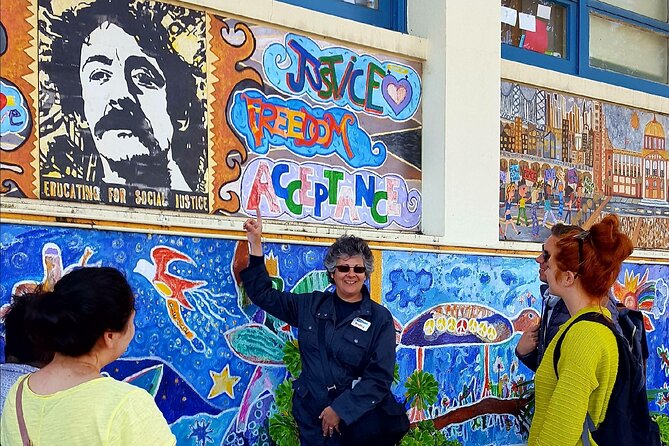
The most moving part of this Castro walk is the way ordinary streets become pages in LGBTQ history. A former camera shop becomes a political headquarters, sidewalk plaques honor queer figures, and memorials bring the AIDS epidemic and earlier persecution into the open. Guide Kathy, a longtime Castro resident and community activist, gives the neighborhood a personal voice.
I like the focus on Harvey Milk’s actual Castro sites, rather than a tour that only points out rainbow flags. I also like the visit to the Pink Triangle Memorial Park and Rainbow Honor Walk, which connects local stories to wider struggles for civil rights. The main consideration is that this is a serious history tour. It includes discrimination, political conflict, and the AIDS epidemic, so it may feel more reflective than lighthearted.
In This Review
- Key points to know before you book
- Why the Castro works so well as a history lesson
- Starting at 400 Castro Street
- Castro Theatre and the neighborhood’s name
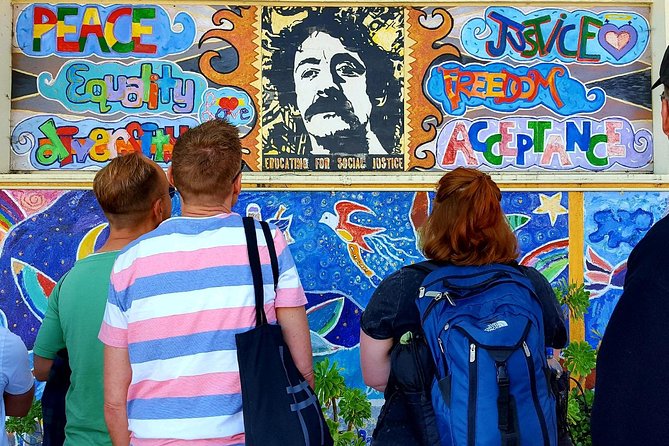
- Harvey Milk’s Castro, from camera shop to campaign office
- Pink Triangle Memorial Park and the cost of persecution
- The Rainbow Honor Walk and sidewalk history
- The AIDS Quilt Names Project site
- Human Rights Campaign Action Center and Store
- Kathy’s guiding style and the very small group
- Is $40 a fair price?
- Who should take this Castro walk?
- Practical details that affect your morning
- Should you book the San Francisco LGBTQ Walking Tour?
- FAQ
- Where does the San Francisco LGBTQ Walking Tour begin?
- Where does the tour end?
- What time does the tour start?
- How long does the walking tour last?
- Who leads the tour?
- What sites are included?
- Is the tour wheelchair accessible?
- What happens if the tour is canceled?
Key points to know before you book
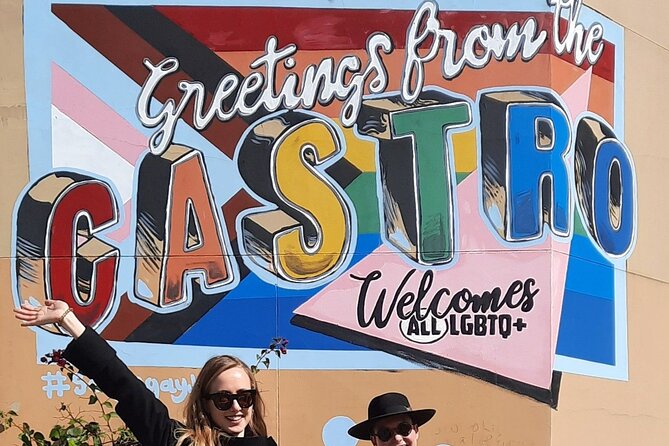
- Kathy brings local experience: She has lived in the neighborhood for decades and ties public history to personal stories and present-day issues.
- More than 20 sites appear across the walk: The route covers LGBTQ culture, Harvey Milk, the AIDS epidemic, memorials, art, and activism.
- Harvey Milk is central to the story: You see his home, former camera shop, campaign headquarters, and Harvey Milk Plaza.
- The memorials carry real emotional weight: Pink Triangle Memorial Park, the Rainbow Honor Walk, and the original AIDS Quilt Names Project site give the tour a solemn side.
- The walk lasts about two hours: It begins and ends at 400 Castro Street at 10:00 a.m., with no hotel transport included.
- The group can be very small: The stated maximum is two people, making this a highly personal format, though minimum numbers still apply.
Why the Castro works so well as a history lesson
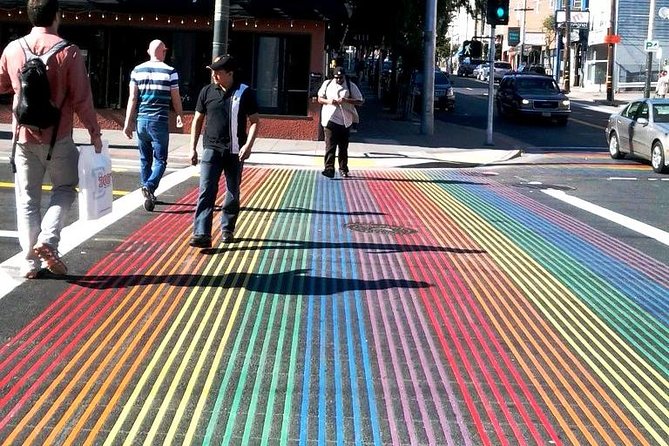
The Castro is not presented as a museum district sealed off from daily life. You walk through an active San Francisco neighborhood while learning how it became a center of LGBTQ organizing, culture, and political action.
That setting matters. The story unfolds at real addresses, public plazas, sidewalks, businesses, and memorials. You are not simply hearing a timeline. You are seeing how activism took shape in a place where people lived, worked, campaigned, gathered, and mourned.
The tour also reaches beyond one decade. Its scope includes the Gold Rush, World War II, the civil rights movement, Harvey Milk, the AIDS epidemic, and the continuing fight for equal rights. That wider frame helps you understand the Castro as part of American history, not just a colorful San Francisco neighborhood.
Kathy’s role is important here. Her long connection to the district gives the walk a personal tone, and she is described as funny, direct, compassionate, and strongly involved in the community. You should expect interpretation shaped by lived experience, not a neutral list of dates and building names.
More walking tours in San Francisco:
- North Beach & Little Italy Walking Tour: Food, History & Flavor
★ 5.0 · 1,044 reviews - San Francisco Chinatown Walking Tour
★ 5.0 · 778 reviews - Chinatown Walking Tour: Food, History & Flavor
★ 5.0 · 575 reviews
Starting at 400 Castro Street
You meet at 400 Castro Street at 10:00 a.m. The tour returns to the same address, which makes planning the rest of your day easier. There is no hotel pickup or drop-off, so you need to reach the Castro on your own.
The meeting point is near public transportation. The route uses public walkways, and the tour information says those walkways are wheelchair accessible. Service animals are allowed, and most people can take part.
The walk operates in rain or shine, but poor weather can lead to a cancellation and a choice of another date or a full refund. Since this is an outdoor experience, check the forecast and wear shoes suited to two hours on city streets.
The group size deserves special attention. The maximum listed size is two people, which is unusually intimate for a walking tour. That can mean more room to ask questions and a conversation tailored to your interests. At the same time, a minimum number is required, so a confirmed booking can still be canceled if too few people sign up.
Castro Theatre and the neighborhood’s name
One early stop is the Castro Theatre, known for its Spanish Colonial Baroque architecture. The building gives the tour a visual starting point, but the bigger value is the explanation of how the district got its name and how the neighborhood developed.
This is where the walk begins to connect architecture, migration, community life, and identity. You are not only looking at a grand old theater. You are learning how a place gathers meaning over time and how public spaces can become important to a community.
The tour is described as covering more than 20 historical sites. That does not mean every stop receives the same amount of time. Some are brief points along the route, while others, especially the Harvey Milk locations and memorials, receive more attention.
You should expect a steady walking pace with regular pauses for stories. The walk is not advertised as strenuous, and one account describes it as not involving too much walking. Still, it lasts two hours, so comfortable footwear remains a sensible choice.
Harvey Milk’s Castro, from camera shop to campaign office
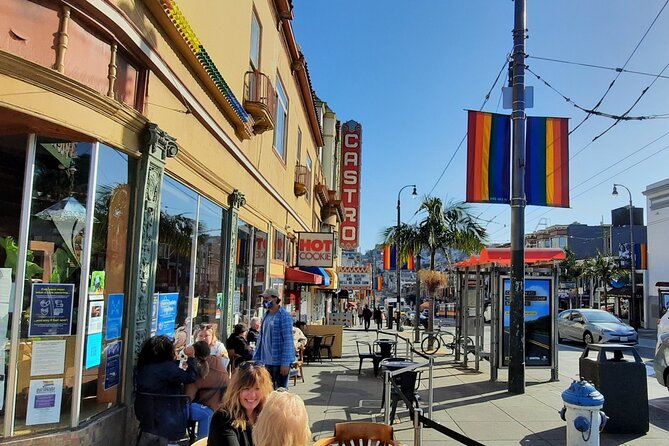
Harvey Milk is one of the strongest threads running through the tour. You visit his former home, camera shop, and campaign headquarters, then continue to Harvey Milk Plaza.
Seeing these places together helps explain how a neighborhood activist became the first openly gay male politician elected to public office in the United States. The story is not limited to his public image. The route shows the connection between his business, residence, political organizing, and daily life in the Castro.
The former camera shop and campaign headquarters now house the Human Rights Campaign Action Center and Store. This stop adds a present-day political layer to the history. You learn that LGBTQ people still do not have equal rights in employment, housing, and public accommodations.
That point keeps the tour from treating the past as finished business. Harvey Milk’s campaigns and speeches belong to an earlier period, but the questions around legal protection and public acceptance continue.
At Harvey Milk Plaza, the guide also explains how the rainbow flag was created. The flag is familiar around the world, but learning about its local connection gives the symbol a more specific meaning. It becomes part of the story of organizing, public visibility, and pride in the Castro.
Allow time for this section to feel personal. The tour’s appeal is not simply that it includes famous names. Kathy has a reputation for adding stories from decades of community involvement, and that can make these locations feel less distant.
A few more San Francisco tours worth comparing
- Castro District LGBTQ+ Historic Tour
★ 5.0 · 9 reviews - San Francisco: Castro District LGBTQ+ History Tour
★ 5.0 · 9 reviews - Castro District LGBTQ+ History Tour
★ 5.0 · 5 reviews - San Francisco: Castro & LGBTQ Private Walking Tour
★ 4.0 · 4 reviews
Pink Triangle Memorial Park and the cost of persecution
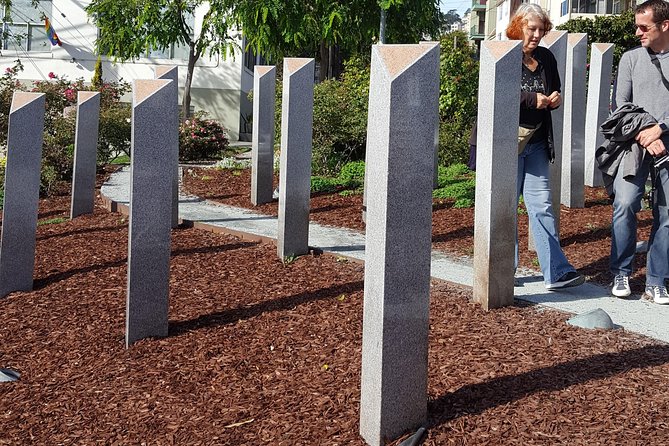
Pink Triangle Memorial Park is one of the more serious stops. Its memorial stones and triangular forms recall the persecution of gay men under Nazi rule. The stop places LGBTQ history within a larger story of state violence and forced labeling.
It is easy to rush through a memorial on a sightseeing day. Here, you should slow down and let the guide explain why the symbol matters. The tour does not treat the pink triangle as a decorative image. It shows how a mark used for oppression was later reclaimed as a sign of remembrance and resistance.
This part may be difficult for younger children, though one family account describes a four-year-old being accommodated well and a teenager remaining engaged throughout the walk. The subject matter is serious, so parents should decide if the tone suits their family.
The memorial also adds balance to the Castro’s more celebratory images. Pride flags and public art tell one part of the story. This park reminds you that visibility came with risk and that civil rights gains followed years of fear, organizing, and loss.
The Rainbow Honor Walk and sidewalk history

The Rainbow Honor Walk Project places plaques along Castro sidewalks to recognize LGBTQ people who made important contributions. As you move through the neighborhood, the pavement itself becomes part of the tour.
This is one of the easiest features to appreciate because it rewards careful looking after the tour ends. You may notice names and plaques that you would otherwise walk past. The project also broadens the story beyond San Francisco figures, showing that LGBTQ history includes writers, artists, activists, public figures, and people who changed public life in different ways.
The plaques are a useful counterpoint to the Harvey Milk stops. Milk is the best-known local political figure, but the Honor Walk shows that one person never tells the whole story.
The project also reflects change in the neighborhood. A person returning to the Castro after many years may notice how much more history is now marked in public spaces. For a first-time visitor, it offers an easy way to continue exploring independently after the guided walk.
The AIDS Quilt Names Project site
The original site of the AIDS Quilt Names Project adds the tour’s most personal and mournful note. The AIDS Memorial Quilt became a way for families and friends to remember people lost to AIDS, while also confronting the silence and stigma surrounding the epidemic.
At this stop, the guide places the AIDS crisis within the Castro’s social and political history. You gain a clearer sense of how illness, grief, activism, public policy, and community care became linked.
This is not just a stop for information. It offers a place to pay respects. One account describes ending near the ashes of an activist and having a chance to honor that person, which suggests that the final portion of the walk can carry real emotional force.
You should not expect the tour to avoid difficult details. Its purpose is to show how the Castro became a center for LGBTQ rights while also acknowledging the people and crises that shaped that movement.
Human Rights Campaign Action Center and Store
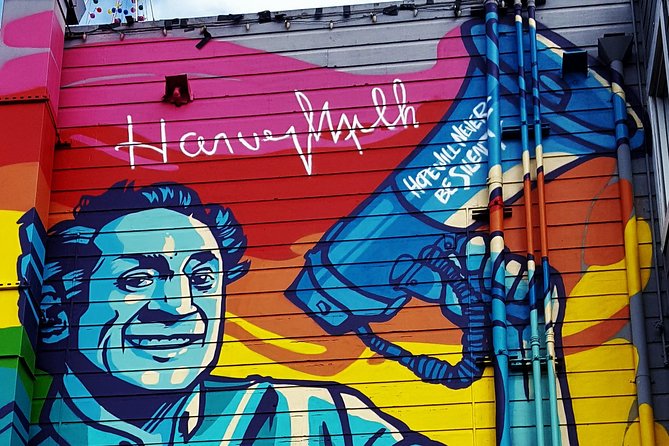
The Human Rights Campaign Action Center and Store occupies Harvey Milk’s former camera shop, home, and campaign headquarters. The stop lasts about 10 minutes, but it links the neighborhood’s past to current civil rights work.
You learn that legal equality remains incomplete in areas such as employment, housing, and public accommodations. That information gives the tour a present-tense edge. It is not only a tribute to historic figures. It asks you to consider what activism still needs to accomplish.
The stop is listed as free, while the $40 tour price covers the local guide. There are no hotel transfers or extra admission costs listed. The main value comes from the guide’s interpretation and the route’s concentration of sites.
If you prefer sightseeing with little political discussion, this section may feel more direct than expected. If you want context for the neighborhood’s activism, it is one of the most useful parts of the morning.
Kathy’s guiding style and the very small group
The strongest praise centers on Kathy. She is described as funny, warm, patient, direct, and deeply informed by years in the Castro. Her ability to make a solo participant feel included is especially useful, since the group may be tiny.
She also seems to adjust her approach to the people in front of her. Families, couples, solo participants, teenagers, and repeat visitors have all found the walk engaging. That flexibility matters because LGBTQ history can be personal, political, or entirely new to you.
The tone is not stiff. You can expect stories, humor, strong opinions, and encouragement to remain active in the work of making communities safer and fairer. Kathy’s approach appears to connect history with responsibility rather than leaving it in the past.
The small maximum group size is a major advantage if you want to ask questions. It may also make the experience feel more like a conversation with a local historian than a standard tour. Keep in mind that the very small format is paired with a minimum booking requirement, so the date is not guaranteed if demand is too low.
Is $40 a fair price?
At $40 per person, the tour costs more than a basic neighborhood walk, but the price is reasonable if you want focused historical interpretation. You are paying for two hours with a local guide, a carefully chosen route, and access to more than 20 sites connected to LGBTQ culture and activism.
The value is strongest for someone who would otherwise walk through the Castro without understanding the significance of its addresses and memorials. The camera shop, plaza, plaques, and parks are more meaningful when you know the people and events tied to them.
The price is less compelling if you only want a quick look at the neighborhood’s famous streets or a photo stop at the rainbow crosswalks. This is a history and civil rights tour first, with sightseeing woven into it.
The reported rating is 4.9 from 600 reviews, with 100 percent recommending the experience. Those numbers fit the tour’s clearest strengths: a highly praised guide, strong local insight, and a route that feels personal rather than generic. I would book it early, especially since it is commonly reserved about 29 days ahead.
Who should take this Castro walk?
I would recommend it to first-time visitors who want a clear introduction to the Castro and to anyone interested in LGBTQ history, American politics, civil rights, or San Francisco social history.
It also suits repeat visitors. One person took the tour again after 14 years and found the neighborhood had changed, including the growth of the Rainbow Honor Walk. A guided return visit can show you details you missed the first time.
Families can take part, but parents should prepare children for discussions of persecution, AIDS, discrimination, and political struggle. Teenagers may find the subject especially meaningful, while very young children may understand only the neighborhood walk and a few visual stops.
The tour is also a good choice for solo visitors. The group format is small, and Kathy’s personal approach helps keep a single participant involved. Couples may appreciate the chance to explore the Castro together while discussing what the history means today.
Practical details that affect your morning
The tour starts and ends at 400 Castro Street, at 10:00 a.m. Plan your transportation carefully because hotel pickup and drop-off are not included.
Confirmation arrives when you book. The experience is non-refundable and cannot be changed for personal reasons, so choose your date carefully. If the operator cancels because of poor weather or insufficient numbers, you receive the choice of another date or a full refund.
The walk is offered in English. Public walkways are wheelchair accessible, service animals are allowed, and most people can participate. Since the tour runs in all weather unless conditions force cancellation, bring weather-appropriate clothing and expect to remain outdoors for most of the two hours.
One small practical point: the route returns to its starting point. That makes it easy to continue with lunch, shopping, or more independent time in the Castro without arranging a separate ride back.
Should you book the San Francisco LGBTQ Walking Tour?
Book this tour if you want the Castro explained through the people who shaped it. The combination of Harvey Milk’s former sites, the Rainbow Honor Walk, Pink Triangle Memorial Park, and the AIDS Quilt Names Project gives you more than a neighborhood introduction. It gives you a working timeline of courage, grief, organizing, and ongoing civil rights work.
Kathy is the main reason to choose this particular walk. Her long local connection, personal stories, humor, and clear commitment to the community make the experience feel grounded. The $40 price is fair for a two-hour, very small-group tour with this much concentrated history.
Skip it if you want a purely lighthearted outing or dislike political discussion. For everyone else, especially first-time visitors and anyone who wants to understand why the Castro matters, this is one of San Francisco’s most worthwhile neighborhood walks.
FAQ
Where does the San Francisco LGBTQ Walking Tour begin?
The tour begins at 400 Castro Street, San Francisco, California 94114.
Where does the tour end?
The walk ends at the same address, 400 Castro Street.
What time does the tour start?
The scheduled start time is 10:00 a.m.
How long does the walking tour last?
The tour lasts approximately two hours.
Who leads the tour?
The tour is led by a local guide. The guide highlighted in the tour information and participant feedback is Kathy, a longtime Castro resident, historian, and community activist.
What sites are included?
The route includes the Castro Theatre, Harvey Milk Plaza, Harvey Milk’s former home and camera shop, his campaign headquarters, Pink Triangle Memorial Park, the Rainbow Honor Walk Project, the original AIDS Quilt Names Project site, and the Human Rights Campaign Action Center and Store.
Is the tour wheelchair accessible?
The public walkways used by the tour are wheelchair accessible.
What happens if the tour is canceled?
If poor weather or insufficient numbers lead to cancellation, you are offered another date or experience, or a full refund. Personal cancellations and amendments are non-refundable.
Recently added around San Francisco
- Guided Private Wine Tour to Napa and Sonoma Wine Country★ 5.0 · 3 reviews
- San Francisco: Muir Woods Giant Redwoods & City Private Tour★ 5.0 · 3 reviews
- San Francisco Chinatown Food and Culture Tour★ 5.0 · 3 reviews
- San Francisco City Half-Day Private Custom Tour★ 5.0 · 3 reviews
- Napa or Sonoma Private Wine Tour from San Francisco★ 5.0 · 3 reviews
- SFO Pick-Up with City Sightseeing Tour★ 5.0 · 3 reviews
- 6-Hour Luxury Napa Wine Tasting Tour with Route Planning★ 5.0 · 3 reviews
- 6-Hour Sparkling Wine Tour of Napa Valley★ 5.0 · 3 reviews
Walking Tours, compared.

North Beach & Little Italy Walking Tour: Food, History & Flavor
Read our review →
Take a Walk with a Storyteller! The Surreal San Francisco Tour.
Read our review →Browse the lists this tour appears in