
Reviewed · CHINATOWN TOURS
San Francisco Chinatown Food and Culture Tour
San Francisco Chinatown comes alive through food, small streets, painted balconies, and stories that connect daily life with immigration, politics, disaster, and renewal. This two-hour walk takes you from a neighborhood park to a fortune cookie factory, then on to dim sum and a quiet redwood grove beside the Transamerica Pyramid.
I like the included dim sum spread and the way the tour links each bite to Chinatown’s culture. I also like the small maximum of 15 people, which gives the guide room to explain details without rushing. The main consideration is time: two hours moves quickly, and extra bakery purchases cost more than the $49 tour price.
In This Review
- Key points to know before booking
- Why this Chinatown walk works so well
- Woh Hei Yuen Park sets the tone
- Gum Moon Residence Hall and Chinatown’s community support
- AA Bakery & Cafe brings the first tastes
- Rose Pak Station connects food with politics
- Painted balconies and the memory of 1906
- Ross Alley mixes fortune cookies with darker stories
- Grant Avenue shows Chinatown’s bold architecture
- House of Dim Sum provides the main meal
- Transamerica Redwood Park ends the route quietly
- How much walking and food should you expect?
- The small group and guide make a difference
- Who should book this Chinatown experience?
- Final booking advice
- FAQ
- How long does the San Francisco Chinatown Food and Culture Tour last?
- Where does the tour begin?
- Where does the tour end?
- What time does the tour start?
- Is dim sum included in the price?
- Are vegan dumplings available?
- How large is the tour group?
Key points to know before booking
- Dim sum is included: You receive a mix of steamed, baked, and fried dumplings at House of Dim Sum.
- The food stops have variety: AA Bakery & Cafe serves buns, egg tarts, sesame balls, and other baked treats.
- The history has real range: Hear about gold rush immigrants, Christian missionaries, political leaders, criminal gangs, and the 1906 earthquake.
- The group is limited to 15 people: This is a better setup for questions than a large coach-style tour.
- The route ends in an unexpected place: Transamerica Redwood Park offers a calm finish beneath San Francisco’s famous office tower.
- Bring about $20 if you want extra food: Purchases beyond the included tastings are not covered.
Why this Chinatown walk works so well
Many city food tours give you a snack, a quick fact, and a rush to the next stop. This one has a clearer purpose. You walk through Chinatown while learning how the neighborhood took shape and how its people kept it alive through political pressure, exclusion, earthquake damage, and rebuilding.
The food helps make those stories easier to grasp. A pastry at a neighborhood bakery is not just a sample. Dumplings at a local restaurant turn lunch into part of the lesson. The guide explains the cultural background of what you eat, so the tour feels like a walking introduction to Chinatown rather than a string of unrelated tastings.
The $49 price is reasonable if you want both food and interpretation. Dim sum is included, and you also receive bakery samples along the way. Still, the bakery stop may tempt you to buy more, and the tour advises bringing roughly $20 for extra food. If you only want a large meal, this may not be the best value. If you want a compact introduction with several tastes and plenty of context, the price makes more sense.
The tour begins at 12:30 p.m., a useful time for a lunch-focused outing. You should arrive ready to walk and eat at a steady pace. The route ends at Transamerica Redwood Park, so you do not return to the starting point. Plan your afternoon around that finish.
More Food & Drink Tours in San Francisco
- North Beach & Little Italy Walking Tour: Food, History & Flavor
★ 5.0 · 1,044 reviews - San Francisco Authentic Food Tour with 5 Locals Favorites Dishes
★ 5.0 · 852 reviews - Chinatown Walking Tour: Food, History & Flavor
★ 5.0 · 575 reviews
Woh Hei Yuen Park sets the tone
The meeting point is Woh Hei Yuen Park, a small park and playground in Chinatown. It gives you a pleasant place to get your bearings before the streets become the main attraction.
You might see people dancing to traditional Chinese music here. That detail matters because it places Chinatown in the present, not only in the past. The neighborhood is not simply a historic district for photographs. It remains a place where people gather, exercise, socialize, and use public space.
The first stop lasts about five minutes, so do not expect a long park visit. Think of it as an easy opening and a chance to meet the guide before the history begins.
Gum Moon Residence Hall and Chinatown’s community support
At Gum Moon Residence Hall, the guide discusses Christian missionaries who advocated for, educated, and sometimes sheltered members of the Chinatown community. This adds a less obvious strand to the tour.
You will hear how institutions outside the usual restaurant and shop story played a role in the neighborhood. The stop is brief, but it helps you see Chinatown as a community shaped by education, faith, advocacy, and practical support.
Because the visit lasts roughly five minutes, the value comes from the explanation rather than the building itself. Pay attention to the guide’s storytelling here. This is one of the moments when a walking tour can give you context that you might miss while exploring alone.
AA Bakery & Cafe brings the first tastes
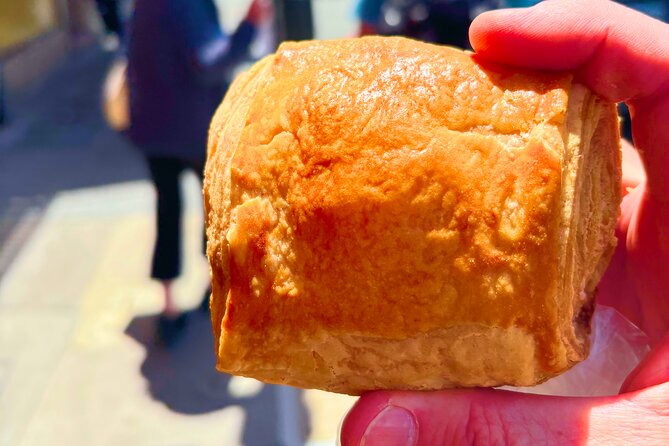
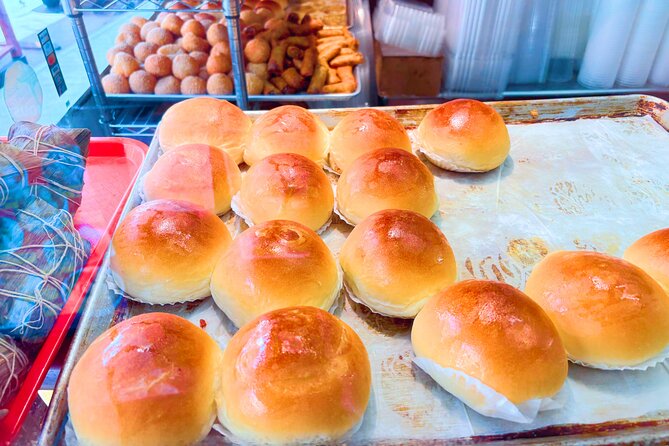
The bakery stop is one of the most appealing parts of the route. At AA Bakery & Cafe, you sample freshly baked buns, egg tarts, sesame balls, and other treats.
That lineup gives you several textures and flavors in a short visit. You get the soft pastry of a bun, the custard center of an egg tart, and the chewy character of a sesame ball. It is a better introduction than tasting only one item because you can compare the sweets as you walk.
The stop lasts about 15 minutes. You should have enough time to taste the included items, listen to the guide, and decide if you want to buy something extra. Those additional purchases are not covered, so bring cash or another payment method suitable for the bakery if you want to take food with you.
I would treat the bakery as a tasting stop, not lunch. The later dim sum meal is the more substantial food portion. If you have dietary needs, the available information specifically confirms vegan dumplings at the dim sum restaurant, but it does not provide a full list of bakery ingredients.
More Chinatown walks:
- Chinatown & North BeachLittle Italy: 7 Tastings & History
★ 5.0 · 1,070 reviews - Ghost Hunt in SF Chinatown with a Professional Investigator
★ 5.0 · 922 reviews - San Francisco Chinatown Walking Tour
★ 5.0 · 778 reviews - San Francisco: Chinatown Culinary Walking Tour
★ 4.8 · 265 reviews
Rose Pak Station connects food with politics
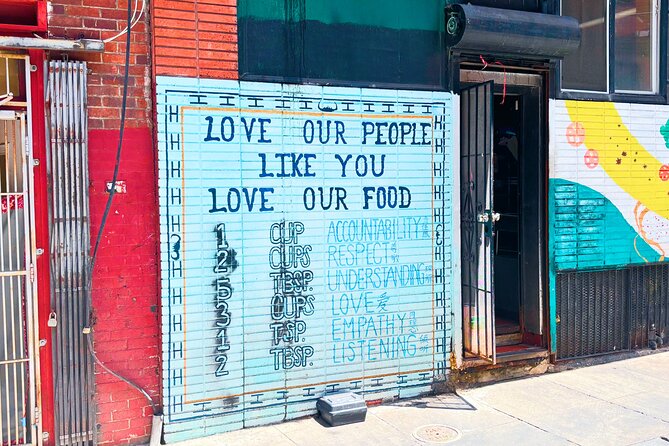
At Chinatown-Rose Pak Station, the tour turns from food to civic life. The guide tells the story of Rose Pak, a woman who strengthened Chinatown’s political voice and helped bring San Francisco’s first Chinese American mayor to office.
The stop also covers the subway line that now serves the neighborhood. That gives the tour a useful modern angle. Transportation is not just a way to reach Chinatown. It can affect how connected the neighborhood is to the rest of the city and how much attention it receives.
The stop takes about five minutes, so the guide has to keep the explanation focused. It is a good reminder that Chinatown’s story includes political organizing and public projects, not only immigration and restaurants.
Painted balconies and the memory of 1906
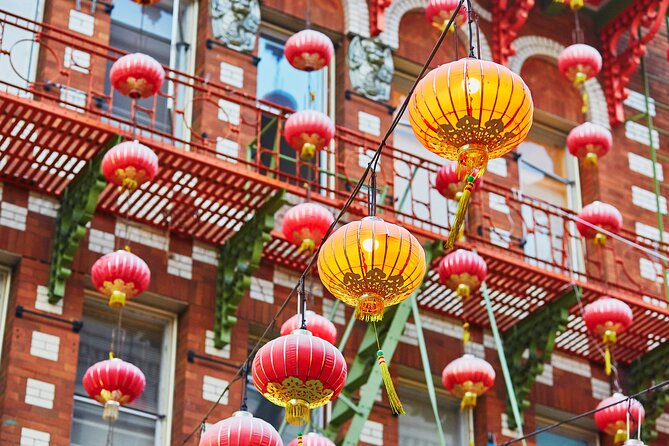
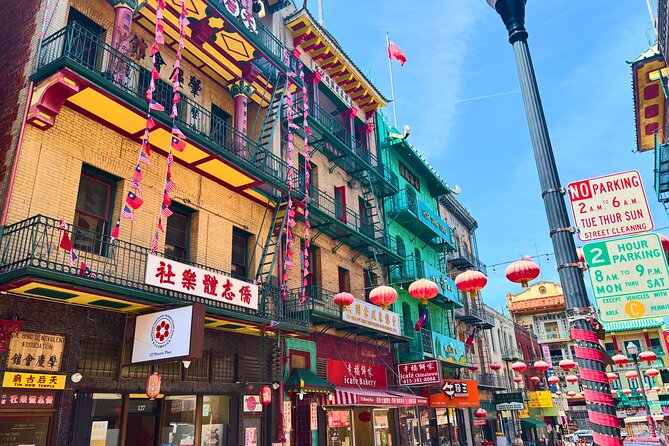
The route continues along the beautiful street of painted balconies on Waverly Place. This is one of the most photogenic parts of the walk, with colorful architectural details that make the street feel distinct from nearby San Francisco blocks.
You will also see the oldest Chinese temple in town. The tour uses these buildings to explain the 1906 earthquake and fire, and how Chinatown responded afterward.
That history gives the architecture more weight. The painted balconies are attractive, but they are not just decoration. The neighborhood’s built form reflects rebuilding, identity, and the effort to preserve a community after destruction. The guide helps you connect the visual details to the larger story.
This portion may be especially useful if you are taking photographs. Listen first, then take your pictures. The short walk is more meaningful when you understand what you are looking at.
Ross Alley mixes fortune cookies with darker stories
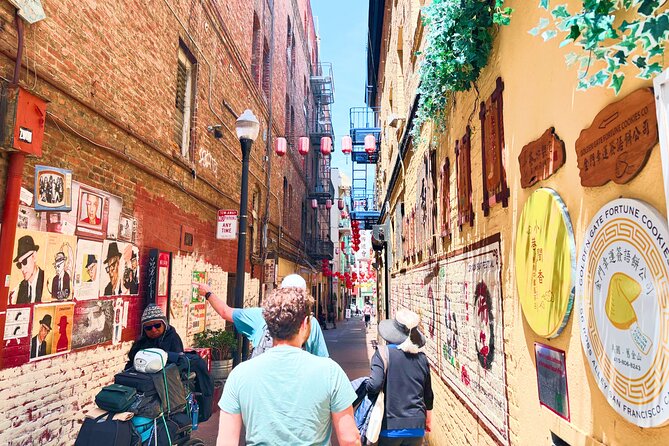
Ross Alley brings one of Chinatown’s most famous stops: a fortune cookie factory. You can see where the familiar folded cookies are made and learn about a food item that has become closely tied to Chinese American restaurant culture.
The stop also covers the criminal gangs that once prowled Chinatown’s alleys. That contrast gives the neighborhood story some edge. The tour does not present Chinatown as a postcard district with only pleasant tales. It includes the hard parts, too.
The visit lasts about 10 minutes. A factory can be crowded or compact, so do not expect a long private demonstration unless the guide specifically arranges one. The appeal is the combination of a recognizable local product and the alley’s past.
Grant Avenue shows Chinatown’s bold architecture
Grant Avenue is the visual spine of the walk. Here, the guide points out striking buildings and explains the thinking behind Chinatown’s colorful architecture.
This is a good place to slow down and look up. Storefronts, upper floors, signs, and decorative details can disappear when you focus only on getting from one food stop to another. The guide gives you a reason to notice the street as a designed environment.
The stop is listed at about five minutes, but the route itself provides more time to see the area as you move through it. Keep in mind that this is a public street, not a closed museum. You will be walking among ordinary city activity, so stay with the group and watch your footing.
House of Dim Sum provides the main meal
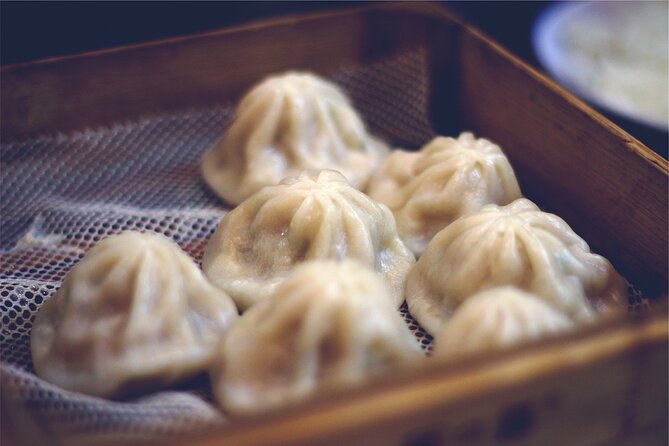
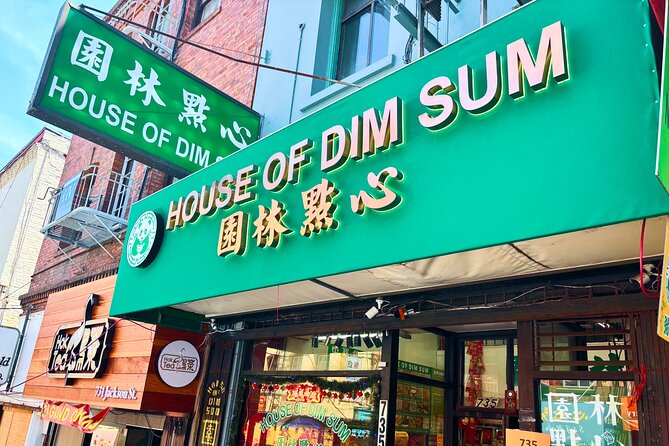
The dim sum stop at House of Dim Sum is the heart of the food portion. You receive a selection of steamed, baked, and fried dumplings at no extra charge.
That variety is important. It lets you experience different cooking methods instead of eating a single plate of one type. Steamed dumplings offer a softer bite, baked items bring a different texture, and fried dumplings add crispness. The exact selection can vary, but the tour promises a mix across those categories.
The stop lasts about 15 minutes. That is enough for a tasting meal, but not necessarily a long, leisurely restaurant sitting. You may still want another meal later, depending on your appetite.
Vegan dumplings are available if you tell the guide you prefer that option. The tour does not provide broader allergy information, so you should ask the guide directly about ingredients before eating if you have a serious allergy.
I like that this meal is built into the price. Food tours can become expensive when every sample is an extra charge. Here, the dim sum portion gives you a clear value anchor for the $49 fee.
Transamerica Redwood Park ends the route quietly
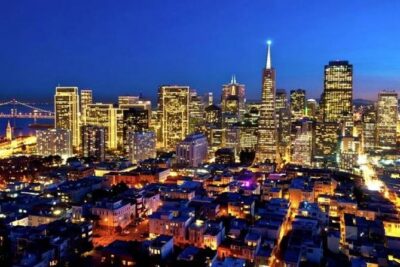
The final stop is Transamerica Redwood Park, a grove of redwood trees beside the Transamerica Pyramid. It is an unexpected way to finish a Chinatown walk.
After food, narrow streets, architecture, and busy city movement, the trees provide a change of pace. The stop lasts about 30 minutes, making it the longest listed portion of the tour. You have time to settle in, ask final questions, and take stock of what you have seen.
The ending point is at 600 Montgomery Street, not back at Woh Hei Yuen Park. That is practical if you plan to continue toward the Financial District, but less convenient if your car or hotel is near the starting point. Check the route before booking so the finish works with your afternoon plans.
How much walking and food should you expect?
This is a two-hour walking tour with several short stops. The route includes parks, alleys, bakery and restaurant visits, public streets, and an ending at a downtown park. The information provided does not state the total distance or whether there are stairs, so you should be prepared for ordinary city walking and ask the provider if you need precise mobility details.
Most people can participate, and service animals are allowed. The tour runs near public transportation, which makes reaching the starting point easier. A mobile ticket is provided, so you can keep your booking confirmation on your phone.
The food is spread across the tour instead of served all at once. You taste bakery items first, then receive dumplings later. If you prefer a full lunch at one sitting, plan around the tasting format.
The small group and guide make a difference
The maximum group size is 15 people. That is small enough for the guide to keep the group together through alleys and busy streets without relying on a microphone.
The strongest praise for this experience centers on the guide’s presentation. The tour is described as informative, unrushed, and professional, with exceptional attention to Chinatown’s history. Those qualities matter here because the route includes many brief stops. A rushed guide could turn the walk into a list of names and dates. A clear guide can make the connections between food, architecture, politics, immigration, and disaster easier to follow.
No guide name is provided, so you should not book this expecting a particular named host. The experience depends on the local guide assigned to your date.
Who should book this Chinatown experience?
I would recommend it to first-time visitors who want an efficient introduction to Chinatown without giving up the pleasure of eating along the way. It also suits people who enjoy city history but do not want a lecture in a formal museum.
Food-focused visitors will appreciate the bakery samples and included dim sum. Photography-minded visitors will like Waverly Place’s painted balconies, the temple, Grant Avenue’s buildings, and the fortune cookie factory.
Families may find the two-hour length manageable, especially with the park at the beginning and the redwood grove at the end. People seeking a slow, sit-down meal should know that the food stops are timed and shared across the group.
This is less suitable if you want a private tour, a long restaurant lunch, or a detailed breakdown of every dish. The maximum group is 15, not one-on-one. The $49 cost covers the main tasting, but extra snacks and purchases require more money.
Final booking advice
Book this tour if you want Chinatown explained as a living neighborhood, with enough food to make the history memorable. The included dim sum, bakery tastings, small group, and strong focus on local stories give the experience good value.
Skip it if you would rather explore at your own pace, spend hours eating, or avoid a fixed end point. For most visitors, though, the route offers a smart two-hour introduction, especially if you arrive hungry and keep the rest of your afternoon flexible.
Cancellation is free up to 24 hours before the 12:30 p.m. start time. Changes or cancellations made inside that window are not accepted for a refund.
FAQ
How long does the San Francisco Chinatown Food and Culture Tour last?
The tour lasts approximately two hours.
Where does the tour begin?
It begins at Woh Hei Yuen Park in San Francisco, California.
Where does the tour end?
The tour ends at Transamerica Redwood Park, 600 Montgomery Street, near the Transamerica Pyramid.
What time does the tour start?
The listed start time is 12:30 p.m.
Is dim sum included in the price?
Yes. The tour includes a variety of steamed, baked, and fried dumplings at House of Dim Sum.
Are vegan dumplings available?
Yes. The dim sum restaurant can offer vegan dumplings. Tell your guide that you prefer this option.
How large is the tour group?
The activity has a maximum of 15 participants.
More Food Tours in San Francisco
- San Francisco: North Beach and Little Italy Food Tour
★ 4.8 · 188 reviews - Ultimate Electric SF Bike Tour- food, icons & local hidden gems
★ 5.0 · 182 reviews - Mission District Food Tour: Appetizers, Entrée and Dessert
★ 5.0 · 182 reviews - Exclusive North Beach Food Tour in San Francisco
★ 5.0 · 162 reviews
Recently added around San Francisco
- Guided Private Wine Tour to Napa and Sonoma Wine Country★ 5.0 · 3 reviews
- San Francisco: Muir Woods Giant Redwoods & City Private Tour★ 5.0 · 3 reviews
- San Francisco City Half-Day Private Custom Tour★ 5.0 · 3 reviews
- Napa or Sonoma Private Wine Tour from San Francisco★ 5.0 · 3 reviews
- SFO Pick-Up with City Sightseeing Tour★ 5.0 · 3 reviews
- 6-Hour Luxury Napa Wine Tasting Tour with Route Planning★ 5.0 · 3 reviews
- 6-Hour Sparkling Wine Tour of Napa Valley★ 5.0 · 3 reviews
- Muir Woods, Sausalito and Ferry back to Fisherman’s Wharf★ 4.7 · 3 reviews
Chinatown Tours, compared.
Chinatown & North BeachLittle Italy: 7 Tastings & History
Read our review →
Ghost Hunt in SF Chinatown with a Professional Investigator
Read our review →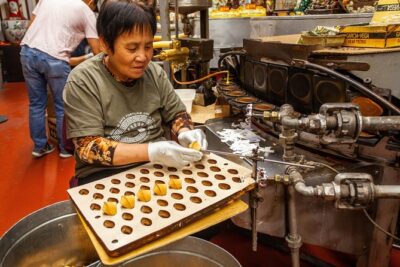
SF’s Chinatown: Tea & Dim Sum Food Tour – Includes full meal, 3hr
Read our review →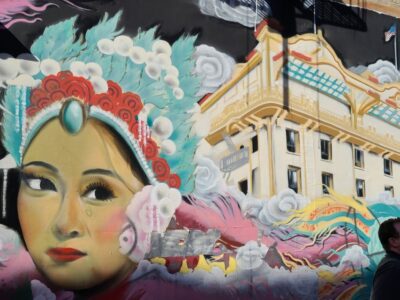
Browse the lists this tour appears in