
Reviewed · CHINATOWN TOURS
Chinatown Walking Tour: Food, History & Flavor
San Francisco’s Chinatown is easy to visit and surprisingly hard to understand on your own. This three-hour walk begins at Dragon Gate and takes you into narrow lanes, food shops, markets, and family-run businesses that can seem like ordinary storefronts until someone explains what you’re seeing. The food comes in several small tastings, enough to add up to lunch, rather than one sit-down meal.
I like two things especially. First, the small group of 15 or fewer gives you room to ask questions and hear the guide. Second, the route mixes famous stops, such as the Golden Gate Fortune Cookie Factory, with everyday places on Stockton Street and a tea shop where the neighborhood feels less staged. The main caution is that this is as much a history and culture walk as a food tour. If you want nonstop eating, some stops may feel too talk-heavy, and long lines can occasionally force the fortune-cookie visit to be skipped.
In This Review
- Key points to know before you book
- Dragon Gate is more than a photo stop
- Alleys and side streets reveal the neighborhood
- Dim sum and BBQ pork buns make the walk a meal
- Stockton Street markets show Chinatown at work
- The fortune-cookie factory is small and memorable
- Tea at Vital Tea Leaf slows the pace
- The guides give the tour its character
- What $86 buys you in San Francisco
- Timing, meeting point, and practical details
- Who should book this Chinatown walk?
- Should you book the Chinatown Walking Tour?
- FAQ
- Where does the Chinatown walking tour begin?
- Where does the tour end?
- How long does the tour last?
- How much does the tour cost?
- What food is included?
- Is tea included?
- Does the tour visit the Golden Gate Fortune Cookie Factory?
- How large is the group?
- Is the route hilly?
- Can people with nut allergies join?
- Is the tour offered in languages other than English?
- What is the cancellation policy?
Key points to know before you book
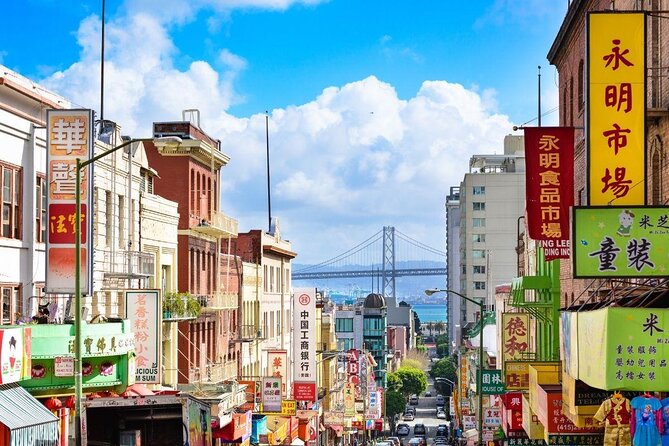
- Start at Dragon Gate: The meeting point is 400 Grant Avenue, a useful central location for beginning your Chinatown visit.
- A full lunch in tastings: Expect dim sum, BBQ pork buns, pastries, fortune cookies, tea, and other Chinese specialties rather than a single restaurant meal.
- History is a major part of the route: Guides connect food and streets to immigration, Gold Rush-era beginnings, resilience, and present-day Chinatown.
- Stockton Street shows daily life: The produce, herb, and specialty food shops offer a look at where locals shop, not just where tourists take pictures.
- Guides bring different personalities: Ryan, Andre, Scott, Isabella, Cynthia, Brian, David, and others have led tours, with particular praise for humor, local stories, and personal recommendations.
- Allow for hills and food restrictions: The route includes some uphill walking, and the operator cannot accommodate nut allergies.
Dragon Gate is more than a photo stop
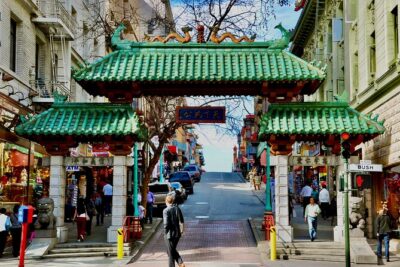
The tour starts at 400 Grant Avenue, at San Francisco’s famous Dragon Gate. This is the natural front door to Chinatown and a good place to begin because you can immediately see the contrast between the decorative entrance and the working neighborhood beyond it.
From here, your guide sets the tone. The best guides on this route do not simply point at buildings and recite dates. They explain why Chinatown developed where it did, how Chinese immigrants built a community under difficult conditions, and why the neighborhood remains a major part of San Francisco’s identity.
I would pay close attention during this opening section. It gives you a useful frame for everything that follows. A bakery, tea shop, market stall, or alleyway becomes easier to appreciate once you understand that Chinatown is not just a collection of tourist sights. It is also a place of business, family life, cultural memory, and daily shopping.
The route has a steady pace, but one portion can be hilly. One person described the climb as roughly a block, with enough time to recover, while another called the neighborhood very hilly. I would wear supportive shoes and avoid treating this as a flat stroll. Most people can take part, but anyone with mobility concerns should think carefully about uneven streets and inclines.
More Food & Drink Tours in San Francisco
- North Beach & Little Italy Walking Tour: Food, History & Flavor
★ 5.0 · 1,044 reviews - San Francisco Authentic Food Tour with 5 Locals Favorites Dishes
★ 5.0 · 852 reviews - San Francisco: North Beach and Little Italy Food Tour
★ 4.8 · 188 reviews
Alleys and side streets reveal the neighborhood
One of the strongest reasons to book a guided walk is the route through narrow streets and back alleys. On your own, you can certainly wander Grant Avenue, but you may miss the quieter passageways and the small details that explain how the district works.
Your guide may point out unusual sites, bits of local horticulture, specialty shops, and places that do not advertise themselves with large signs. Ryan has been praised for sharing facts about both Chinatown’s past and its plant life. Andre is known for bringing personal knowledge of shopping and eating in the neighborhood into the walk. Scott often mixes local history with pop culture and keeps the group involved through questions.
Those differences matter. The stops are broadly similar, but the personality of your guide shapes the experience. Cynthia has been described as friendly and fun, while Isabella is noted for making the area’s historical facts clear. Brian and David have also led the tour, with David helping people feel more comfortable exploring Chinatown after the walk.
I like this part because it gives you practical orientation. After three hours, you will know where to return for tea, food, markets, and further wandering. The tour is not only about collecting tastings. It helps you read the neighborhood.
Dim sum and BBQ pork buns make the walk a meal
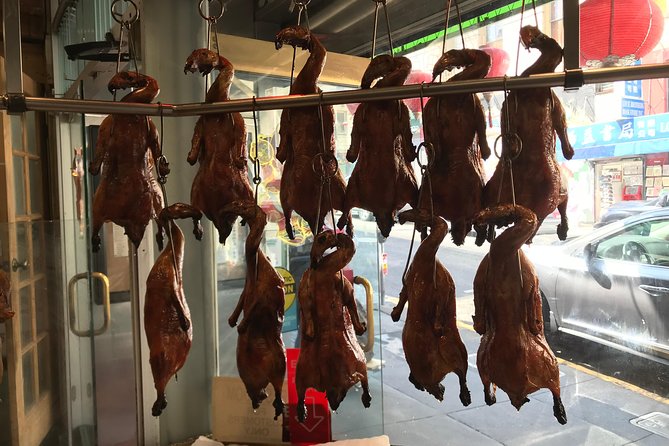
The food begins early enough to keep the route from becoming a lecture with an occasional snack. Tastings have included dim sum, BBQ pork buns, onion pancakes, Shanghai dumplings, potstickers, sesame balls, shrimp dumplings, rice cakes, Peking duck, Chinese pastries, and other local favorites.
The exact selection can vary, so you should think in terms of a tasting meal rather than a fixed restaurant menu. The portions are designed to be sampled along the way, and the combined food is intended to serve as lunch. That makes the $86 price easier to assess: you are paying for several tastings, a guide, and a structured introduction to the neighborhood, not simply for a plate of dumplings.
Food quality can be uneven from stop to stop. Some people have singled out the opening onion and pork bun tasting, Peking duck, and off-menu noodles at Vital Tea Leaf as favorites. Others found a few of the food stops merely adequate and felt the historical material was the stronger part of the tour.
That is useful information if your priority is eating. I would book this for the combination of food and context, not as a replacement for a carefully planned Chinatown restaurant crawl. You may find a few bites memorable and others less exciting. The benefit is variety, access, and explanation. You get to try several styles of food without spending time researching every stop yourself.
The tour can also work well for families. A 16-year-old enjoyed one outing, and the quick changes between walking, tasting, stories, and shop visits help keep the three hours moving. Children and young people must be registered with an adult registration, so plan accordingly.
Stockton Street markets show Chinatown at work
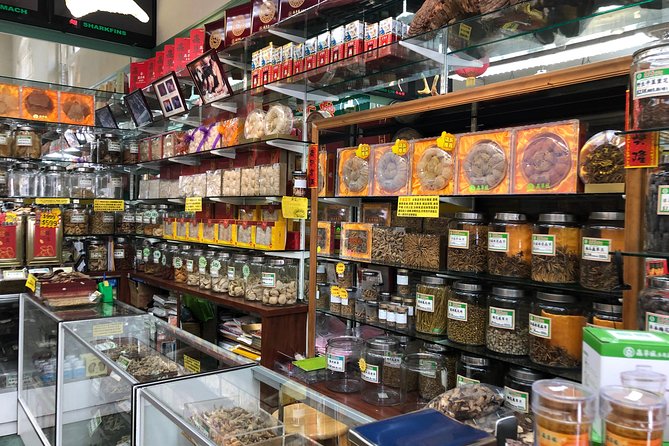
The Stockton Street section is one of the most useful parts of the route. Here, you browse shops where locals buy fresh produce, herbs, and specialty ingredients. The displays may be unfamiliar, and that is exactly why a guide helps.
Rather than treating the market as a backdrop, ask questions about what you see. Your guide can explain how ingredients fit into Chinese cooking and why these stores matter to the neighborhood. This is also where the tour shifts from landmark sightseeing to ordinary daily life.
I appreciate that balance. Grant Avenue gives you the recognizable Chinatown experience, while Stockton Street shows a more practical side of the district. You might see shoppers choosing produce, herbs, or delicacies for home cooking. It is a reminder that the neighborhood is not preserved solely for visitors. It continues to serve a local community.
If you enjoy markets, this may be more rewarding than another photo stop. If you prefer a strictly food-focused tour, the market commentary may feel like time taken away from tasting. I would see it as part of the meal’s context: food makes more sense when you see where ingredients are sold and how the neighborhood shops.
More Chinatown walks:
- Chinatown & North BeachLittle Italy: 7 Tastings & History
★ 5.0 · 1,070 reviews - Ghost Hunt in SF Chinatown with a Professional Investigator
★ 5.0 · 922 reviews - San Francisco Chinatown Walking Tour
★ 5.0 · 778 reviews - San Francisco: Chinatown Culinary Walking Tour
★ 4.8 · 265 reviews
The fortune-cookie factory is small and memorable
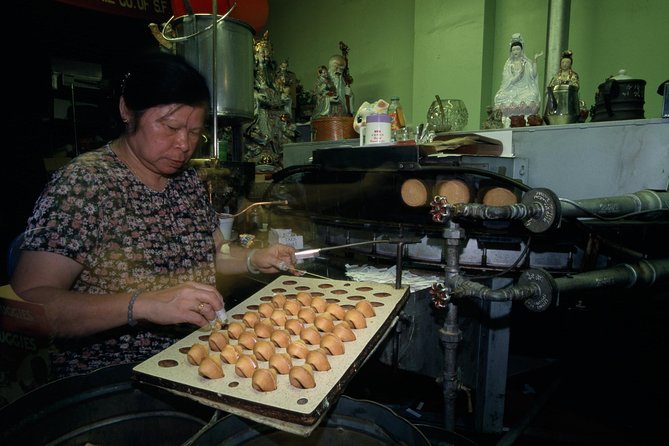
The Golden Gate Fortune Cookie Factory is one of the tour’s most distinctive stops. You can see fortune cookies being made and sample them fresh. That quick look behind the scenes adds something a standard bakery visit does not.
The factory is popular, and that creates a practical limitation. Long lines have caused the stop to be missed on at least one busy outing. If the queue is too long, the guide may need to protect the rest of the schedule rather than spend the entire tour waiting.
I would treat the factory as a welcome bonus, not the sole reason to book. When you get inside, the freshly made cookies and working equipment provide a fun contrast to the more serious historical sections. When you do not, the tour still includes food, tea, markets, and alleyways.
This is also a good example of why a three-hour route cannot guarantee equal time at every stop. The group has several tastings and sites to fit in, and Chinatown’s crowds can affect the order or length of a visit.
Tea at Vital Tea Leaf slows the pace
The tea tasting is repeatedly singled out as a favorite part of the experience, and I can see why. After several savory and sweet tastings, tea gives the tour a quieter pause. At a family-run tea shop, you learn about Chinese tea customs and sample different varieties rather than simply being handed a cup.
Vital Tea Leaf is a recurring stop, and its host has been praised for a humorous presentation. One guide, Scott, is also associated with off-menu noodles there, another detail that makes the stop more than a standard tasting.
The value here is not only the drink. Tea offers a window into habits, hospitality, and flavor. Your guide or the tea host can help you notice differences that might otherwise pass you by. For many people, this becomes the most distinctive part of the afternoon.
If you are sensitive to caffeine, ask questions during the visit. The supplied information does not specify the tea varieties or whether alternatives are available, so do not assume the tasting can be customized. The operator also states clearly that nut allergies cannot be accommodated across the tour.
The guides give the tour its character
The company uses several guides, and the experience is not built around one fixed personality. Ryan is described as funny, personable, and full of local facts. Andre brings strong historical detail and personal experience with Chinatown shops and restaurants. Scott is praised for combining humor, food, pop culture, and San Francisco stories.
Isabella, Cynthia, Brian, and David have also led tours. Isabella is noted for clear historical explanations, Cynthia for friendly energy, Brian for food and history, and David for helping people feel more confident walking around the area afterward.
You will not choose your guide from this information, but it helps set expectations. The strongest part of the tour is the live interpretation. A guide who welcomes questions can adjust the balance between food, history, and neighborhood details. Tell your guide early if you are most interested in eating, architecture, immigration stories, markets, or tea.
One point to keep in mind: the route may feel more like a history and culture tour with substantial food than a pure food tour. That is not a flaw, but it is an important distinction. The tour is best for someone who wants to understand why Chinatown looks and feels the way it does.
What $86 buys you in San Francisco
At $86 per person, this is not a bargain snack walk. It can still offer fair value if you would otherwise pay for several tastings, a full lunch, and a private introduction to Chinatown.
You are paying for a small group, a three-hour route, multiple food stops, tea, and access to a guide who can answer questions. The group maximum of 15 is especially important in a neighborhood with tight sidewalks and small shops. A large group could make the alleys and food counters awkward; this size should feel more manageable.
The value drops if you want a long sit-down meal or already know Chinatown’s food scene well. You may prefer to spend $86 exploring restaurants on your own, especially if food quality is your only concern. But you would lose the route through side streets, the historical explanation, the fortune-cookie visit when available, and the market context.
I would consider it a good first-day activity in San Francisco. Take it early in your visit, then use the guide’s suggestions to return to places that interest you. One guide has offered recommendations for further exploring, and that practical follow-up can make the tour more useful than a one-time meal.
Timing, meeting point, and practical details
The tour lasts about three hours and ends at 650 Jackson Street. Since the beginning and ending points differ, plan your next activity from the Jackson Street side of Chinatown rather than assuming you will return to Dragon Gate.
The starting point is near public transportation, and you receive a mobile ticket. Confirmation is provided when you book. Service animals are allowed, and most people can participate, but the hills and walking pace deserve attention.
You can cancel for a full refund if you do so at least 24 hours before the local start time. Cancellations or changes made inside that window are not refunded or accepted. The tour also requires a minimum number of participants. If that minimum is not met and the experience is canceled, you will be offered another date or experience, or a full refund.
Because the tour is often booked about 24 days ahead, I would reserve early if your San Francisco schedule is fixed. That is especially sensible for weekends or a short visit, when losing one preferred time could disrupt the rest of your plans.
Who should book this Chinatown walk?
I would recommend it to you if you want a first look at Chinatown that combines food with clear local explanation. It suits couples, families with older children, solo visitors, and anyone who prefers a guided route to figuring out a complicated neighborhood alone.
It is also a good fit if you enjoy small tastes rather than one large meal. The mix of dim sum, buns, pastries, tea, and market stops gives you a broad introduction to Chinatown’s flavors.
I would hesitate if you have a nut allergy, need a completely flat route, or want the entire three hours devoted to food. I would also be cautious about booking it solely for the fortune-cookie factory, since crowds can make that stop impractical.
Should you book the Chinatown Walking Tour?
Book it if you want Chinatown to become more than a colorful street crossed off your San Francisco list. The best payoff comes from the blend of food, markets, alleys, tea, and stories about immigration and community life.
At $86, you should expect a guided cultural walk with a full lunch in tastings, not a nonstop gourmet feast. Wear good shoes, arrive ready to walk uphill, and tell your guide what interests you. If that balance sounds right, this is a strong way to get your bearings and leave with a better sense of where to eat and what you are seeing.
FAQ
Where does the Chinatown walking tour begin?
The tour begins at 400 Grant Avenue, San Francisco, California 94108, near Dragon Gate.
Where does the tour end?
The tour ends at 650 Jackson Street, San Francisco, California 94133.
How long does the tour last?
The experience lasts approximately three hours.
How much does the tour cost?
The listed price is $86 per person.
What food is included?
Tastings can include dim sum, BBQ pork buns, onion pancakes, dumplings, potstickers, sesame balls, rice cakes, Peking duck, Chinese pastries, fortune cookies, and other Chinatown specialties. The tastings are intended to add up to a full lunch.
Is tea included?
Yes. The tour includes a tea tasting, often at Vital Tea Leaf, with an introduction to Chinese tea customs and flavors.
Does the tour visit the Golden Gate Fortune Cookie Factory?
The route includes the Golden Gate Fortune Cookie Factory when conditions allow. Long lines can sometimes prevent the group from making the stop.
How large is the group?
The tour has a maximum of 15 participants.
Is the route hilly?
Yes. Chinatown includes hills, so you should wear comfortable shoes and be prepared for uphill walking.
Can people with nut allergies join?
The operator states that it cannot accommodate nut allergies.
Is the tour offered in languages other than English?
The tour is offered in English.
What is the cancellation policy?
You can cancel at least 24 hours before the local start time for a full refund. Cancellations or changes made less than 24 hours before the start are not accepted, and the amount paid is not refunded.
More History Walks in San Francisco
- San Francisco Whiskey Cocktail Class: Views and City History
★ 5.0 · 206 reviews - Chinatown Food & History Walking Tour – Small Group
★ 4.5 · 36 reviews - San Francisco: Chinatown Food and History Walking Tour
★ 4.9 · 27 reviews - North Beach Food & History Walking Tour – Small Group
★ 4.5 · 25 reviews
More Food Tours in San Francisco
- Ultimate Electric SF Bike Tour- food, icons & local hidden gems
★ 5.0 · 182 reviews - Mission District Food Tour: Appetizers, Entrée and Dessert
★ 5.0 · 182 reviews - Exclusive North Beach Food Tour in San Francisco
★ 5.0 · 162 reviews - SF’s Chinatown: Tea & Dim Sum Food Tour – Includes full meal, 3hr
★ 5.0 · 153 reviews
Recently added around San Francisco
- Guided Private Wine Tour to Napa and Sonoma Wine Country★ 5.0 · 3 reviews
- San Francisco: Muir Woods Giant Redwoods & City Private Tour★ 5.0 · 3 reviews
- San Francisco Chinatown Food and Culture Tour★ 5.0 · 3 reviews
- San Francisco City Half-Day Private Custom Tour★ 5.0 · 3 reviews
- Napa or Sonoma Private Wine Tour from San Francisco★ 5.0 · 3 reviews
- SFO Pick-Up with City Sightseeing Tour★ 5.0 · 3 reviews
- 6-Hour Luxury Napa Wine Tasting Tour with Route Planning★ 5.0 · 3 reviews
- 6-Hour Sparkling Wine Tour of Napa Valley★ 5.0 · 3 reviews
Chinatown Tours, compared.

Chinatown & North BeachLittle Italy: 7 Tastings & History
Read our review →
Ghost Hunt in SF Chinatown with a Professional Investigator
Read our review →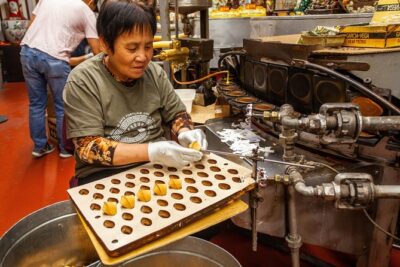
SF’s Chinatown: Tea & Dim Sum Food Tour – Includes full meal, 3hr
Read our review →
San Francisco North Beach & Chinatown Food Tour with 5 Tastings
Read our review →Browse the lists this tour appears in