
Reviewed · HISTORICAL TOURS
Castro District LGBTQ+ History Tour
The Castro’s story is written into its sidewalks, storefronts, theaters, and gathering places. This 90-minute walking tour connects those places to the people who shaped San Francisco’s LGBTQ movement, from José Sarria and Harvey Milk to the community members who fought through the darkest years of the AIDS crisis.
I like the clear focus on local queer history and the way the route includes real objects, not just broad political facts. I also like the small group limit of 30 people and the chance to hear guides such as Miguel and Eric, whose calm pace and strong storytelling help keep a serious subject easy to follow.
The main consideration is time. At about an hour and a half, the tour gives you a well-shaped introduction rather than a full study of the Castro, and the route is conducted in English only.
In This Review
- Key Points
- Starting at Harvey Milk Plaza at 3:00 pm
- José Sarria, the rainbow flag, and objects with a story
- The White Night Riots at Harvey Milk Plaza
- A gay bar that kept its windows open
- The first San Francisco store to hire openly gay workers
- The 1920s theater and the Castro’s visual character
- Guides, pacing, and group size
- Is $39 a fair price?
- Who should book this Castro walk?
- Should you book the Castro District LGBTQ History Tour?
- FAQ
- Where does the Castro District LGBTQ History Tour start?
- Where does the tour end?
- What time does the tour start?
- How long does the tour last?
- What language is the tour offered in?
- How much does the tour cost?
- What is included in the price?
- How many people can join the tour?
- Can I cancel for a full refund?
Key Points
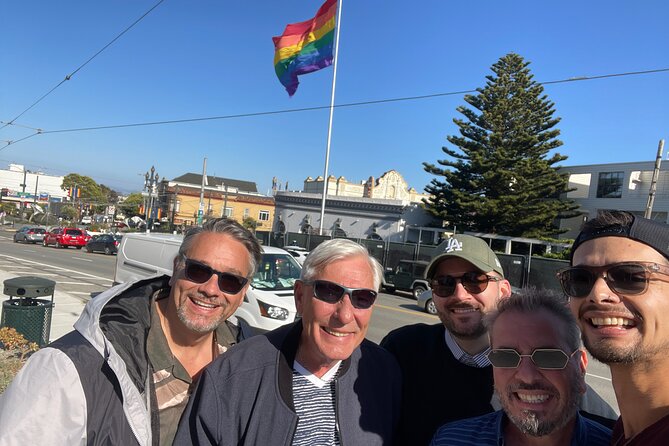
- Harvey Milk Plaza begins the story: Learn why this public gathering place became tied to the White Night Riots.
- José Sarria’s personal items add a human scale: See artifacts connected to a major figure in San Francisco queer history.
- The original rainbow flag is part of the experience: The tour includes a place associated with one of the city’s best-known symbols.
- Landmark businesses reveal daily life: Visit a gay bar more than 50 years old and the first San Francisco store to hire openly gay workers.
- The Castro Theatre adds architectural context: The route includes one of the city’s last palatial-style theaters from the 1920s.
- A practical 90-minute format: The tour starts at 3:00 pm, ends near 18th and Castro Streets, and costs $39 per person.
Starting at Harvey Milk Plaza at 3:00 pm
The tour begins at Harvey Milk Plaza, San Francisco, California 94114. That choice of meeting point is more than convenient. The plaza is a civic gathering place tied to the Castro’s political life and to the White Night Riots, a major event in the city’s LGBTQ history.
You can expect the guide to set the neighborhood in context here before leading you through nearby streets. That opening matters because the Castro is not just a collection of rainbow flags and nightlife venues. It is a place where public space became a platform for protest, organizing, mourning, and celebration.
The 3:00 pm start is useful if you want to pair the tour with other sightseeing earlier in the day. It also gives you a clear afternoon plan without taking up an entire day. I would arrive a little early, since the meeting point is specific and the tour begins at a fixed time.
The tour is offered in English, with a mobile ticket. It is near public transportation, which makes the starting point practical for visitors already moving around San Francisco without a car.
More history walks in San Francisco:
- Chinatown & North BeachLittle Italy: 7 Tastings & History
★ 5.0 · 1,070 reviews - North Beach & Little Italy Walking Tour: Food, History & Flavor
★ 5.0 · 1,044 reviews - Chinatown Walking Tour: Food, History & Flavor
★ 5.0 · 575 reviews
José Sarria, the rainbow flag, and objects with a story
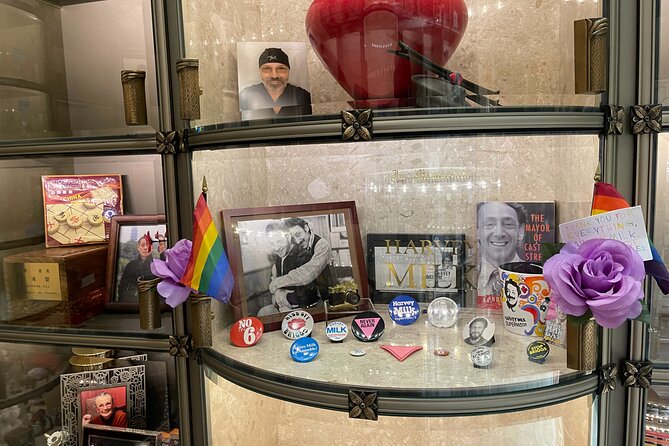
One of the most valuable parts of this experience is its use of physical history. The route includes the original rainbow flag, a piece of the HIV/AIDS Memorial Quilt, and many personal items belonging to José Sarria.
These objects give the tour more weight than a simple walk past famous addresses. A flag can become a symbol in a textbook, but seeing the original connects that symbol to the people and place that gave it meaning. The Memorial Quilt piece brings attention to the human cost of the AIDS crisis, while Sarria’s personal items help you meet an individual rather than only hearing about an era.
José Sarria is an important figure in San Francisco queer history, and the inclusion of his belongings gives the guide a chance to explain his role through personal details. I appreciate this kind of stop because it can make a large social movement easier to understand. You are not only hearing dates and names. You are seeing reminders of people who organized, performed, worked, loved, and pushed back.
The subject matter can be emotional. The tour deals with discrimination, political conflict, and the AIDS crisis, so it is best suited to you if you want a serious historical experience alongside the neighborhood’s more cheerful public image.
The White Night Riots at Harvey Milk Plaza
Harvey Milk Plaza is also the setting for one of the tour’s key historical chapters: the White Night Riots. The guide explains why this gathering place became connected to the community response following the trial and conviction of Dan White for the killings of Harvey Milk and Mayor George Moscone.
The provided tour details specifically identify the plaza as the gathering place of the gay community that resulted in the riots. That makes this stop important not only for learning about Harvey Milk, but for understanding the anger and grief that could turn a public gathering into a confrontation.
I like that the tour includes this difficult event rather than presenting the Castro as a tidy success story. LGBTQ history in San Francisco includes political gains, but it also includes fear, loss, conflict, and frustration. A good guide needs to handle those shifts in tone, and the strongest guide feedback here points to Miguel and Eric as engaging, accurate, and passionate presenters.
You can ask questions during the tour, and Miguel in particular has been described as answering them concisely. That is useful on a 90-minute route, since a guide who can explain a point clearly without losing the group’s pace helps you get more from the limited time.
A gay bar that kept its windows open
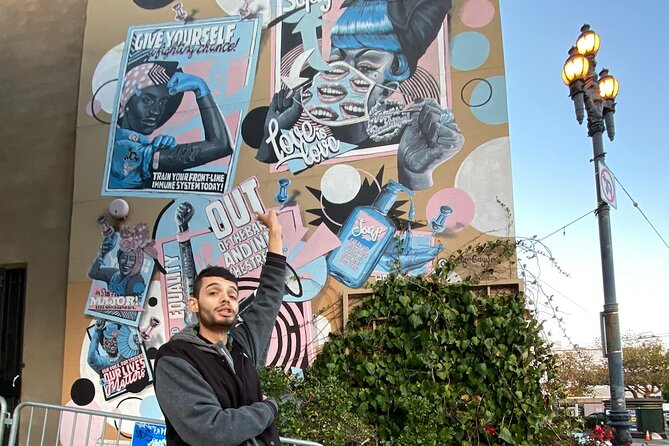
The route includes an iconic gay bar that has operated for more than 50 years. Its most revealing detail is architectural and social: when it opened, it did not block out its windows, even though that was customary for gay bars at the time.
That detail says a great deal in very few words. Covered windows offered privacy and protection, but they also kept queer life hidden from public view. Leaving the windows open was a visible choice, and the guide can use the building to explain how everyday businesses reflected the changing mood of the Castro.
This is the sort of stop I value on a walking tour. You do not need a long lecture to understand the point. A storefront can show how much social conditions have changed, while also reminding you that being visible was once a risk.
The experience does not say that you will enter the bar or receive a drink, so you should think of this as an exterior history stop unless the guide tells you otherwise. The focus is the building and what its windows represented.
A few more San Francisco tours worth comparing
- San Francisco LGBTQ Walking Tour with Local Guide
★ 5.0 · 600 reviews - Castro District LGBTQ+ Historic Tour
★ 5.0 · 9 reviews - San Francisco: Castro District LGBTQ+ History Tour
★ 5.0 · 9 reviews - San Francisco: Castro & LGBTQ Private Walking Tour
★ 4.0 · 4 reviews
The first San Francisco store to hire openly gay workers
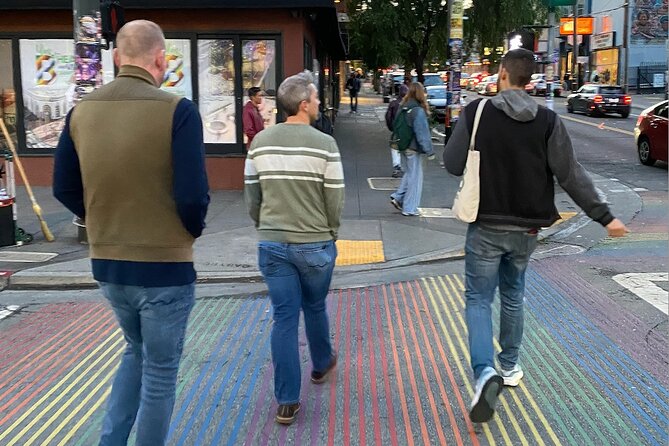
Another stop marks the first store in San Francisco to hire openly gay workers. This may sound less dramatic than a plaza tied to riots or a memorial connected to AIDS, but it adds an essential part of the story: work.
Public acceptance is often measured through marches and elections, yet employment is where equality affects daily life. A workplace that hired openly gay employees challenged the idea that queer people had to hide to earn a living. The guide can use this location to connect political change with ordinary routines such as applying for a job, serving customers, and being seen in public.
I like the balance created by this stop. It keeps the tour from focusing only on major leaders. Harvey Milk and José Sarria matter, but so do business owners and workers who helped make the Castro a functioning community.
The provided information does not specify the store’s current business status or whether you will go inside. Plan to view it as part of the walking route and listen to the historical explanation at the location.
The 1920s theater and the Castro’s visual character
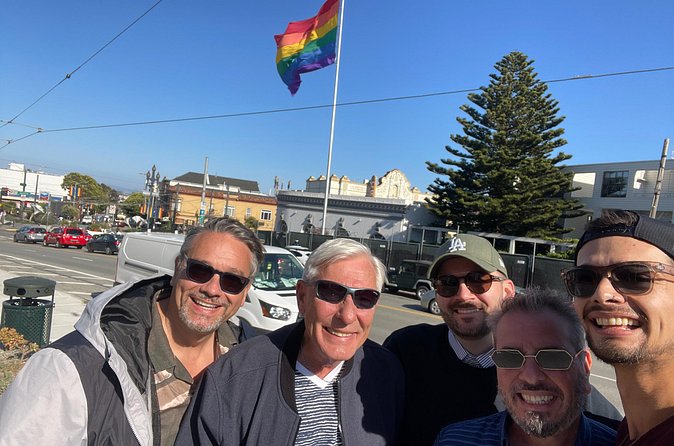
The tour also visits one of San Francisco’s last palatial-style theaters from the 1920s. This stop adds architectural context to a route otherwise centered on social and political history.
A theater of that style helps explain why the Castro can feel visually distinct even when you are focused on its LGBTQ story. The building is not simply decoration. It shows the age and scale of the neighborhood’s public life, while its place on this route connects entertainment and community identity.
The tour information does not promise admission or a film screening, so you should expect to see the theater as a landmark rather than attend a show. That is still worthwhile if you want the walk to include more than plaques and political sites.
The theater stop also gives the tour a change of pace. After discussing the White Night Riots, employment, and the AIDS crisis, architecture and popular entertainment provide a less heavy part of the neighborhood’s story.
Guides, pacing, and group size
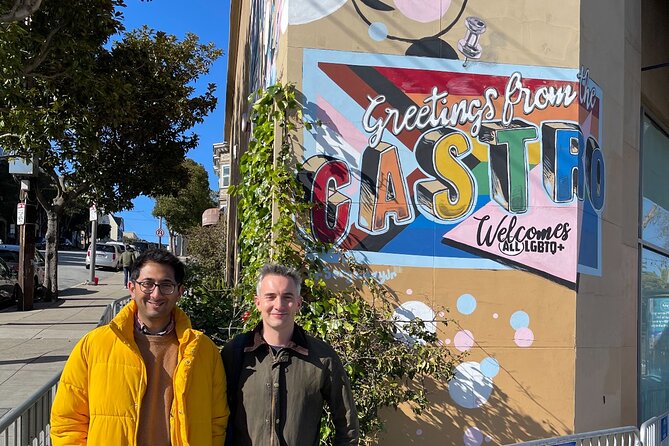
The guide can make or break a short history tour. Names associated with this experience include Miguel and Eric. Miguel is noted for maintaining a comfortable pace, holding attention, and handling questions with concise answers. Eric is described as passionate and especially effective at bringing the Castro’s past to life.
Those details help you know what kind of presentation to expect: spoken history, personal engagement, and room for questions rather than a silent walk between landmarks. The route covers many important corners in a compact period, so a clear guide matters.
The maximum group size is 30 people. That is not an intimate private walk, but it is also not an enormous crowd. Your position near the guide may affect how easily you hear, so staying reasonably close is sensible, especially at busy street corners.
Most people can participate, and service animals are allowed. No special physical requirements are provided, so you should use your own judgment about a 90-minute city walk.
Is $39 a fair price?
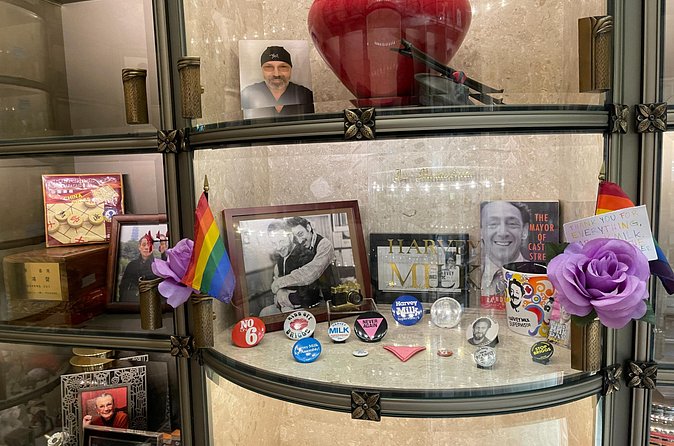
At $39 per person, this tour sits in the reasonable range for a guided city walk, especially if you want a focused subject rather than a general San Francisco overview. The value comes from the guide’s interpretation and from access to specific historical touchpoints, including the original rainbow flag, a Memorial Quilt piece, José Sarria’s personal items, Harvey Milk Plaza, and several landmark businesses.
I would not book it expecting a long, all-day examination of LGBTQ history. Ninety minutes is enough to introduce the Castro’s key people and places, but not enough to cover every period, organization, or site in depth. If you already know the neighborhood well, you may want a longer or more specialized experience.
For a first visit, though, the price makes sense. You get a structured route, a guide who can connect separate locations, and a clearer understanding of why the Castro matters. You can then spend more time on your own at the places that interest you most.
The tour is free to cancel up to 24 hours before the 3:00 pm start time for a full refund. Cancellations or changes made within 24 hours are not refunded or accepted, so leave yourself enough notice if your plans may shift.
Who should book this Castro walk?
I would choose this tour if you want an introduction to San Francisco LGBTQ history that stays rooted in one neighborhood. It suits first-time visitors, anyone interested in civil rights history, and people who prefer learning through actual streets and buildings rather than a museum alone.
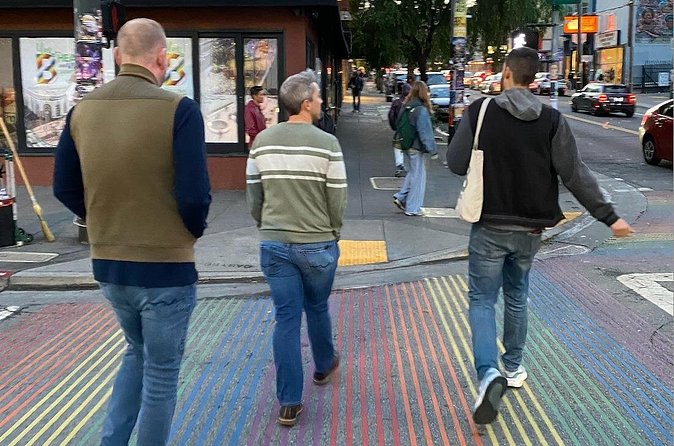
It is also a good fit if you want a tour with a clear time limit. The 3:00 pm start and 90-minute duration leave room for other plans, while the endpoint at 18th Street and Castro Street puts you near the heart of the district.
You may want to skip it if you are looking for nightlife, a food tour, or a visit inside each landmark. The experience is a guided history walk. Its strength is explanation, not entertainment in the usual tourist sense.
Should you book the Castro District LGBTQ History Tour?
I would book it if you want the Castro explained through its people, protests, businesses, symbols, and buildings. The route brings together José Sarria’s personal items, the original rainbow flag, a piece of the HIV/AIDS Memorial Quilt, Harvey Milk Plaza, a long-running gay bar, an openly inclusive workplace, and a grand 1920s theater.
The strongest reason to go is the guide. Miguel and Eric are both associated with an engaging, well-paced approach, and the tour’s subject calls for someone who can handle both pride and pain with care. At $39, it offers solid value for a focused introduction.
Book it at least a day ahead if your schedule is fixed, since the experience is often reserved about eight days in advance. If you have only one afternoon in the Castro and want to understand what you are seeing, this is a sensible choice.
FAQ
Where does the Castro District LGBTQ History Tour start?
The tour starts at Harvey Milk Plaza, San Francisco, CA 94114, USA.
Where does the tour end?
The tour ends at 18th Street and Castro Street, San Francisco, CA 94114.
What time does the tour start?
The scheduled start time is 3:00 pm.
How long does the tour last?
The tour lasts approximately 1 hour and 30 minutes.
What language is the tour offered in?
The tour is offered in English.
How much does the tour cost?
The price is $39 per person.
What is included in the price?
A guided tour is included.
How many people can join the tour?
The activity has a maximum of 30 participants.
Can I cancel for a full refund?
Yes. You can cancel at least 24 hours before the start time for a full refund. Cancellations or changes made less than 24 hours before the start time are not refunded or accepted.
Recently added around San Francisco
- Guided Private Wine Tour to Napa and Sonoma Wine Country★ 5.0 · 3 reviews
- San Francisco: Muir Woods Giant Redwoods & City Private Tour★ 5.0 · 3 reviews
- Napa or Sonoma Private Wine Tour from San Francisco★ 5.0 · 3 reviews
- San Francisco Chinatown Food and Culture Tour★ 5.0 · 3 reviews
- San Francisco City Half-Day Private Custom Tour★ 5.0 · 3 reviews
- SFO Pick-Up with City Sightseeing Tour★ 5.0 · 3 reviews
- 6-Hour Luxury Napa Wine Tasting Tour with Route Planning★ 5.0 · 3 reviews
- Muir Woods, Sausalito and Ferry back to Fisherman’s Wharf★ 4.7 · 3 reviews
Historical Tours, compared.
Chinatown & North BeachLittle Italy: 7 Tastings & History
Read our review →
North Beach & Little Italy Walking Tour: Food, History & Flavor
Read our review →
San Francisco Whiskey Cocktail Class: Views and City History
Read our review →
Chinatown Food & History Walking Tour – Small Group
Read our review →
North Beach Food & History Walking Tour – Small Group
Read our review →
Delicious Fun Food and History Tour of North Beach and Beyond!
Read our review →Browse the lists this tour appears in