
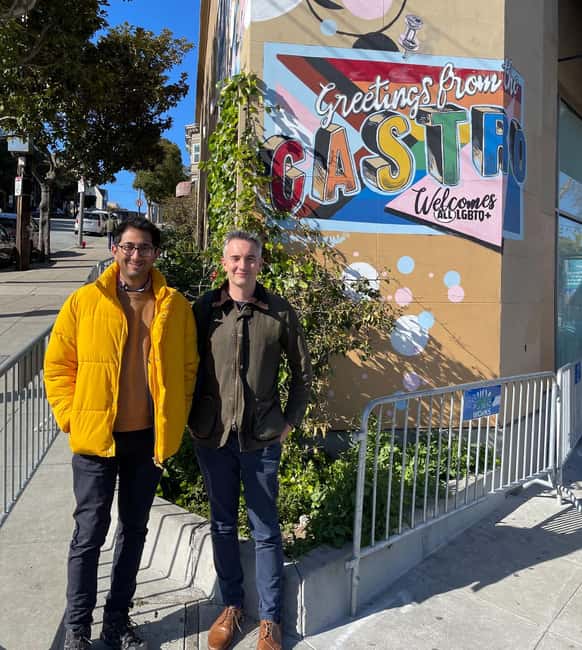
Reviewed · HISTORICAL TOURS
San Francisco: Castro District LGBTQ+ History Tour
The most striking part of this Castro tour is the guide himself. Eric is a sixth generation San Franciscan, a historian, and a POC queer organizer and activist who personally witnessed some of the events he explains. That gives the walk a local voice rather than a textbook feel. Harvey Milk’s former camera shop, campaign headquarters, and home bring the story close to street level.
I like the clear focus on LGBTQ+ history, and I like that the tour connects local events to larger forces such as the US military and the Nazi persecution of gay people. The 90 minute length and $39 price also make it an easy addition to a San Francisco day. The main consideration is that the subject matter includes persecution, violence, and political conflict, so this is not a light sightseeing stroll.
In This Review
- Key points to know before you book
- Why this Castro walk is more than a neighborhood tour
- Harvey Milk Plaza gives you the right starting point
- The military story behind San Francisco’s queer community
- The Pink Triangle Memorial brings the story to Europe
- Hibernia Beach and the Castro LGBTQ+ Memorial
- Jane Warner Plaza and the role of local public service
- White Night Riots and the 1979 gay rights ordinance
- What the guide’s style adds
- Is $39 a fair price for 90 minutes?
- Practical details for a smoother walk
- Who should book the Castro LGBTQ+ History Tour?
- My take: book it for context, not just landmarks
- FAQ
- How long is the Castro LGBTQ+ History Tour?
- How much does the tour cost?
- Where does the tour meet?
- Who leads the tour?
- What language is the tour conducted in?
- Is the tour wheelchair accessible?
- What should I bring?
- Can I cancel for a full refund?
- Can I reserve now and pay later?
Key points to know before you book
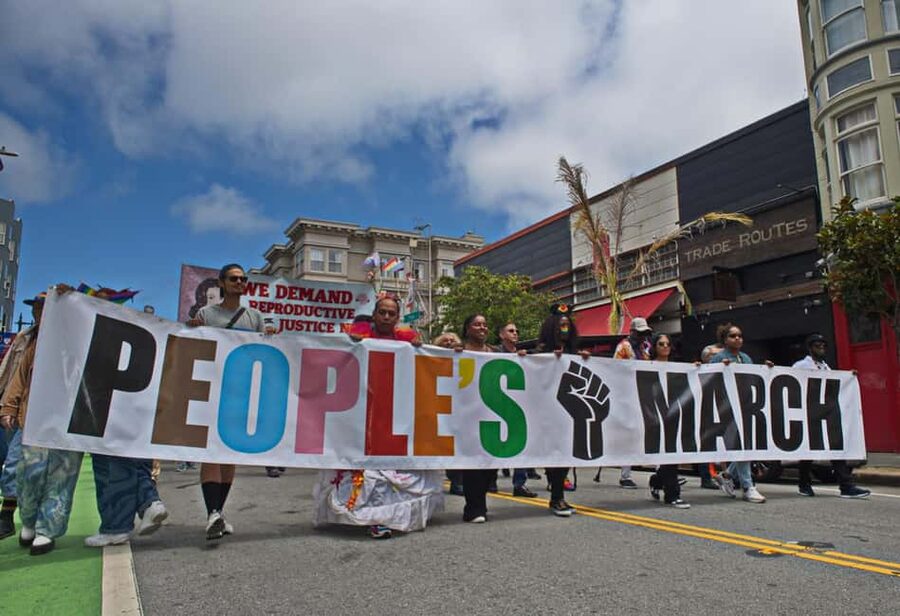
- Eric brings a personal San Francisco connection: He is a sixth generation native, historian, POC queer organizer, and activist.
- Harvey Milk’s Castro locations are part of the route: You visit his former camera shop, campaign headquarters, and residence.
- The Pink Triangle Memorial adds European context: The stop honors gay prisoners killed under the Nazi regime from 1933 to 1945.
- The tour covers local political conflict: You discuss the White Night Riots and the landmark gay rights ordinance of 1979.
- It is a focused 90 minute walk: Comfortable shoes matter, and the tour is wheelchair accessible.
- The booking terms are flexible: You can cancel up to 24 hours ahead for a full refund or reserve now and pay later.
Why this Castro walk is more than a neighborhood tour
The Castro is easy to visit on your own. You can walk along Castro Street, see rainbow flags, pause at Harvey Milk Plaza, and take in the district’s famous public spaces. What is harder is understanding how military policy, migration, activism, grief, and local politics shaped the neighborhood.
That is the purpose of this tour. It treats the Castro as a place where personal lives and public decisions meet. You are not simply being shown notable buildings. You are given a way to connect those locations to the people and struggles behind them.
Eric’s background matters here. As a sixth generation San Francisco native, he offers a personal tie to the city that few guides can match. His work as a POC queer organizer and activist also gives the tour a clear social and political viewpoint. That perspective will suit you if you want a direct discussion of power and community, not a softened version of the past.
The tone is also helped by the small-scale nature of the experience. The supplied details do not specify a maximum group size, so you should not book expecting a private tour. Still, the guide has shown care for individual participants. On one particularly crowded Halloween afternoon, Eric checked in with his group to make sure everyone could still hear him around construction and a night fair.
That is a useful point for you. The Castro can become noisy and crowded during events. A guide who watches the group and adjusts his delivery can make a real difference.
More history walks in San Francisco:
- Chinatown & North BeachLittle Italy: 7 Tastings & History
★ 5.0 · 1,070 reviews - North Beach & Little Italy Walking Tour: Food, History & Flavor
★ 5.0 · 1,044 reviews - Chinatown Walking Tour: Food, History & Flavor
★ 5.0 · 575 reviews
Harvey Milk Plaza gives you the right starting point
The tour begins at Harvey Milk Plaza, next to SoulCycle at 400 Castro Street. This is a fitting meeting point because Harvey Milk’s work is closely tied to the neighborhood and to the wider push for LGBTQ+ rights in San Francisco.
Starting here gives you an immediate sense of place. You are not beginning with a general city introduction, then waiting for the subject to appear. The focus is clear from the first minute: the Castro as a center of organizing, visibility, and political change.
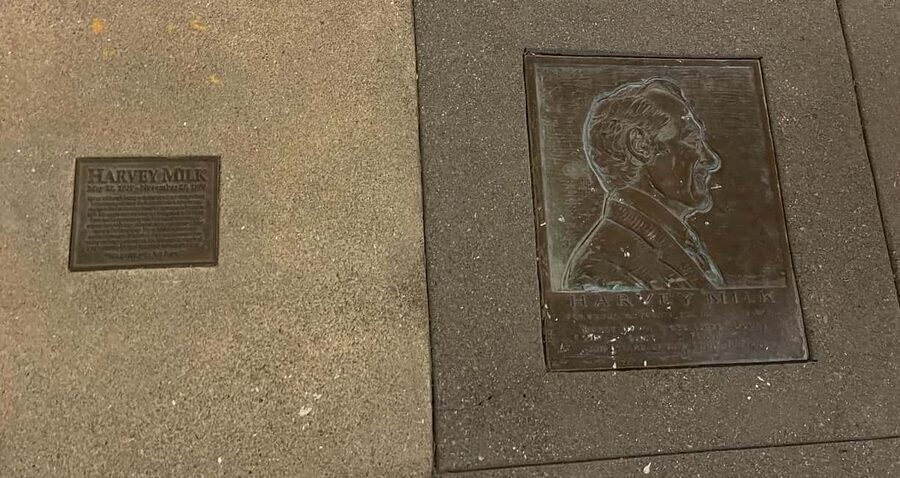
From the plaza, the tour includes Harvey Milk’s former camera shop, campaign headquarters, and residence. These locations help turn a well-known public figure into a local person with a workplace, a home, and a campaign base. I find this kind of stop more useful than a simple plaque or photo opportunity because it gives the story several physical anchors.
The former camera shop is especially important to the structure of the tour. It links Milk’s public life with the everyday setting of the Castro. The campaign headquarters then shows how neighborhood organizing moved into formal politics, while the residence adds a private dimension to a story often told through speeches and elections.
You should not expect entry into every site. The experience is described as a guided walking tour of these locations, not an interior museum visit. The value comes from the explanation and the connections between the stops.
The military story behind San Francisco’s queer community
One of the tour’s more unusual themes is the role of the US military in the formation of what has been called the gayest city on Earth. This is a useful angle because it moves beyond the familiar story of famous activists and election campaigns.
The military helped shape San Francisco’s queer population in ways that had lasting effects on the city. The tour unpacks that connection rather than treating the Castro as if it appeared fully formed. You get a look at how national institutions and local geography affected who arrived, who stayed, and how a community grew.
This part may appeal most to you if you already know a little about Harvey Milk or the Castro and want a wider frame. It explains that LGBTQ+ history is not only about marches, bars, and political offices. It also involves military rules, displacement, and the choices people made after being pushed out of other places.
Because the tour lasts 90 minutes, this topic will be presented as part of a larger route rather than as a full academic lecture. That is a strength for most visitors. You get a focused introduction without spending half a day on one narrow subject.
The Pink Triangle Memorial brings the story to Europe
The Pink Triangle Memorial is one of the tour’s most serious stops. It honors gay prisoners killed during the Nazi regime between 1933 and 1945. The memorial was the first of its kind to honor those victims.
This stop broadens the walk beyond San Francisco. It shows how LGBTQ+ history in the Castro connects to events in Europe and to the dangers of government persecution. The memorial also gives the tour a quiet point of reflection amid the more political and neighborhood-centered stops.
I appreciate its inclusion because it prevents the tour from becoming only a celebration of local success. The Castro’s history includes progress, but it also includes fear, loss, and the need to remember people who were targeted by the state.
You should come prepared for serious material here. This is not a casual photo stop. If you prefer tours that keep difficult subjects brief, the memorial and the discussion around it may feel heavy. If you want a fuller account of LGBTQ+ history, it is one of the most worthwhile parts of the route.
A few more San Francisco tours worth comparing
- San Francisco LGBTQ Walking Tour with Local Guide
★ 5.0 · 600 reviews - Castro District LGBTQ+ Historic Tour
★ 5.0 · 9 reviews - Castro District LGBTQ+ History Tour
★ 5.0 · 5 reviews - San Francisco: Castro & LGBTQ Private Walking Tour
★ 4.0 · 4 reviews
Hibernia Beach and the Castro LGBTQ+ Memorial
Hibernia Beach, also known as the Castro LGBTQ+ Memorial, offers another chance to consider how public space can carry memory. The name connects the location with the wider neighborhood, while its memorial role gives the stop a clear focus on LGBTQ+ lives and loss.
A stop like this works best when your guide explains what you are seeing and why it matters. On your own, you might pass through without knowing the story behind the place. With Eric, the location becomes part of a larger conversation about belonging, remembrance, and public recognition.
The tour’s emphasis on sites like Hibernia Beach also keeps it grounded in the neighborhood. You are not moving from one famous name to another without pause. Instead, the route gives space to locations that help explain how the Castro became a community as well as a political symbol.
The available details do not provide a full description of the memorial’s design or how long the group stays there. Plan to listen rather than expect a long stop with extensive displays.
Jane Warner Plaza and the role of local public service
Jane Warner Plaza is named for the first openly lesbian police officer on the San Anselmo police force. That detail adds a different kind of story to the tour. The Castro’s history is not only about activists who held office or led major campaigns. It also includes people who entered public service while openly claiming their identity.
The plaza gives Eric a way to discuss visibility within civic institutions. A police officer’s public role carries a different set of pressures and expectations from those faced by a campaign organizer or shop owner. That contrast makes the route more varied.
I like this stop because it widens the idea of representation. You see how LGBTQ+ history can be tied to policing, public trust, and local government, not only to protest movements. It also gives the tour a useful human scale, since a plaza named for one person can prompt questions about what public recognition means.
As with the other outdoor stops, the experience depends on the guide’s storytelling. The information provided does not promise a formal exhibit or indoor visit at the plaza.
White Night Riots and the 1979 gay rights ordinance
The tour also covers the White Night Riots and San Francisco’s landmark gay rights ordinance of 1979. These subjects show the political tension beneath the Castro’s public image.
The ordinance represents a major step in legal protection and civic recognition. The White Night Riots, by contrast, reveal anger and unrest within the community after a deeply painful political and legal episode. Discussing both gives you a more honest picture of change. Rights were not granted in a smooth, steady line.
This is where Eric’s background as an organizer and activist becomes particularly relevant. The tour does not treat political history as a list of dates. It connects laws and riots to people, neighborhoods, and the pressure placed on communities seeking basic dignity and safety.
The material may be especially useful if you have seen the Castro presented only as a cheerful nightlife district. The walk shows the political work beneath that public image. It also helps explain why certain streets, plazas, and buildings matter beyond their appearance today.
What the guide’s style adds
The strongest praise attached to this experience concerns Eric’s teaching style and personal manner. He is described as passionate about social politics, easy to understand, respectful, kind, and willing to give time to questions.
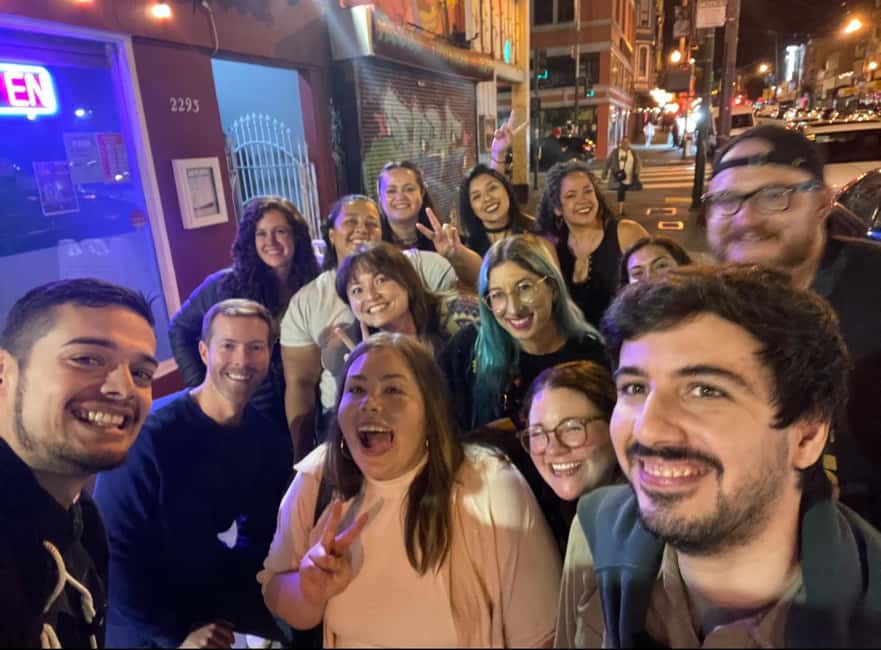
One participant took the tour alone and still received a full afternoon of attention and conversation. That suggests the experience can work well for solo visitors, not only couples or groups. Another participant attended during a hectic Halloween setting, when construction and a night fair made hearing difficult, and Eric checked in throughout the walk.
Those details tell you more than a generic claim that the guide is good. They suggest an experience built around conversation and awareness of the group. The tour may feel personal even when the streets are busy.
The guide’s authenticity is another major draw. He is not presented simply as someone who has studied the Castro from a distance. He is a local historian, a POC queer organizer, an activist, and someone who personally witnessed many of the events discussed. That combination gives the tour a viewpoint rooted in both research and lived experience.
You should still remember that personal perspective is part of the value, and also part of the character of the tour. If you want a neutral, audio-guide style presentation with no political framing, this may not be your best match. If you value an engaged guide who explains why events still matter, it should suit you well.
Is $39 a fair price for 90 minutes?
At $39 per person, this is not the cheapest way to walk through the Castro, since you can explore the streets and public spaces without paying. The question is what you want from the visit.
For the price, you receive a focused 90 minute guided walk led by a local historian with a personal connection to the subject. You also get a route that brings together Harvey Milk sites, the Pink Triangle Memorial, Hibernia Beach, Jane Warner Plaza, the GLBT History Museum, military history, the White Night Riots, and the 1979 ordinance.
That range gives the tour good value if you would otherwise spend hours trying to work out what you are looking at. It also saves you from reading separate sources on Harvey Milk, Nazi persecution, local government, and San Francisco activism before your visit.
The value is lower if you only want photographs or a quick introduction to Castro Street. The tour is about interpretation, not sightseeing alone. You are paying for context, a guide’s time, and access to a personal account of the city.
A useful strategy is to take the tour early in your time in the Castro. The route can help you understand later visits to the neighborhood, including a return to the GLBT History Museum or to Harvey Milk’s former sites.
Practical details for a smoother walk
The meeting point is Harvey Milk Plaza, next to SoulCycle, at 400 Castro Street. Check the starting time when you book, since availability can vary.
Wear comfortable shoes. The activity lasts 90 minutes and takes place as a walking tour through the neighborhood. No special equipment is listed, and the tour is wheelchair accessible.
The tour is conducted in English and includes a live guide. Gratuities are not included, so plan for that extra cost if you choose to tip.
The booking terms are friendly for changing plans. You can cancel up to 24 hours in advance for a full refund, and you can reserve now while paying later. Those options help if your San Francisco schedule is still shifting.
Who should book the Castro LGBTQ+ History Tour?
I would choose this tour if you want the Castro explained through LGBTQ+ history rather than treated as a quick photo stop. It is a strong fit for visitors interested in activism, local politics, civil rights, queer history, and the personal stories behind public landmarks.
It also suits solo visitors. The guide has shown that he can give time and attention to one person, not just a large group. Couples and friends who want serious conversation should also find the format useful.
You may want to skip it if your main goal is nightlife, shopping, or a general orientation to San Francisco. The subject includes persecution, grief, and political conflict, so you should expect a thoughtful and sometimes difficult walk rather than a purely cheerful outing.
My take: book it for context, not just landmarks
I recommend this tour if you want to understand why the Castro matters. Eric’s local roots, activism, and personal connection to San Francisco give the walk a voice that a self-guided route cannot easily match.
The best reason to book is the combination of personal storytelling and serious historical range. You move from Harvey Milk’s everyday spaces to a memorial for gay prisoners killed under the Nazi regime, then to local political struggles and public spaces named for LGBTQ+ figures.
At $39, it is a fair buy for a focused introduction. Book it if you want the Castro to mean more to you after you leave than it did when you arrived.
FAQ
How long is the Castro LGBTQ+ History Tour?
The tour lasts 90 minutes.
How much does the tour cost?
The listed price is $39 per person.
Where does the tour meet?
You meet at Harvey Milk Plaza, next to SoulCycle, at 400 Castro Street.
Who leads the tour?
The guide is Eric. He is a sixth generation San Francisco native, historian, POC queer organizer, and activist.
What language is the tour conducted in?
The tour is conducted in English.
Is the tour wheelchair accessible?
Yes, the activity is wheelchair accessible.
What should I bring?
Bring comfortable shoes for the walking tour.
Can I cancel for a full refund?
Yes. You can cancel up to 24 hours in advance for a full refund.
Can I reserve now and pay later?
Yes. The reserve now and pay later option lets you hold your place without paying at the time of booking.
Recently added around San Francisco
- Guided Private Wine Tour to Napa and Sonoma Wine Country★ 5.0 · 3 reviews
- San Francisco: Muir Woods Giant Redwoods & City Private Tour★ 5.0 · 3 reviews
- San Francisco Chinatown Food and Culture Tour★ 5.0 · 3 reviews
- San Francisco City Half-Day Private Custom Tour★ 5.0 · 3 reviews
- Napa or Sonoma Private Wine Tour from San Francisco★ 5.0 · 3 reviews
- SFO Pick-Up with City Sightseeing Tour★ 5.0 · 3 reviews
- 6-Hour Luxury Napa Wine Tasting Tour with Route Planning★ 5.0 · 3 reviews
- Muir Woods, Sausalito and Ferry back to Fisherman’s Wharf★ 4.7 · 3 reviews
Historical Tours, compared.
Chinatown & North BeachLittle Italy: 7 Tastings & History
Read our review →
North Beach & Little Italy Walking Tour: Food, History & Flavor
Read our review →
San Francisco Whiskey Cocktail Class: Views and City History
Read our review →
Chinatown Food & History Walking Tour – Small Group
Read our review →
North Beach Food & History Walking Tour – Small Group
Read our review →
Delicious Fun Food and History Tour of North Beach and Beyond!
Read our review →Browse the lists this tour appears in