
Reviewed · HISTORICAL TOURS
Castro District LGBTQ+ Historic Tour
The Castro is compact, but few San Francisco neighborhoods carry so much meaning in so few blocks. This 90-minute walk connects Harvey Milk’s former neighborhood, a grand 1920s movie palace, the original rainbow flag, and bars that helped shape the area as America’s first gayborhood.
I like the small group limit of 10, which gives Eric Curry room to explain the neighborhood instead of rushing through a script. I also like the way the tour links ordinary storefronts and local businesses to larger events in LGBTQ+ history.
The main drawback is that several stops are viewed from outside, including the GLBT Historical Society Museum and Castro Theatre. At $39, the tour is a good value for guided context, but you should not expect museum admission or a full theater visit.
In This Review
- Key points to know before booking
- Why this short Castro walk carries so much weight
- Starting at Harvey Milk Plaza
- Walking the Castro’s everyday streets
- The Castro Theatre from the outside
- The GLBT Historical Society Museum and the original rainbow flag
- A quiet pause at Pink Triangles Memorial Park
- Twin Peaks Tavern and the final stretch
- What you get for $39
- Who will enjoy this experience most
- Practical details that affect your choice
- Should you book the Castro District LGBTQ+ Historic Tour?
- FAQ
- How long is the Castro District LGBTQ+ Historic Tour?
- What time does the tour start?
- Where does the tour begin and end?
- Is admission to the Castro Theatre included?
- Does the tour enter the GLBT Historical Society Museum?
- How many people can join the tour?
Key points to know before booking
- Harvey Milk Plaza begins the walk: You start at one of the Castro’s most important public spaces and hear about Milk’s life and political work.
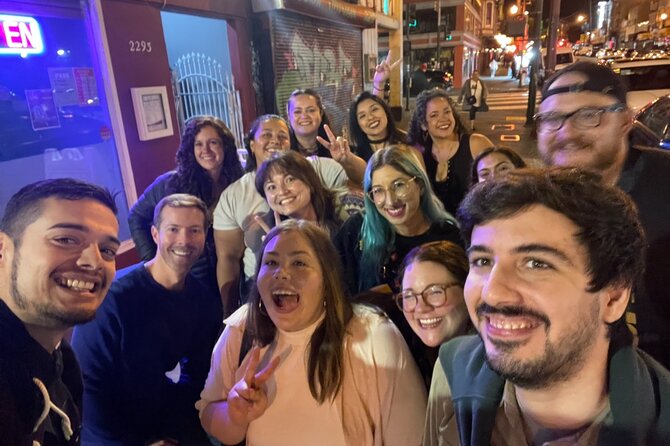
- Eric Curry leads the tour: His style is warm, lively, and focused on making the history easy to follow.
- The original rainbow flag is discussed from outside: The tour explains the museum’s role, but admission is not included.
- Pink Triangles Memorial Park adds a solemn pause: This stop honors approximately 15,000 gay and lesbian people killed under the Nazi regime from 1933 to 1945.
- Twin Peaks Tavern connects history with daily life: One of the first bars on the strip helped establish the Castro as a major LGBTQ+ center.
- The walk ends at The Mix: You finish at a popular local bar, with time to continue your evening on 18th Street.
Why this short Castro walk carries so much weight
San Francisco’s Castro District is often presented as a fun place for bars, restaurants, rainbow flags, and nightlife. Those things are part of the neighborhood, but they are only the surface.
This tour gives you the stories beneath the storefronts. You learn how the area developed, how local businesses helped form a lasting community, and how military policy played a role in bringing LGBTQ+ people to San Francisco. The guide also covers changes in language, including why GLBT became LGBT, and explains the meaning behind the colors of the rainbow flag.
That mix matters. You are not simply stopping at famous names. You are being shown how a neighborhood becomes a center of political action, social life, and public memory.
I especially like the tour’s size and length. Ninety minutes is enough to give the district shape without taking over your whole afternoon. With a maximum of 10 people, you should have a better chance to hear the guide clearly and ask a question than on a large bus or crowded group walk.
The tour begins at 3:00 pm, a useful time for fitting it into a day of sightseeing. It ends at The Mix, so you can stay in the Castro for a drink, a meal, or more independent exploring.
More history walks in San Francisco:
- Chinatown & North BeachLittle Italy: 7 Tastings & History
★ 5.0 · 1,070 reviews - North Beach & Little Italy Walking Tour: Food, History & Flavor
★ 5.0 · 1,044 reviews - Chinatown Walking Tour: Food, History & Flavor
★ 5.0 · 575 reviews
Starting at Harvey Milk Plaza
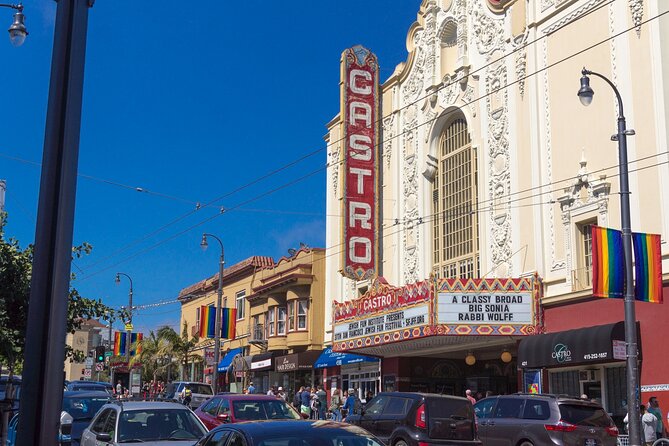
Harvey Milk Plaza is the right place to begin. Milk lived and worked in the Castro, where he owned a camera shop before becoming the first openly gay elected official in North America.
The plaza gives the guide a natural starting point for explaining Milk’s role and the political changes connected to the neighborhood. You also begin with a clear sense that the Castro is not just a district with LGBTQ+ businesses. It is a place where public life and political organizing took root together.
Eric Curry is named as the guide for this experience. The available feedback points to a friendly, energetic approach, with strong attention to facts and a talent for keeping the walk engaging from the start. That is useful here because the subject covers painful events as well as moments of celebration.
Do not expect Harvey Milk Plaza to be a long stop filled with formal exhibits. Its value comes from the explanation you receive on site and from how the rest of the walk builds on that opening.
Walking the Castro’s everyday streets
The first section of the tour spends about 30 minutes moving through the Castro District. Along the way, you pass shops, restaurants, and bars while learning why certain local businesses mattered.
This is one of the strongest parts of the experience. A neighborhood’s past is easier to understand when it is attached to real buildings and active businesses, rather than presented as a list of dates. The tour shows how the Castro’s commercial life helped create a gathering place and strengthen its identity as a gay Mecca.
The guide also discusses the role of the US military in forming the neighborhood. The supplied details do not spell out every part of that story, so you should think of this as a guided introduction rather than a full academic lecture. Still, it adds useful context that you might miss while walking the same streets alone.
The route is a walking tour through an urban district, and a moderate level of physical fitness is recommended. The distance is not presented as strenuous, but you should be comfortable standing and walking for roughly an hour and a half.
Service animals are allowed, and the meeting area is near public transportation. That makes the tour fairly easy to add to a San Francisco day without arranging a car.
The Castro Theatre from the outside
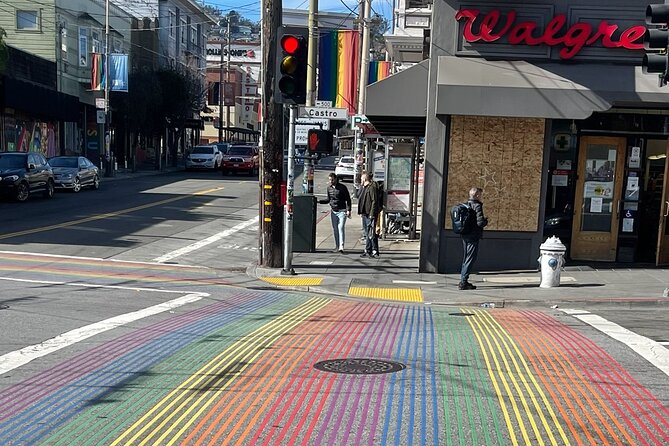
The Castro Theatre receives about 10 minutes. This historic movie palace dates to the 1920s and is one of the last of its kind.
Even a short exterior visit can help you read the street differently. The building is not just a photo stop. It represents the grand entertainment spaces that once anchored city neighborhoods, and its connection to the Castro adds another layer to the district’s cultural identity.
Admission is not included, and the tour does not take you inside. That limitation is important if the theater is your main reason for booking. You will see and discuss the building, but this is not a theater tour or a screening experience.
For most people, the stop works best as part of the larger story. The guide places the theater alongside the shops, bars, and community sites that made the Castro a recognizable center of LGBTQ+ life.
A few more San Francisco tours worth comparing
- San Francisco LGBTQ Walking Tour with Local Guide
★ 5.0 · 600 reviews - San Francisco: Castro District LGBTQ+ History Tour
★ 5.0 · 9 reviews - Castro District LGBTQ+ History Tour
★ 5.0 · 5 reviews - San Francisco: Castro & LGBTQ Private Walking Tour
★ 4.0 · 4 reviews
The GLBT Historical Society Museum and the original rainbow flag
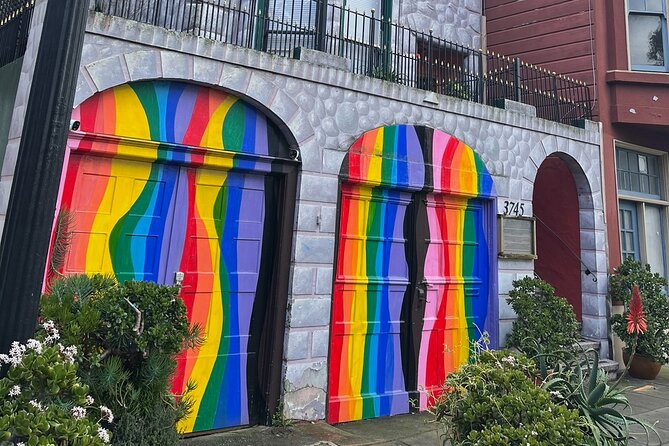
The walk then pauses for about 10 minutes near the GLBT Historical Society Museum. The group does not enter, and admission is not included.
The museum itself is significant to the neighborhood’s story, and the tour points out that it is home to the original rainbow flag. That detail gives the stop real weight. The rainbow flag is widely recognized, but seeing where an original flag is preserved connects a familiar symbol to the people and place that gave it public meaning.
The guide also addresses the colors of the flag. If you have wondered what the different colors represent, this is one of the questions the tour is designed to answer.
Because you remain outside, you should treat this as an orientation stop. If you want to spend time with museum exhibits, plan a separate visit and check admission details independently. The walking tour gives you context, but it does not replace the museum.
A quiet pause at Pink Triangles Memorial Park
Pink Triangles Memorial Park is the most solemn stop. The group spends about 20 minutes here, and admission is free.
The monument honors approximately 15,000 gay and lesbian people killed under the fascist Nazi regime between 1933 and 1945. The pink triangle has a difficult history, and the memorial gives the tour a place to consider persecution, memory, and the importance of public recognition.
This stop changes the pace. Much of the Castro walk involves businesses, politics, and community life. Here, the subject turns toward loss. A good guide needs to handle that shift with care, and the feedback about Eric Curry repeatedly points to passion and a strong connection to LGBTQ+ and other communities facing discrimination.
The memorial is also valuable because it prevents the tour from becoming a simple celebration of progress. The Castro’s story includes victories, but it also includes violence, exclusion, and the need to remember people who were targeted because of who they were.
Twin Peaks Tavern and the final stretch
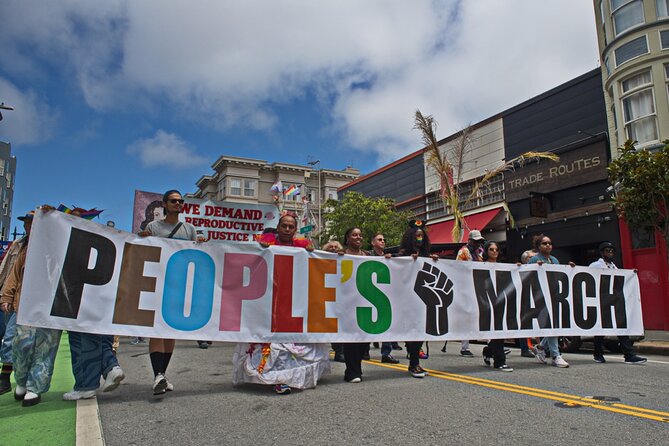
Twin Peaks Tavern receives about 20 minutes. It was one of the first bars on the strip and helped secure the Castro’s place as a gay Mecca.
This is an especially useful stop for understanding how social spaces shape a neighborhood. A bar can look like an ordinary business, but in the context of the Castro, early LGBTQ+ establishments offered places to meet, organize, build friendships, and live more openly.
The tour does not present the Castro only through monuments and political figures. Twin Peaks Tavern brings the story back to daily life. It helps explain why businesses mattered as much as official institutions in creating a lasting community.
From there, the walk ends at The Mix on 18th Street. This is a popular local watering hole, and the ending makes practical sense. You are not dropped at an isolated corner after the final story. You finish in a place where you can continue the conversation over a drink or use the Castro as the next part of your evening.
What you get for $39
At $39 per person, this is not the cheapest way to walk around the Castro. You can explore the streets, photograph the theater, and find the memorials on your own without paying an admission fee.
The price pays for something different: a guide who connects the sites. That context is the real product. Without it, Harvey Milk Plaza, the Castro Theatre, the museum, Pink Triangles Memorial Park, and Twin Peaks Tavern can feel like separate points on a map. With the tour, they form a clear story about community, politics, memory, and local business.
The value is strongest if you are new to the Castro or want a focused introduction before exploring on your own. It is also useful if you prefer learning through conversation rather than reading plaques or doing research in advance.
The value is weaker if you already know the neighborhood well, have studied Harvey Milk’s life, or mainly want to enter the Castro Theatre and museum. Neither admission is included, so budget extra time and money if you plan to visit either one separately.
The 10-person maximum helps justify the price. A small group can make a history walk feel more personal, and Eric’s energetic style appears suited to questions and discussion. The tour also averages being booked 10 days ahead, so you should not assume you can wait until the last minute for a preferred date.
Who will enjoy this experience most
I would recommend this tour to anyone who wants a clear introduction to the Castro’s LGBTQ+ past without giving up an entire day. The 90-minute format works well for a first afternoon in the neighborhood or as a focused stop during a broader San Francisco visit.
It suits solo visitors, too. The guide’s warm approach can help you feel at ease if you arrive alone, and the small group gives the walk a more social feel without the scale of a large tour.
It is also a good fit for people who want history tied to living places. You see active businesses and public spaces, not only formal memorials. The final stop at The Mix adds a natural chance to stay in the area.
I would be more cautious about booking it for young children or anyone unable to walk and stand for 90 minutes, since the experience is built around urban walking and serious historical discussion. The tour requires moderate physical fitness, and the subject matter includes persecution and mass killing.
Practical details that affect your choice
You meet at Harvey Milk Plaza in San Francisco at 3:00 pm. The tour ends at The Mix, 4086 18th Street, San Francisco, California 94114.
A mobile ticket is provided, and confirmation arrives at booking. The meeting point is near public transportation, which is useful in San Francisco, where driving and parking can add hassle to a short neighborhood visit.
Free cancellation is available if you cancel at least 24 hours before the local start time. Canceling within 24 hours or making changes inside that period does not qualify for a refund.
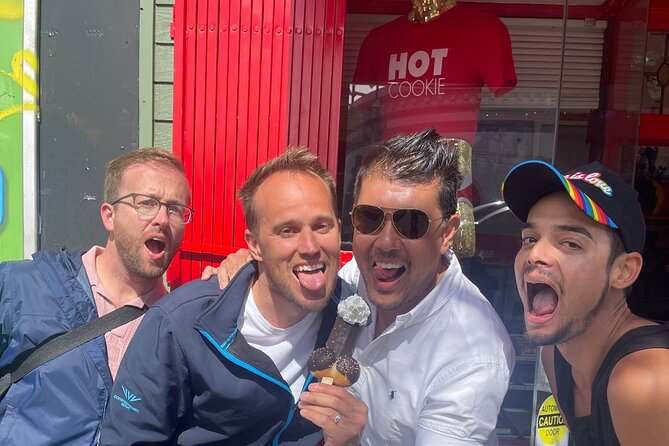
The walk is operated by Mick’s Bootique Tours. The available rating is 5 out of 5 from nine reviews, with especially strong praise for Eric Curry’s passion, friendliness, facts, and ability to keep the group comfortable and engaged. One particularly colorful comment highlights the fun tone of the experience, including vulva cookies, though you should see that as part of the guide’s playful style rather than a guaranteed feature listed in the tour details.
Should you book the Castro District LGBTQ+ Historic Tour?
Book it if you want the Castro explained by a local guide rather than simply photographed. The best reasons are the small group, Eric Curry’s engaging style, and the range of stops: Harvey Milk Plaza, the Castro Theatre, the original rainbow flag’s home, Pink Triangles Memorial Park, and Twin Peaks Tavern.
Skip it if you mainly want indoor access to the theater or museum, since neither admission is included. You may also prefer independent exploring if you already know the district’s history.
For most first-time visitors, $39 is fair for a focused 90-minute introduction, especially when you value the connections between places. Start at 3:00 pm, listen closely during the serious memorial stop, and keep the rest of the evening open after The Mix. That gives you both the story of the Castro and time to experience the neighborhood at your own pace.
FAQ
How long is the Castro District LGBTQ+ Historic Tour?
The tour lasts approximately 1 hour and 30 minutes.
What time does the tour start?
The tour starts at 3:00 pm.
Where does the tour begin and end?
It begins at Harvey Milk Plaza in San Francisco and ends at The Mix, located at 4086 18th Street in the Castro District.
Is admission to the Castro Theatre included?
No. The tour visits the Castro Theatre from the outside, and admission is not included.
Does the tour enter the GLBT Historical Society Museum?
No. The museum is viewed from outside, and admission is not included.
How many people can join the tour?
The tour has a maximum of 10 people.
Recently added around San Francisco
- Guided Private Wine Tour to Napa and Sonoma Wine Country★ 5.0 · 3 reviews
- San Francisco: Muir Woods Giant Redwoods & City Private Tour★ 5.0 · 3 reviews
- San Francisco Chinatown Food and Culture Tour★ 5.0 · 3 reviews
- San Francisco City Half-Day Private Custom Tour★ 5.0 · 3 reviews
- Napa or Sonoma Private Wine Tour from San Francisco★ 5.0 · 3 reviews
- SFO Pick-Up with City Sightseeing Tour★ 5.0 · 3 reviews
- 6-Hour Luxury Napa Wine Tasting Tour with Route Planning★ 5.0 · 3 reviews
- 6-Hour Sparkling Wine Tour of Napa Valley★ 5.0 · 3 reviews
Historical Tours, compared.
Chinatown & North BeachLittle Italy: 7 Tastings & History
Read our review →
North Beach & Little Italy Walking Tour: Food, History & Flavor
Read our review →
San Francisco Whiskey Cocktail Class: Views and City History
Read our review →
Chinatown Food & History Walking Tour – Small Group
Read our review →
North Beach Food & History Walking Tour – Small Group
Read our review →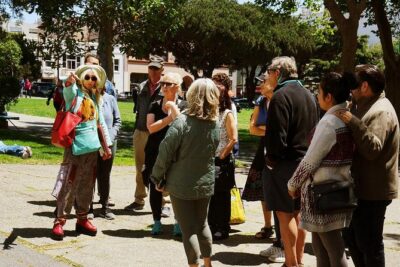
Delicious Fun Food and History Tour of North Beach and Beyond!
Read our review →Browse the lists this tour appears in