
Reviewed · HISTORICAL TOURS
San Francisco Technology and History Tour: South of Market
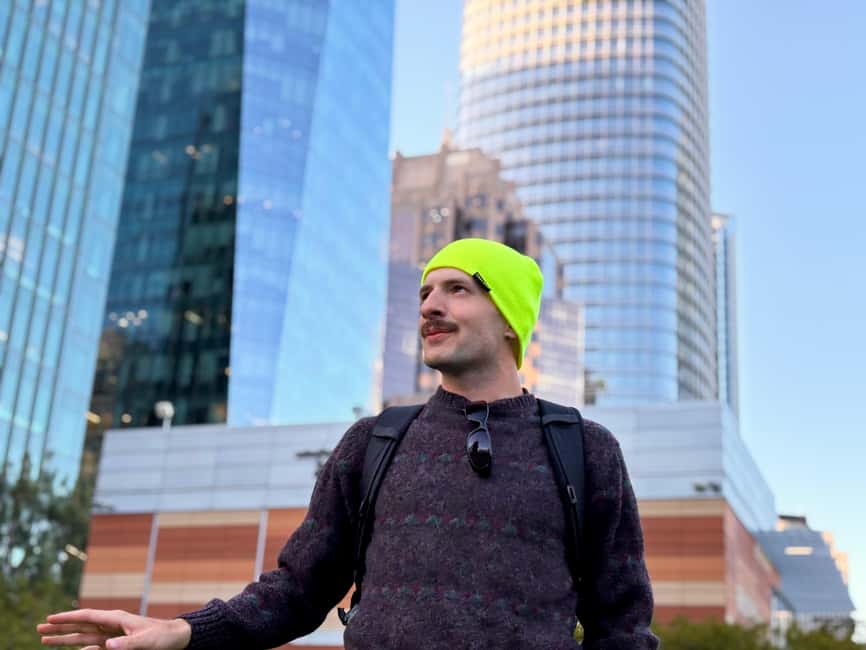
San Francisco’s startup story makes far more sense when you see the streets where it took shape. This 70-minute SoMa walk links South Park, old shipping routes, Yerba Buena Gardens, and Salesforce Park, showing how one neighborhood shifted from waterfront industry to venture capital and major tech offices.
I like the route’s flat pavement and clear sense of place. I also like Wes’s unusual mix of startup experience and urban history, plus his use of historical photos to compare the past with what you see now. The main drawback is pace: 70 minutes covers a lot, so you get a strong overview rather than a slow, detailed look at every site.
In This Review
- Key points at a glance
- Why this SoMa walk tells a bigger San Francisco story
- Starting in South Park, the neighborhood that keeps changing
- Second Street and the making of commercial San Francisco
- Yerba Buena Gardens and the cost of renewal
- Salesforce Park and the new downtown skyline
- What Wes adds to the route
- Who will get the most from this experience
- Is $30 a fair price?
- Practical advice for the 70-minute route
- Should you book the South of Market tour?
- FAQ
- How long does the tour last?
- Where does the tour begin?
- Where does the tour end?
- Is the tour wheelchair-accessible?
- What language is the tour conducted in?
- What should I bring?
- Does the tour include South Park?
- Which places are included along the route?
- Can I reach public transportation after the tour?
- Can I cancel for a refund?
Key points at a glance
- South Park connects gold rush camps, Japanese San Francisco, and Instagram’s early office.
- Second Street follows an old shipping corridor and the site of a major hill removal.
- Yerba Buena Gardens opens the difficult story of urban renewal and displacement.
- Salesforce Park gives you a rooftop view over downtown and the Bay.
- Wes combines startup experience with stories about the city’s changing streets.
- The mostly flat route is useful for wheelchair users and anyone avoiding San Francisco hills.
Why this SoMa walk tells a bigger San Francisco story
San Francisco is often sold through cable cars, steep streets, and Victorian houses. Those sights matter, but SoMa explains a different city: one shaped by shipping, land reclamation, factories, redevelopment, finance, and technology.
That makes this a good choice if you want to understand how San Francisco became a startup capital rather than simply see another set of downtown buildings. You’ll walk through places where old industries and new companies sit almost on top of one another.
The tour is led by Wes, who lives and works in the neighborhood and has worked with startups. That background matters here. He can discuss the technology industry from inside its working world while also tracing the older forces that made this part of town useful to business.
I especially like that the route does not treat tech as the beginning of San Francisco’s story. The tech offices came late. Before them came docks, workshops, immigrant communities, poor housing, political battles, and large public projects. You get a more honest picture when those layers are kept together.
A few more San Francisco tours worth comparing
- San Francisco Food Tour: Ferry Building and Ferry Plaza Farmers Market
★ 4.5 · 92 reviews
Starting in South Park, the neighborhood that keeps changing
You begin in South Park, one of San Francisco’s oldest neighborhoods. Its design came from the British garden-square model in the 1850s, so the open green space gives you shade, seating, and a calmer place to begin.
Wes spends about 10 to 15 minutes here before the group heads north. That pause is useful. You can get your bearings, settle into the pace, and see why this small park has mattered to so many different groups.
South Park has served as a gold rush encampment, a luxury development during the Gilded Age, and a refugee camp after the 1906 earthquake. It later became home to San Francisco’s Japanese community, then an industrial community, and now a center of the city’s technology and finance world.
In the 2010s, the first offices of Instagram and Twitter were in this area. That detail helps explain why South Park still carries such weight in the startup story, even though the park itself looks modest beside the glass towers nearby.
The value of this stop is the comparison. You are not just told that the neighborhood changed. You can look at the same compact setting and consider how its residents, buildings, and purpose shifted over time.
South Park is also the most comfortable opening point on the route. There is shade and seating, and the tour does not begin with a steep climb. If you need a short rest before walking, this is the place to use it.
Second Street and the making of commercial San Francisco
From South Park, you walk along Second Street. This is one of the strongest parts of the tour because the street ties the modern technology corridor to San Francisco’s shipping past.
Second Street connected downtown with the Pacific Mail Steamship Company’s docks. That link helped make it a practical commercial route, and the tour explains how the street fits into the city’s early growth.
The ground beneath modern offices also has a dramatic story. One of San Francisco’s largest hills was flattened during the city’s first major land reclamation project, creating room for a commercial thoroughfare. In other words, the city did not simply grow around its natural setting. It reshaped that setting to serve trade.
That idea connects neatly to the current tech economy. Today, Second Street is home to companies including LinkedIn, DoorDash, and Anthropic. The names change, but the basic pattern remains: businesses gather where transportation, money, labor, and useful office space meet.
The walk is mostly flat, a real advantage in San Francisco. SoMa is the city’s flattest neighborhood, and this route avoids the hill work that can make other city walks tiring. You should still wear comfortable shoes, but this is a more forgiving outing than many San Francisco sightseeing walks.
The route also touches Folsom Street, a place associated with San Francisco’s gay history. That adds another social layer to the tour. SoMa is not only a business district or former industrial zone. It has also been shaped by communities that helped define the city’s public life and political culture.
Yerba Buena Gardens and the cost of renewal
Yerba Buena Gardens brings the tour to one of San Francisco’s largest urban renewal projects. The gardens are pleasant today, but the important question is what was here before them and who paid the price for the change.
The tour discusses the people who lived in the area and the effects of their eviction on San Francisco’s political climate. This is valuable because large redevelopment projects can look simple after the construction is finished. A park, museum district, or office complex may appear to improve a neighborhood, but the process can also remove homes, businesses, and established communities.
You will not get a long academic lecture in this 70-minute format. Instead, the stop gives you a compact way to connect the clean public space in front of you with the disputes that came before it.
I appreciate this part of the route because it keeps the tour from becoming a celebration of new construction. San Francisco’s development story includes useful public spaces and new investment, but it also includes eviction and conflict. Those facts belong in the same conversation.
Yerba Buena Gardens is also a natural midpoint. By this stage, you have moved from a small historic square through an old shipping corridor and into a major downtown redevelopment area. The neighborhood’s changing scale becomes easy to read as you walk.
A different sort of day in San Francisco altogether:
- Muir Woods and Sausalito (Return by Bus or Ferry)
★ 4.5 · 5,098 reviews - Big Bus SF: Hop-on Hop-off Tour with 17 Stops and Sunset Option
★ 4.0 · 4,539 reviews - Napa and Sonoma Wine Country Full-Day Tour from San Francisco
★ 4.5 · 4,455 reviews - Small Group Yosemite and Giant Sequoias Day Trip from San Francisco
★ 5.0 · 3,671 reviews
Salesforce Park and the new downtown skyline
The tour ends near Market Street at Salesforce Park, a large rooftop garden above the Salesforce Transit Center. From the top, you get a view toward San Francisco’s skyline and the Bay.
This is the most visible mark of the technology industry on the modern city. Salesforce’s project is also the largest development in San Francisco in recent history, so the site gives you a clear final example of how tech money has changed the downtown core.
The rooftop garden is more than a viewpoint. It is a public park built into a major piece of transportation and commercial infrastructure. Ending here lets Wes connect the new skyline to the older ground beneath it.
That older ground has its own hard story. The project was built over a beachfront natural gas refinery, and the area was once home to Tar Flat, described as San Francisco’s poorest neighborhood. The contrast is sharp: a high-profile rooftop garden and major technology development now occupy a site once associated with industrial work and severe poverty.
You also have the chance to see Klockar’s blacksmith, a reminder that this part of town once centered on metalworking. That small detail helps keep the final stop tied to ordinary labor rather than only towers and corporate names.
The rooftop finish is a practical bonus. You can take in the view, then continue your sightseeing from a central location instead of needing to retrace the route. The tour ends at Salesforce Tower or the Salesforce Terminal area, with easy access to BART and MUNI. The Powell Street cable car is about a 15-minute walk away.
What Wes adds to the route
Wes is the key to this experience. The subject matter could easily become a string of dates, company names, and construction projects. His role is to connect those facts into a story about how San Francisco works.
His local connection gives the walk a personal edge. He lives and works in the neighborhood, and his work with startups helps him explain the city’s current technology scene without treating it as a distant trend.
The feedback about his guiding is unusually consistent: people describe him as informed, kind, entertaining, and passionate about the city. One especially useful feature is his comparison of historical photographs with the streets in front of you. That turns an abstract story into something you can check with your own eyes.
I would book this route for the guide’s point of view, not just for the stops. If you want a standard list of famous sights, this is not the best match. If you want to understand why a startup office sits beside evidence of old industry, Wes’s mix of business knowledge and city history is a strong reason to go.
Who will get the most from this experience
This tour suits visitors who have already seen the basic San Francisco landmarks and want a different side of the city. It also works well for locals, especially if you work in technology or live nearby but have never pieced together SoMa’s earlier eras.
You should be interested in at least one of these subjects:
- San Francisco’s startup economy
- Urban planning and redevelopment
- Shipping and industrial history
- LGBTQ history
- Japanese San Francisco
- Public parks and downtown construction
- The effect of major development on local communities
The route is also a practical choice for anyone concerned about hills. It is wheelchair-accessible and mostly flat, with seating and shade at South Park. Still, this remains a walking tour, so comfortable clothes and shoes are sensible.
The private-group option may suit families, coworkers, or friends who want to ask more questions along the way. The available information does not specify a standard group size, so check the chosen booking option if that detail matters to you.
Is $30 a fair price?
At $30 per person, the tour offers good value if you want interpretation rather than simple transport between sights. You are paying for a live English-speaking guide, a focused route, and context that would be difficult to gather from plaques or a self-guided walk.
The 70-minute length keeps the cost and time commitment modest. You can fit it into a downtown day, use it as an introduction to SoMa, or schedule it before another activity near Market Street.
The tradeoff is depth. South Park, Second Street, Folsom Street, Yerba Buena Gardens, the Salesforce development, Tar Flat, and Klockar’s blacksmith are a lot of ground for just over an hour. You will come away with a clear framework, but you should not expect long stops or extensive time inside each place.
For me, the price makes the most sense when you value the guide’s interpretation. The buildings and parks are free to see on your own. The reason to pay is to understand the forces behind them.
Free cancellation up to 24 hours before the start and the reserve-now, pay-later option also reduce the risk of fitting it into a changing San Francisco schedule.
Practical advice for the 70-minute route
Meet at South Park, with the exact meeting point depending on the option you book. Plan to arrive ready to walk, since the first 10 to 15 minutes are spent in the park before the group heads north on Second Street.
Wear comfortable shoes and clothes. The route is flat by San Francisco standards, but the value of the walk comes from staying with the group and looking closely at the streets, buildings, and public spaces.
Bring a curious eye. Notice the contrast between the quiet garden square, the office buildings on Second Street, the polished public design at Yerba Buena Gardens, and the rooftop park above the transit center.
Since the tour is in English, you should be comfortable following a live English-language explanation. The accessible route makes this one of the easier city walks for wheelchair users, though you may still want to confirm the exact meeting point and route details when booking.
Should you book the South of Market tour?
Book it if you want San Francisco explained through its changing neighborhoods, not just its postcard sights. The strongest reasons are Wes’s combined startup and local-history background, the use of historical photos, the flat accessible route, and the honest look at redevelopment and displacement.
Skip it if you want a long architectural tour, a food walk, or a broad introduction to all of San Francisco. This experience stays focused on SoMa and moves quickly.
For curious locals and visitors who want to understand the city’s tech economy, working past, and contested redevelopment, $30 is a sensible price for a sharp 70-minute orientation. You finish with a skyline view, easy rail connections, and a much clearer idea of how San Francisco’s newest identity grew from its oldest streets.
FAQ
How long does the tour last?
The walking tour lasts 70 minutes.
Where does the tour begin?
It begins in South Park. The exact meeting point may vary depending on the option booked.
Where does the tour end?
The tour ends near Salesforce Tower, at the Salesforce Terminal and Salesforce Park area in downtown San Francisco.
Is the tour wheelchair-accessible?
Yes. The tour is wheelchair-accessible, and South of Market is San Francisco’s flattest neighborhood.
What language is the tour conducted in?
The live guided tour is conducted in English.
What should I bring?
Bring comfortable shoes and comfortable clothes for the walking route.
Does the tour include South Park?
Yes. You spend about 10 to 15 minutes in South Park before walking north on Second Street.
Which places are included along the route?
The route includes South Park, Second Street, Folsom Street, Yerba Buena Gardens, and Salesforce Park.
Can I reach public transportation after the tour?
Yes. BART and MUNI lines are easy to reach from the end point. The Powell Street cable car is about a 15-minute walk away.
Can I cancel for a refund?
You can cancel up to 24 hours in advance for a full refund. A reserve-now, pay-later option is also available.
More History Walks in San Francisco
- Chinatown & North BeachLittle Italy: 7 Tastings & History
★ 5.0 · 1,070 reviews - North Beach & Little Italy Walking Tour: Food, History & Flavor
★ 5.0 · 1,044 reviews - Chinatown Walking Tour: Food, History & Flavor
★ 5.0 · 575 reviews - San Francisco Whiskey Cocktail Class: Views and City History
★ 5.0 · 206 reviews
Recently added around San Francisco
- Guided Private Wine Tour to Napa and Sonoma Wine Country★ 5.0 · 3 reviews
- San Francisco: Muir Woods Giant Redwoods & City Private Tour★ 5.0 · 3 reviews
- Napa or Sonoma Private Wine Tour from San Francisco★ 5.0 · 3 reviews
- San Francisco Chinatown Food and Culture Tour★ 5.0 · 3 reviews
- San Francisco City Half-Day Private Custom Tour★ 5.0 · 3 reviews
- SFO Pick-Up with City Sightseeing Tour★ 5.0 · 3 reviews
- 6-Hour Luxury Napa Wine Tasting Tour with Route Planning★ 5.0 · 3 reviews
- Muir Woods, Sausalito and Ferry back to Fisherman’s Wharf★ 4.7 · 3 reviews
Historical Tours, compared.
Chinatown & North BeachLittle Italy: 7 Tastings & History
Read our review →
North Beach & Little Italy Walking Tour: Food, History & Flavor
Read our review →
San Francisco Whiskey Cocktail Class: Views and City History
Read our review →
Chinatown Food & History Walking Tour – Small Group
Read our review →
North Beach Food & History Walking Tour – Small Group
Read our review →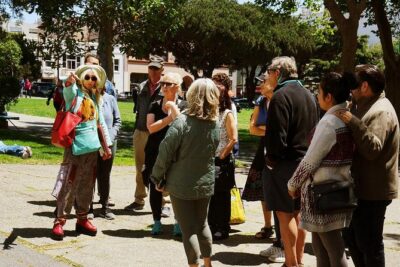
Delicious Fun Food and History Tour of North Beach and Beyond!
Read our review →Browse the lists this tour appears in