
Reviewed · MISSION DISTRICT TOURS
San Francisco: Mission District Food & History Walking Tour
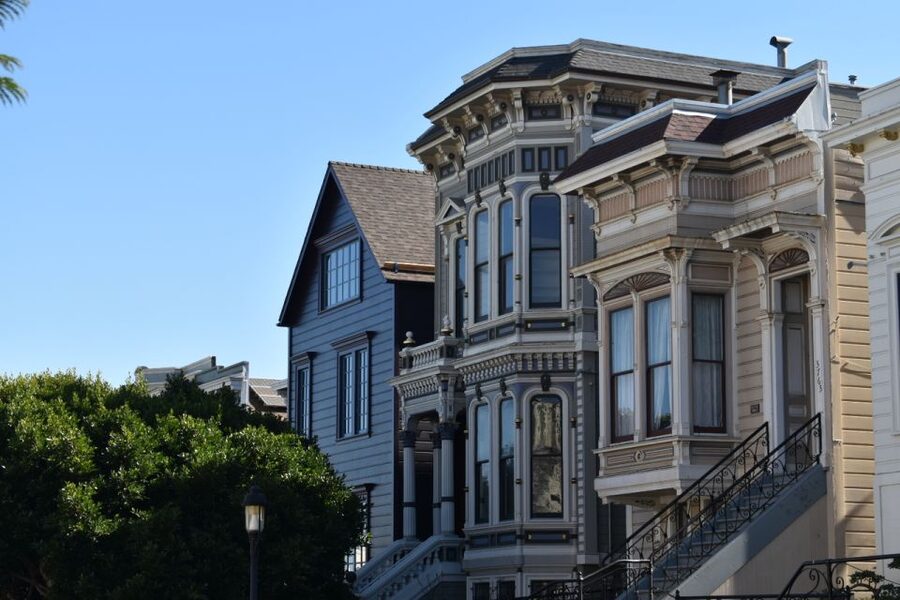
San Francisco’s Mission District tells its story through food, murals, old buildings, and one famous fire hydrant. This 210-minute walk connects those pieces, beginning at Mission Dolores and ending at Balmy Alley, with tamales, tortillas, tacos, pastries, or coffee along the way. The food is part of the history, not just a snack break.
I like the chance to see the Golden Fire Hydrant, the only hydrant said to have survived the 1906 earthquake and fire, and I like the stop at Café de Olla for handmade Oaxacan food. Guide Joseph has earned especially warm praise for his local knowledge and personal stories. The main drawback is simple: some people may feel that three and a half hours gives the Mission District more attention than they want.
In This Review
- Key points to know before you book
- Why this Mission District walk is different
- Starting at Mission Dolores
- Mission Dolores Park and the Golden Fire Hydrant
- Café de Olla and the Oaxacan food stop
- Mission Street, shops, theaters, and old homes
- The 24th Street food stretch
- Murals with a political message
- Guide Joseph and the storytelling
- Is $99 a fair price?
- Who should book this walk?
- Should you book the Mission District Food and History Walking Tour?
- FAQ
- How long does the Mission District food and history tour last?
- Where does the tour begin?
- Where does the tour finish?
- What food is included?
- Is admission to Mission Dolores included?
- What language is the tour conducted in?
- What should I bring?
Key points to know before you book
- Mission Dolores begins the story: Enter one of San Francisco’s oldest buildings, see religious art, visit the gardens, and walk through the city’s only cemetery.
- The Golden Fire Hydrant adds a memorable earthquake lesson: Mission Dolores Park gives the neighborhood’s past a physical landmark.
- Café de Olla serves the heart of the food portion: Expect handmade Oaxacan-style dishes such as quesadillas, tamales, tlayudas, and tortillas.
- Mission Street and 24th Street show daily life: The route shifts from history to shops, theaters, architecture, tacos, pastries, and local street scenes.
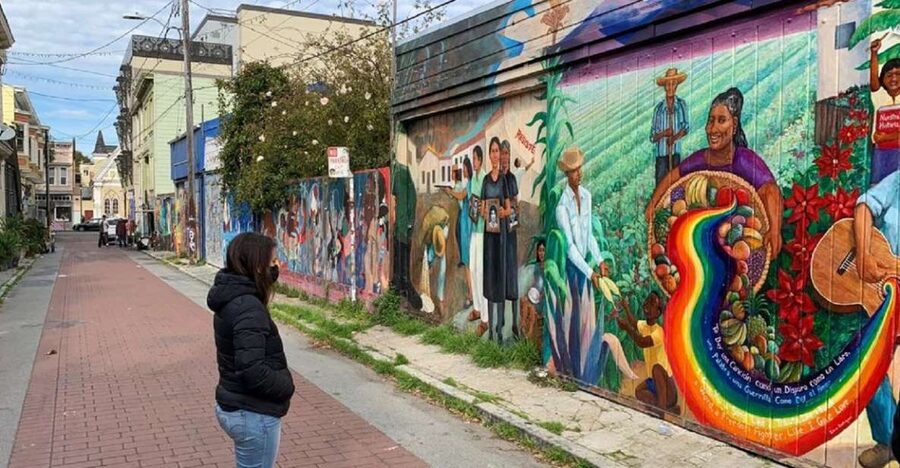
- Balmy Alley gives the tour a serious finish: Its murals address human rights violations and political abuses in Central America.
- Joseph is a major part of the experience: His storytelling and personal connection to the area have been praised repeatedly.
Why this Mission District walk is different
Many San Francisco sightseeing walks focus on famous views, grand buildings, or the waterfront. This one takes you into a neighborhood where history is easier to read in the details: a chapel, a cemetery, a painted wall, a family-run restaurant, and streets lined with older homes and working shops.
You get a mix of fixed sights and changing street life. Mission Dolores gives you a clear beginning. Café de Olla supplies a taste of the neighborhood. Mission Street and 24th Street show how the area functions today. Balmy Alley brings the tour to a thoughtful close.
I also like the balance between food and interpretation. You are not simply handed a list of dishes. The stops help explain why Mexican and Central American traditions are so important to the Mission District.
The route lasts 210 minutes, so this is not a quick orientation walk. You should expect a steady amount of walking, with roughly an hour around Mission Dolores Park, 30 minutes at Café de Olla, 30 minutes around Mission Street, and another food stop lasting about an hour. Wear shoes that can handle city pavement and dress for San Francisco’s changeable weather.
More Food & Drink Tours in San Francisco
- North Beach & Little Italy Walking Tour: Food, History & Flavor
★ 5.0 · 1,044 reviews - San Francisco Authentic Food Tour with 5 Locals Favorites Dishes
★ 5.0 · 852 reviews - Chinatown Walking Tour: Food, History & Flavor
★ 5.0 · 575 reviews
Starting at Mission Dolores
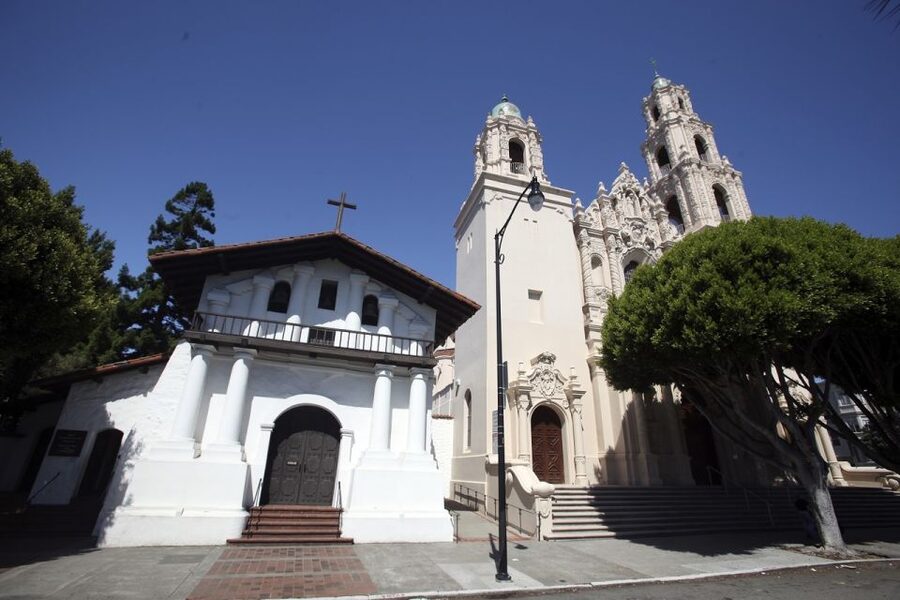
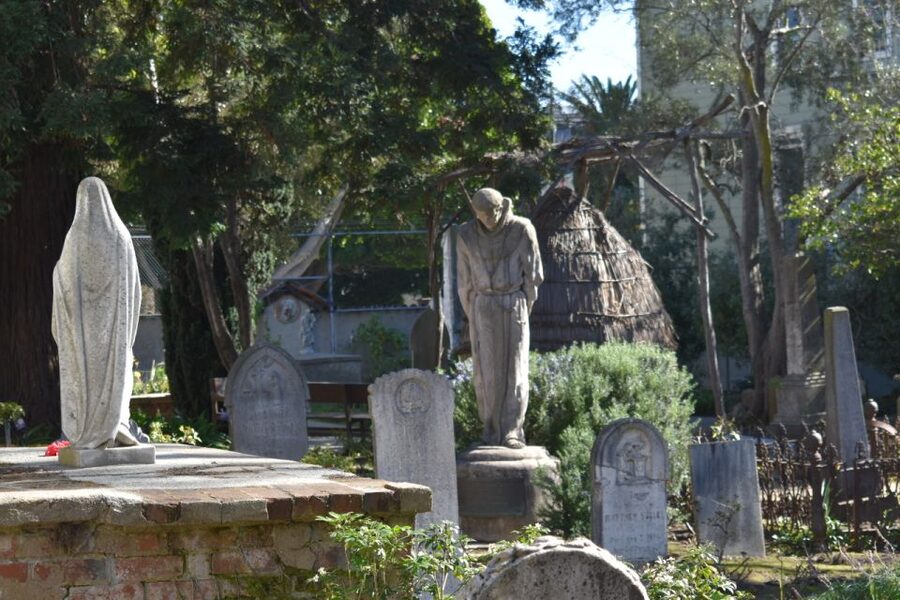
Meet your guide in front of Misión San Francisco de Asís, better known as Mission Dolores. This is one of the oldest buildings in San Francisco and gives the tour a more serious opening than starting at a restaurant or on a busy commercial street.
Inside, you can see religious art that is not usually part of the standard San Francisco sightseeing circuit. The gardens add a calmer setting, while the cemetery offers a rare look at an older burial ground within the city.
The chapel matters because it anchors the neighborhood in its earliest period. Before you look at murals, storefronts, and restaurants, you get a reminder that the Mission District has many layers. The area is not defined by one culture or one time period.
The stop is also practical. It gives you a physical place to meet your guide and a clear introduction before the walking portion begins. If you enjoy architecture, religious art, or old city history, this will likely be one of the strongest early sections.
Mission Dolores Park and the Golden Fire Hydrant
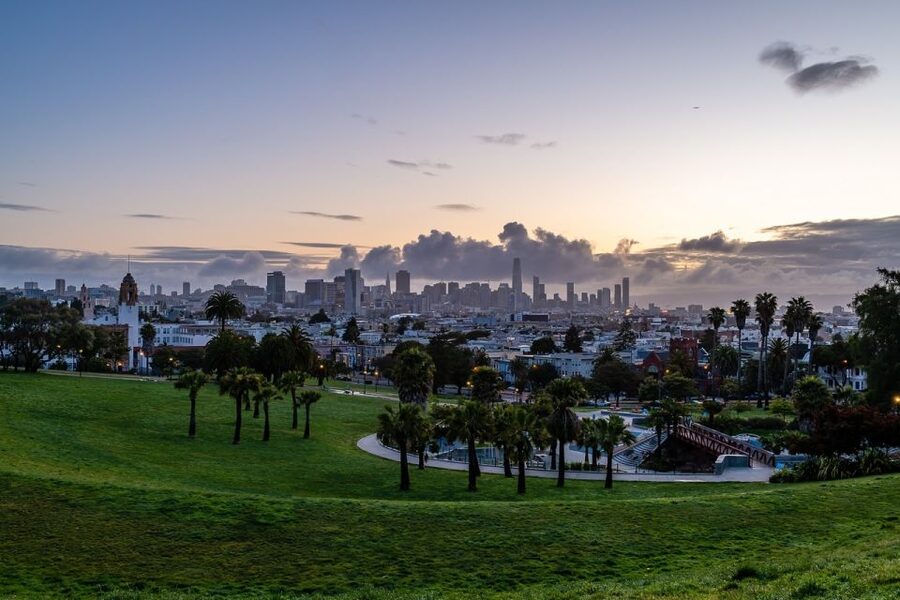
From the chapel, the group walks toward Mission Dolores Park. The park occupies land that was once a Jewish cemetery, a detail that neatly shows how the neighborhood has changed over time.
The park is now one of San Francisco’s best-known public spaces. Your guide points out Father Hidalgo’s statue and explains the importance of the Golden Fire Hydrant, the bright landmark credited with helping save the Mission District after the 1906 earthquake.
This is a good example of how the tour uses a small object to explain a major event. You do not need a long lecture on earthquake damage to understand the point. One surviving hydrant makes the disaster feel close and specific.
The park section takes about an hour, so it is not merely a quick photo stop. You have time to take in the setting and hear how the land and neighborhood have been used. The possible tradeoff is that the pace may feel slow if you already know Mission Dolores Park or prefer a tour focused mostly on food.
Still, the park adds useful context. You are learning not only what the Mission District looks like now, but also what came before it.
Café de Olla and the Oaxacan food stop
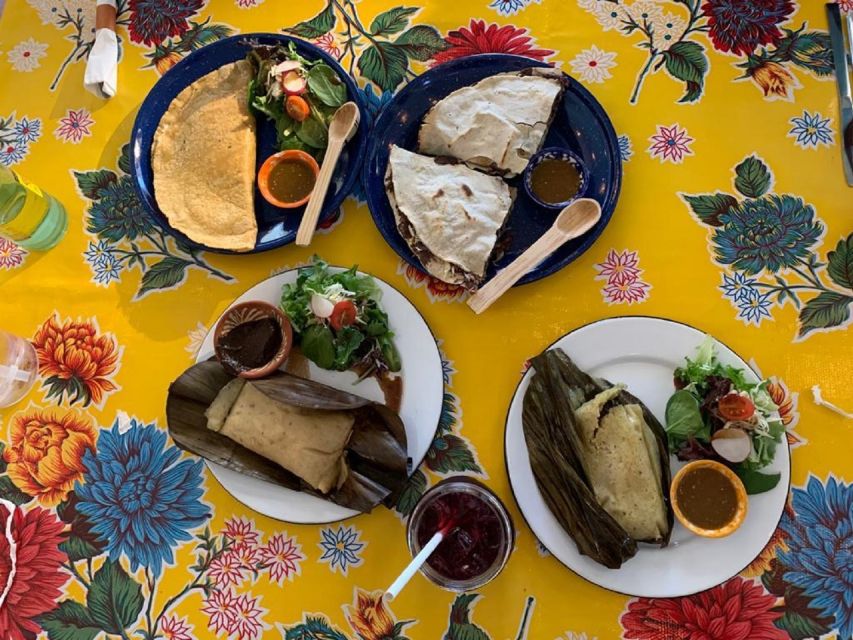
The first major tasting takes place at Café de Olla, a restaurant in the center of the Mission District. The kitchen makes its food from scratch and draws on Oaxacan cooking.
The tasting can include quesadillas, tamales, tlayudas, and tortillas. You may also try agua fresca or iced café de olla. These are not generic restaurant samples. The point is to connect familiar words such as taco, tortilla, and tamale with particular cooking traditions.
This section should appeal to anyone who uses food as a way to understand a neighborhood. You get a chance to ask questions while tasting, rather than trying to identify every dish on your own.
The menu details can vary, so do not book this expecting one fixed plate or a full restaurant meal. It is a tasting stop included in the tour, followed later by a second food choice of tacos, pastry, or coffee.
That arrangement gives the tour a useful rhythm. You begin with the chapel and park, eat at Café de Olla, then continue walking with a better sense of the food culture around you. If you have dietary restrictions, ask about them before booking, since the available information does not specify substitutions.
More Mission District walks and murals:
- Mission District Food Tour: Appetizers, Entrée and Dessert
★ 5.0 · 182 reviews - Mission District Food Tour
★ 5.0 · 69 reviews - Mission District Food and Culture Walking Tour
★ 4.5 · 47 reviews - San Francisco: Mission District Walking Food Tour
★ 4.8 · 22 reviews
Mission Street, shops, theaters, and old homes
After eating, the route moves along Mission Street. This is where the tour shifts from formal landmarks to the everyday neighborhood.
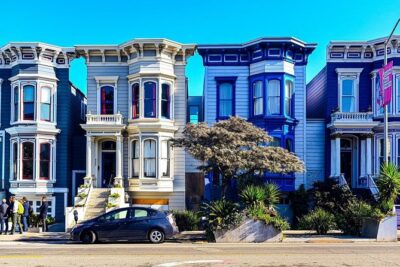
Mission Street is lined with traditional stores and theaters, and your guide points out several architectural styles. You may see Victorian houses, stick-style homes, and mixed-use Mission Revival buildings. The value here is in learning to look upward and across the street, not just at the next restaurant.
The mixed-use buildings are especially useful for understanding the district. Shops, homes, and community spaces occupy the same streets, giving the area a different feel from San Francisco’s office-heavy downtown zones.
This portion lasts about 30 minutes, but the walk continues toward 24th Street. The route lets you see how older architecture sits beside newer businesses and long-running local establishments.
I would pay attention to the guide’s commentary here. Joseph has been praised for explaining the area through history, music, food, people, and architecture. That combination can make ordinary blocks more interesting than they first appear.
You should also expect street conditions rather than a quiet museum setting. Mission Street is a lived-in commercial corridor, so the experience is about observing the neighborhood as it operates.
The 24th Street food stretch
The next food portion takes place around an eight-block stretch of 24th Street. The choices include tacos, pastries, or coffee, giving the tour a second taste of the local food scene.
This is helpful for comparison. Café de Olla focuses on Oaxacan-style cooking, while the later stop gives you another way to sample the Mission’s food culture. If you prefer savory food, tacos may be the natural choice. If you want something lighter, a pastry or coffee may suit you better.
The stop is listed as lasting about an hour, though the exact timing can depend on the group and the pace of the walk. Think of it as part of the route, not a long sit-down restaurant meal.
The food matters, but so does the street around it. An eight-block commercial stretch gives you a sense of the range of options in the district. You may find it especially useful if you plan to return later for an independent meal.
Because the tour already includes two food sections, I would not schedule a large lunch immediately before the walk. At the same time, the tastings should not be treated as a guaranteed substitute for a full day of meals. The supplied details describe samples and choices, not exact serving sizes.
Murals with a political message
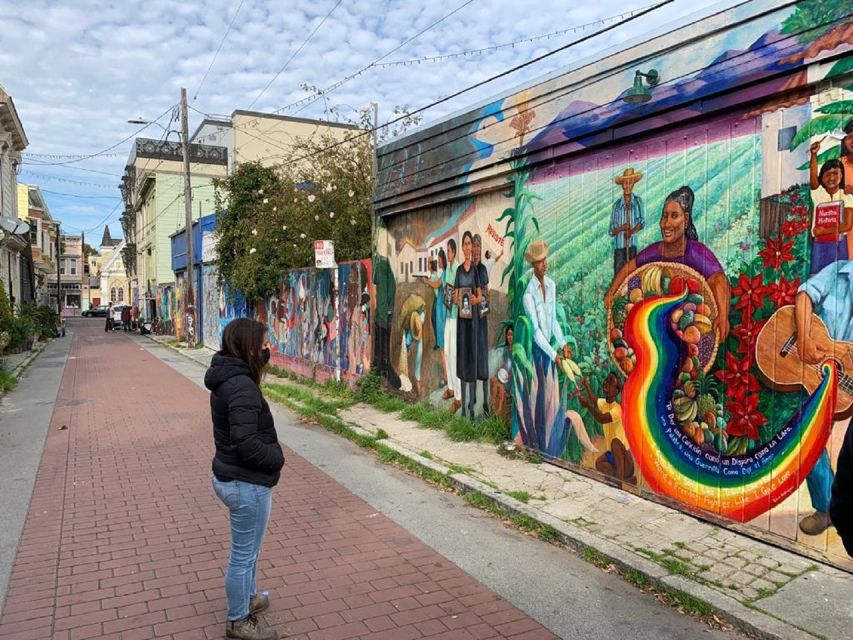
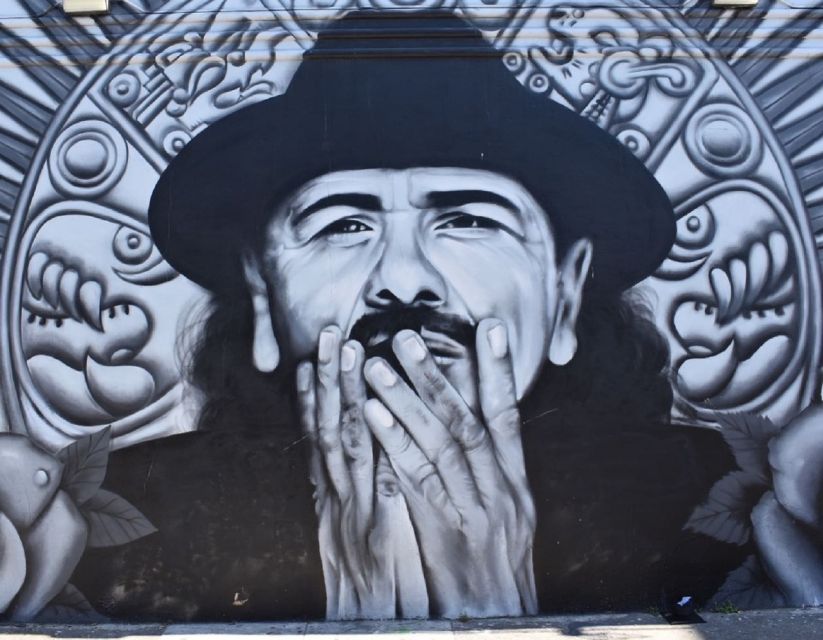
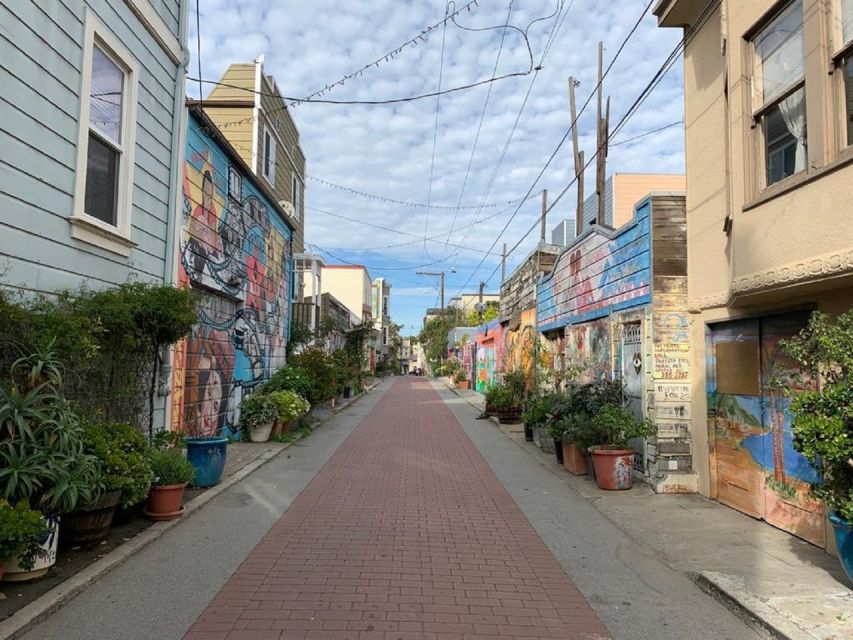
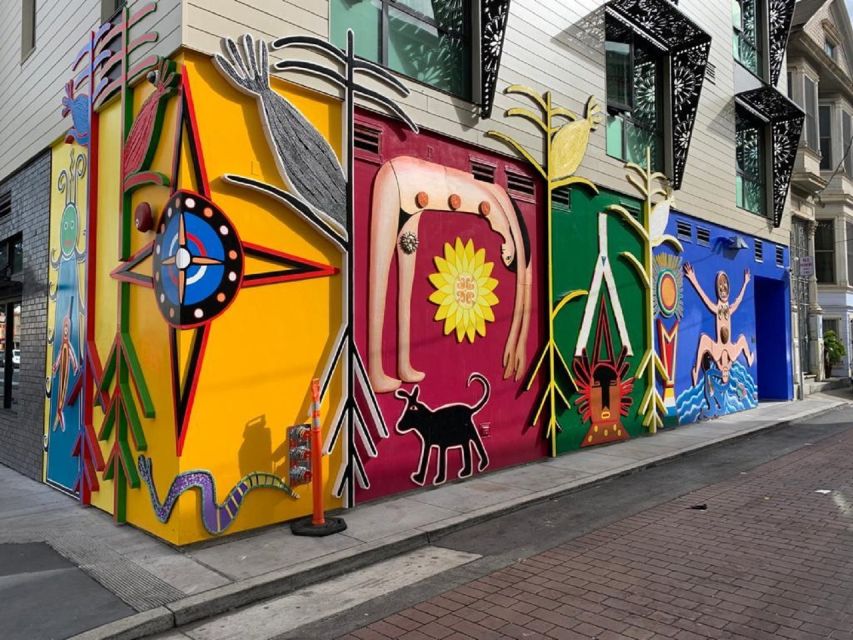
The final stop is Balmy Alley at 50 Balmy Street. This narrow lane is famous for its collection of murals, and it gives the tour its strongest art section.
The paintings often respond to human rights violations and political abuses in Central America. Your guide explains the subjects behind the images, so you are not left treating the murals as decoration alone.
This is an important part of the experience because the artwork carries anger, grief, and political memory. The stories may be difficult, but they give the neighborhood’s public art a purpose. You can see why a painted wall may matter as much as an old building.
Balmy Alley also works well as the finish. The tour begins with institutional religious art inside Mission Dolores and ends with public art created to speak about injustice. Between those points, you have seen food, parks, architecture, shops, and streets. The route presents the Mission District as a place shaped by many voices.
If you want only cheerful murals and photo opportunities, this final section may feel heavier than expected. If you want to understand the meaning behind the art, it is one of the tour’s most valuable stops.
Guide Joseph and the storytelling
The guide can make or break a history walk. Joseph has been singled out for being personable, local to the area, and able to connect the district’s past with its food, art, music, architecture, and people.
That local connection matters. A guide who knows the neighborhood personally can explain why a street feels important, not just recite dates and names. Joseph also shares personal stories, which can make the area easier to picture as a community rather than a set of attractions.
The experience is conducted in English with a live guide. Since only an English-language tour is specified, you should be comfortable following spoken explanations for several hours.
The best fit is someone who enjoys conversation and context. This is not a walk where you rush from landmark to landmark. You will get more from it if you are willing to stop, listen, taste, and look closely.
Is $99 a fair price?
At $99 per person, this is not the cheapest way to sample the Mission District. The price includes the guide, the walking tour, entry to Mission San Francisco de Asís, the Café de Olla tasting, and a second tasting of tacos, pastry, or coffee.
The value depends on how you would otherwise explore the neighborhood. If you plan to visit Mission Dolores, eat at two places, study the murals, and learn the background on your own, you may spend less by planning independently. You would also need to research the sites and decide how to connect them.
The tour earns its price through the guide’s interpretation and the convenience of combining several stops. Joseph’s strong reputation for storytelling is particularly important here. You are paying for a guided point of view, not only for food samples.
I think the price makes the most sense for a first visit to the Mission District, especially if you want a clear introduction in one afternoon. Repeat visitors who already know the neighborhood may prefer to spend the money on a longer meal or independent food crawl.
Who should book this walk?
I would recommend it to first-time San Francisco visitors who want more than the usual downtown sights. It also suits Bay Area residents who know the city but have not spent much time understanding the Mission District.
Food-focused visitors should enjoy the combination of Oaxacan dishes, drinks, tacos, pastries, and coffee. History fans will appreciate Mission Dolores, the cemetery, the former Jewish cemetery, and the earthquake story.
The walk also works for people who like street art but want context. Balmy Alley is more rewarding when someone explains the political events behind the murals.
You should think twice if you dislike extended walking, prefer a tightly timed schedule, or want a tour centered only on eating. One person felt the tour spent too much time in the Mission, so the length is a genuine consideration. Comfortable shoes, comfortable clothes, and weather-appropriate layers are essential.
Free cancellation up to 24 hours before the tour and the option to reserve now and pay later make planning easier, especially if your San Francisco schedule is still shifting.
Should you book the Mission District Food and History Walking Tour?
Book it if you want the Mission District explained through food, local stories, architecture, and political art rather than reduced to a few restaurant stops. The route has a clear arc: Mission Dolores, Mission Dolores Park, Café de Olla, Mission Street, 24th Street, and Balmy Alley.
I would be most likely to choose it for a first visit or for a return trip with someone who wants a thoughtful neighborhood introduction. Joseph appears to be a strong guide choice, and his personal connection gives the walk an advantage over a basic sightseeing loop.
Skip it if three and a half hours feels too long or if you prefer to choose every dish and stop yourself. For everyone else, the Golden Fire Hydrant, handmade Oaxacan food, and Balmy Alley murals make this a useful and memorable way to get oriented.
FAQ
How long does the Mission District food and history tour last?
The tour lasts 210 minutes, or three and a half hours.
Where does the tour begin?
Meet your guide in front of Misión San Francisco de Asís, also called Mission Dolores.
Where does the tour finish?
The tour finishes at 50 Balmy Street, San Francisco, California 94110.
What food is included?
The experience includes a tasting at Café de Olla with possible dishes such as quesadillas, tamales, tlayudas, and tortillas, plus drinks such as agua fresca or iced café de olla. A second tasting offers a choice of tacos, pastry, or coffee.
Is admission to Mission Dolores included?
Yes. The entrance fee to Mission San Francisco de Asís is included.
What language is the tour conducted in?
The live guided tour is conducted in English.
What should I bring?
Bring comfortable shoes, comfortable clothing, and clothing suitable for the weather.
More History Walks in San Francisco
- Chinatown & North BeachLittle Italy: 7 Tastings & History
★ 5.0 · 1,070 reviews - San Francisco Whiskey Cocktail Class: Views and City History
★ 5.0 · 206 reviews - Chinatown Food & History Walking Tour – Small Group
★ 4.5 · 36 reviews - San Francisco: Chinatown Food and History Walking Tour
★ 4.9 · 27 reviews
More Food Tours in San Francisco
- San Francisco: North Beach and Little Italy Food Tour
★ 4.8 · 188 reviews - Ultimate Electric SF Bike Tour- food, icons & local hidden gems
★ 5.0 · 182 reviews - Exclusive North Beach Food Tour in San Francisco
★ 5.0 · 162 reviews - SF’s Chinatown: Tea & Dim Sum Food Tour – Includes full meal, 3hr
★ 5.0 · 153 reviews
Recently added around San Francisco
- Guided Private Wine Tour to Napa and Sonoma Wine Country★ 5.0 · 3 reviews
- San Francisco: Muir Woods Giant Redwoods & City Private Tour★ 5.0 · 3 reviews
- Napa or Sonoma Private Wine Tour from San Francisco★ 5.0 · 3 reviews
- San Francisco Chinatown Food and Culture Tour★ 5.0 · 3 reviews
- San Francisco City Half-Day Private Custom Tour★ 5.0 · 3 reviews
- SFO Pick-Up with City Sightseeing Tour★ 5.0 · 3 reviews
- 6-Hour Luxury Napa Wine Tasting Tour with Route Planning★ 5.0 · 3 reviews
- Muir Woods, Sausalito and Ferry back to Fisherman’s Wharf★ 4.7 · 3 reviews
Mission District Tours, compared.

Mission District Food Tour: Appetizers, Entrée and Dessert
Read our review →

Private San Francisco Mission District Food Tour with +5 Tastings
Read our review →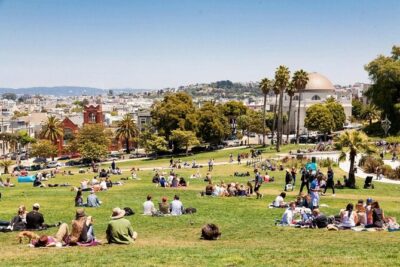
Private City Kickstart Tour:The Castro & Mission District
Read our review →
Browse the lists this tour appears in