
Reviewed · FOOD & DRINK
Food, History, and Resistance: A Self-Guided Audio Tour
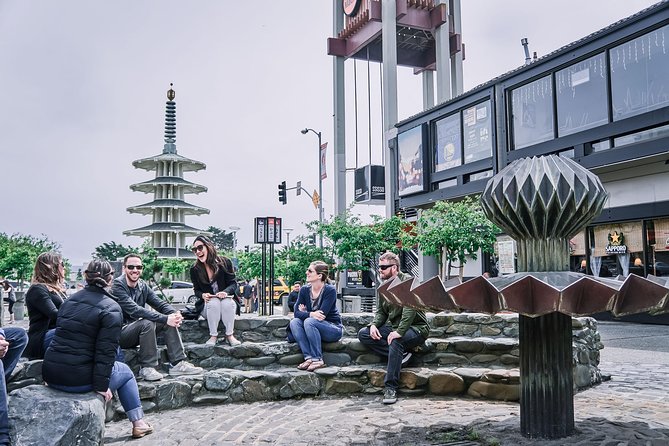
Japantown’s story reaches well beyond ramen and sushi. This self-guided walk connects traditional manju making, Japanese American wartime history, and the jazz clubs of Fillmore Street, giving you a fuller picture of a neighborhood many people pass through without really seeing.
I like the freedom to pause whenever you wish, and I like the offline audio and maps, which are useful if your phone service is unreliable. The main consideration is that this is an audio tour, not a live walk with a guide, and your $11.99 does not cover food, transportation, or museum admission.
In This Review
- Key points to know before you go
- Why this Japantown walk is more than a food tour
- Starting at Osakaya Restaurant on Post Street
- Benkyodo and the survival of manju making
- Japanese American history at the language school gate
- Fillmore Street and Bop City’s jazz legacy
- How the self-guided format changes the experience
- Is $11.99 a fair price?
- Who will get the most from this audio tour?
- Should you book Food, History, and Resistance?
- FAQ
- Where does the audio tour begin?
- Where does the tour end?
- How long does the tour take?
- What language is the tour offered in?
- Do I need a smartphone?
- Can I listen without mobile service?
- Are food, transportation, or museum tickets included?
Key points to know before you go
- Manju and Japanese food traditions: Learn why Benkyodo matters as one of only three traditional Japanese manju makers left in the United States.
- Wartime stories in real places: Hear about Japanese American internment, including the connection to the Japanese Language School gate.
- San Francisco jazz history: Trace Fillmore Street’s role as the Harlem of the West and its connection to Bop City.
- Flexible one-hour format: The audio lasts about 50 minutes to one hour, with time to pause and look around.
- Offline access included: Download the VoiceMap audio, map, and geographic data before setting out.
- Small, independent experience: The tour allows a maximum of 10 people, but each person needs a smartphone to follow it.
Why this Japantown walk is more than a food tour
Food is the entry point here, but it is not the whole meal. The route uses places connected with Japanese American life to explain how Japantown changed, how people maintained traditions, and how the nearby Fillmore district became a major center for Black culture and jazz.
That combination gives the tour a useful shape. You are not simply sent from one restaurant to another. You move between food, music, migration, forced removal, and community memory. For me, that makes the $11.99 price easier to justify than a short audio walk focused only on restaurant recommendations.
The tour begins at Osakaya Restaurant, at 1737 Post Street, and ends at 1010 Geary Boulevard. The listed duration is about 50 minutes to one hour, though the app lets you pause. That matters because some of the places discussed deserve more than a quick glance, especially if you want to stop for food or take your own time with the surrounding streets.
The experience is offered in English through the VoiceMap application. You get lifetime access, along with offline audio, maps, and geographic data. Download everything before you begin. The tour does not provide a smartphone, so you need your own charged device and headphones.
More Food & Drink Tours in San Francisco
- North Beach & Little Italy Walking Tour: Food, History & Flavor
★ 5.0 · 1,044 reviews - San Francisco Authentic Food Tour with 5 Locals Favorites Dishes
★ 5.0 · 852 reviews - Chinatown Walking Tour: Food, History & Flavor
★ 5.0 · 575 reviews
Starting at Osakaya Restaurant on Post Street
The start at Osakaya Restaurant places you directly in the food side of Japantown. The tour makes clear that the neighborhood cannot be reduced to the dishes most familiar to visitors. Food here also carries family tradition, memory, and evidence of a community that has had to adapt.
I would allow a few extra minutes at the start to open the app, check the map, and make sure the audio is playing. Since this is self-guided, you do not have a live person waiting to solve a technical problem or explain where to stand.
The audio format suits visitors who like control. You can stop for a meal, replay a passage, or pause the story while looking at a building. It also works well for different walking speeds, though the route may feel less social than a guided group outing.
The small maximum group size of 10 is worth noting, but this does not turn the experience into a private tour. You are still following recorded narration through an app. The limit mainly keeps the booking from becoming a large group activity.
Benkyodo and the survival of manju making
One of the most specific stops is Benkyodo, described as one of only three traditional Japanese manju makers remaining in the United States. The other two are in Los Angeles and San Jose, the locations of the country’s other two remaining Japantowns.
That fact gives the stop real weight. Manju is a traditional Japanese confection made with sweet bean paste wrapped in mochi, a glutinous rice dough pounded until it becomes sticky and soft. Even if you do not consider yourself a food historian, the explanation helps you see a small confection as part of a much larger story about Japanese American continuity.
I like this kind of stop because it connects an everyday object to place. A sweet is not treated as a novelty or a photo opportunity. Instead, it points to the survival of a specialized craft and to the limited number of Japantowns where such traditions remain visible.
You should keep your expectations practical. The tour includes the audio experience, not food or drinks. If you want to taste manju or buy something along the route, plan to pay separately, and do not assume every stop includes an admission opportunity.
The stop also illustrates one of the tour’s limits. An audio explanation can tell you what manju is and why Benkyodo matters, but it cannot replace seeing the making process firsthand. The value comes from the context, not from a demonstration.
Japanese American history at the language school gate
The most affecting part of the route concerns wartime internment. One account connected the Japanese Language School gate with a location where Japanese Americans reported for internment. The story becomes especially powerful because the physical place is still there.
That detail changes how you look at the street. Instead of treating the gate as just another piece of local architecture, you can consider the families who may have stood there under orders from the government. One personal family connection recalled children and parents leaving San Francisco for Tanforan horse track and later Topaz, Utah.
The tour does not need a large monument to make this history present. Its strength is the use of existing places. You might be standing beside a gate while people nearby go about ordinary business, unaware of what happened there. That contrast can feel unsettling, and it is one reason to give yourself time rather than rushing through the recording.
The wartime section also helps explain why present-day Japantown is smaller than it was before World War II. The route places today’s neighborhood against the loss and displacement of the Japanese American community. That gives the food stops more meaning, since cultural traditions survived despite the disruption.
This section may not suit someone looking for a light sightseeing stroll. The subject is painful, and the tour asks you to pay attention to the human cost of internment. For me, that seriousness is a strength, but you should choose it with the right frame of mind.
More food tours in San Francisco:
- San Francisco: North Beach and Little Italy Food Tour
★ 4.8 · 188 reviews - Ultimate Electric SF Bike Tour- food, icons & local hidden gems
★ 5.0 · 182 reviews - Mission District Food Tour: Appetizers, Entrée and Dessert
★ 5.0 · 182 reviews - Exclusive North Beach Food Tour in San Francisco
★ 5.0 · 162 reviews
Fillmore Street and Bop City’s jazz legacy
The route then broadens beyond Japanese American history to the Black community that grew around Fillmore Street in the 1940s. The district was known as the Harlem of the West, and Bop City at 1712 Fillmore Street became a major after-hours place to play.
The names linked with Bop City are remarkable: John Coltrane, Billie Holiday, Miles Davis, and Duke Ellington. You are not simply hearing a list of famous musicians. You are being shown how a local club could connect San Francisco with some of the most important figures in American jazz.
This is an especially good part of the route for anyone who enjoys music history. It also keeps the tour from presenting Japantown as an isolated cultural pocket. The neighborhoods around Fillmore Street have overlapped, changed, and influenced one another.
A drawback is that the modern street cannot recreate the club scene. The physical location may prompt your imagination, but an audio tour cannot bring back the sound, crowds, or late-night energy of Bop City. What it can do is give you the address and the story, allowing you to picture what once happened there.
The jazz material also adds balance. The tour is about Japanese American food, history, and resistance, yet it recognizes the wider social setting around Japantown. That makes the walk feel connected to San Francisco rather than sealed off from the city around it.
How the self-guided format changes the experience
A recorded tour gives you an unusual amount of control. You can pause at any point, explore a site more closely, stop for food, and continue when ready. One audio account describes the pacing as easy to follow, with enough flexibility to spend extra time at the places that catch your attention.
That pacing is important for a route with serious subject matter. You might want to replay the section about internment or stop to consider the Japanese Language School gate. A fixed live tour may keep moving, while this format lets you set the rhythm.
The VoiceMap application supplies the audio, map, and geographic data. Offline access is a practical benefit, especially if you download the material before leaving your hotel or home. It also means you are not dependent on a constant mobile signal during the walk.
The tradeoff is simple: you must manage the technology yourself. Bring a smartphone, make sure the battery is in good shape, and use headphones that let you remain aware of your surroundings. The tour does not include a phone, transportation, food, or entrance fees for museums and other attractions.
The route is open for use every day according to the listed hours, from midnight to 11:59 p.m. That describes access to the digital experience, not a promise that every business or site along the route will be open at all hours. If you hope to buy food, check the businesses separately and plan for daytime use.
Is $11.99 a fair price?
At $11.99 per person, this is inexpensive compared with a private walking tour. You receive lifetime access rather than a one-time listening window, which adds value if you want to revisit the stories later or share the route planning with someone in your group.
The price is strongest for independent visitors who already have a smartphone and enjoy setting their own schedule. You are paying for the research, narration, route design, and app access. You are not paying for a meal, a guide, or admission to an attraction.
For two people, the cost remains modest, though each person may want a device or headphones. If you are already planning to walk through Japantown, the tour gives that walk a clear purpose for little extra money.
I would not choose it if you want hands-on food tasting or a live conversation with a local guide. You also need to accept the no-refund policy. The experience is non-refundable and cannot be changed after booking, so buy only when your plans are firm.
Who will get the most from this audio tour?
I would recommend this experience to visitors who want more than restaurant suggestions. It suits people interested in Japanese American history, food traditions, civil rights, neighborhood change, and jazz.
It is also a good choice for independent-minded visitors. You can listen alone, move at your own speed, and decide how long to spend at each location. Parents with older children may find the real places and family stories useful, though the internment material calls for thoughtful discussion.
The tour is less suited to anyone who wants a polished sightseeing production with a guide physically leading the way. It is also not the best pick if you are searching for a dedicated food crawl. Food provides an important thread, but the experience is primarily a history and culture walk.
Most people can participate, and service animals are allowed. The route is near public transportation, which helps if you are coming from another part of San Francisco, though transportation itself is not included.
Should you book Food, History, and Resistance?
Book it if you want to understand why Japantown matters, not just where to eat. The strongest sections connect Benkyodo’s manju tradition, the Japanese Language School gate, wartime internment, and Bop City’s jazz past into one compact walk.
The most useful tip is to download the audio and map in advance, start with a charged phone, and leave room in your schedule to pause. If you want manju or another meal, budget for that separately.
Skip it if you need a live guide, included food, or a flexible cancellation policy. For $11.99, though, this is a thoughtful way to give an hour of your San Francisco sightseeing to stories that are easy to miss. It has earned a 5 out of 5 rating from 10 submitted ratings, with 100 percent recommending it, and the praise centers on its pacing and emotional impact.
FAQ
Where does the audio tour begin?
It begins at Osakaya Restaurant, 1737 Post Street, San Francisco, California 94115.
Where does the tour end?
The route ends at 1010 Geary Boulevard, San Francisco, California 94109.
How long does the tour take?
The estimated duration is 50 minutes to one hour.
What language is the tour offered in?
The tour is offered in English.
Do I need a smartphone?
Yes. A smartphone is not included. You use the VoiceMap application to access the tour.
Can I listen without mobile service?
Yes. Offline access to the audio, maps, and geographic data is included. Download the material before beginning.
Are food, transportation, or museum tickets included?
No. Food and drinks, transportation, and tickets or entrance fees for museums and other attractions along the route are not included.
More Self-Guided Tours in San Francisco
- San Francisco: Alcatraz Ticket, Ferry, & Self-Guided App
★ 4.5 · 2,460 reviews - San Francisco: Alcatraz, Ferry & Audio Tour w/ Night Option
★ 4.4 · 617 reviews - Official Alcatraz Island Prison Tour with Free App Audio Packages
★ 4.5 · 337 reviews - Self-Guided Cable Car City Tour in San Francisco
★ 3.0 · 226 reviews
More History Walks in San Francisco
- Chinatown & North BeachLittle Italy: 7 Tastings & History
★ 5.0 · 1,070 reviews - San Francisco Whiskey Cocktail Class: Views and City History
★ 5.0 · 206 reviews - Chinatown Food & History Walking Tour – Small Group
★ 4.5 · 36 reviews - San Francisco: Chinatown Food and History Walking Tour
★ 4.9 · 27 reviews
Recently added around San Francisco
- Guided Private Wine Tour to Napa and Sonoma Wine Country★ 5.0 · 3 reviews
- San Francisco: Muir Woods Giant Redwoods & City Private Tour★ 5.0 · 3 reviews
- San Francisco Chinatown Food and Culture Tour★ 5.0 · 3 reviews
- San Francisco City Half-Day Private Custom Tour★ 5.0 · 3 reviews
- Napa or Sonoma Private Wine Tour from San Francisco★ 5.0 · 3 reviews
- SFO Pick-Up with City Sightseeing Tour★ 5.0 · 3 reviews
- 6-Hour Luxury Napa Wine Tasting Tour with Route Planning★ 5.0 · 3 reviews
- Muir Woods, Sausalito and Ferry back to Fisherman’s Wharf★ 4.7 · 3 reviews
Food & Drink, compared.
North Beach & Little Italy Walking Tour: Food, History & Flavor
Read our review →
San Francisco Authentic Food Tour with 5 Locals Favorites Dishes
Read our review →

Mission District Food Tour: Appetizers, Entrée and Dessert
Read our review →
Ultimate Electric SF Bike Tour- food, icons & local hidden gems
Read our review →
Exclusive North Beach Food Tour in San Francisco
Read our review →
SF’s Chinatown: Tea & Dim Sum Food Tour – Includes full meal, 3hr
Read our review →Browse the lists this tour appears in