Reviewed · SAN FRANCISCO TOURS
SKIP THE LINE: Exploratorium Daytime Admission
The Exploratorium turns science into something you can touch, test, and sometimes make a mess with. At Pier 15, between the Ferry Building and Fisherman’s Wharf, you can spend the day trying hundreds of hands-on exhibits instead of marching through a museum with your hands behind your back.
I like the freedom to set your own pace, and I like that the museum works for a wide age range. A curious four-year-old, a teenager, and a grandparent can all find something worth their time. The main drawback is crowding, especially around popular hands-on stations, and the skip-the-line benefit only gets you past the ticket counter. It does not give you a private museum experience.
In This Review
- Key points to know
- Why the Exploratorium works so well for families
- Arriving at Pier 15 on the Embarcadero
- Starting with the six galleries
- Gallery 3: lights, mirrors, and bubbles
- Gallery 1: the brain and human perception
- The Tinkering Studio and hands-on machines
- Gallery 4: from DNA to ecosystems
- The outdoor area and Bay Observatory
- How long should you stay?
- Price, crowds, and the skip-the-line question
- Who will enjoy this most?
- Should you book the daytime admission?
- FAQ
- How long does the Exploratorium visit take?
- What does the skip-the-line ticket include?
- Is the Tactile Dome included?
- Is the Exploratorium suitable for young children?
- Are food and drinks included?
- Can visitors with service animals or visual impairments participate?
Key points to know
- Six galleries plus outdoor exhibits: Move from light, mirrors, and bubbles to perception, biology, machines, and Bay Area science.
- All-day general admission: You can spend three to five hours inside, and a hand stamp may allow you to leave for food and return.
- A good rainy-day choice: The large indoor museum keeps children busy while giving adults plenty to think about.
- Bay and Bay Bridge views: The Bay Observatory and outdoor area add fresh air and sweeping waterfront scenery.
- The Tactile Dome costs extra: It is not included in this daytime admission ticket.
- Mobile entry saves a ticket-counter stop: Have your barcode ready, but check your ticket instructions carefully because older voucher formats have caused confusion.
Why the Exploratorium works so well for families
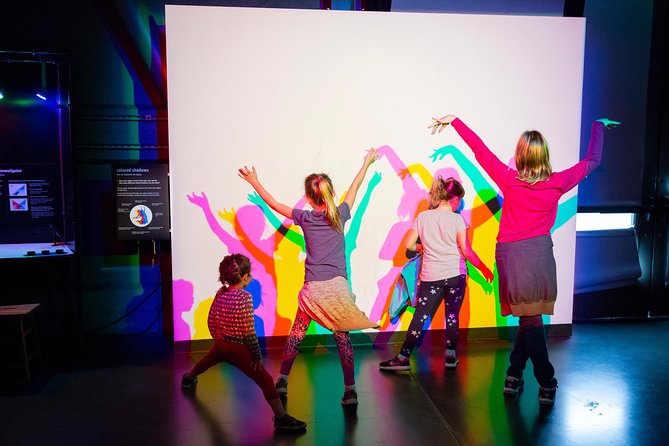
The Exploratorium is not a museum where you simply look at objects behind glass. It asks you to turn knobs, cast shadows, manipulate machines, follow patterns, and watch cause and effect unfold in front of you.
That makes it especially useful for families with children who are restless in traditional museums. The exhibits reward curiosity rather than quiet observation. A child can spend several minutes making shadows, testing a mechanical device, or studying a strange visual effect, while an adult nearby can consider the physics or biology behind it.
You should not expect one straight route through the building. This is a self-guided visit, and the museum is large enough that your group will probably split up and reunite several times. Some children race ahead. Others stop at one exhibit and refuse to move. That is normal here.
I would plan on at least three hours. Five hours is realistic if your family likes to try most of the displays, pause at demonstration stations, and spend time outdoors. Several families have found that even a long visit was not enough to see everything.
The museum is also a strong choice for adults. The exhibits are not simply children’s games with bright colors. They explore chemistry, physics, biology, human perception, and the forces that shape the San Francisco Bay Area. You may arrive expecting to supervise children and end up staying at a moving curtain, mirror effect, or mechanical display longer than they do.
A few more San Francisco tours worth comparing
- San Francisco: Skip-the-Line 1-Hour Bay Cruise by Boat
★ 4.6 · 1,483 reviews - San Francisco: Skip-the-Line Escape from The Rock Bay Cruise
★ 4.4 · 1,393 reviews - SKIP THE LINE: Exploratorium After Dark Thursdays (18+) Admission
★ 4.5 · 51 reviews
Arriving at Pier 15 on the Embarcadero
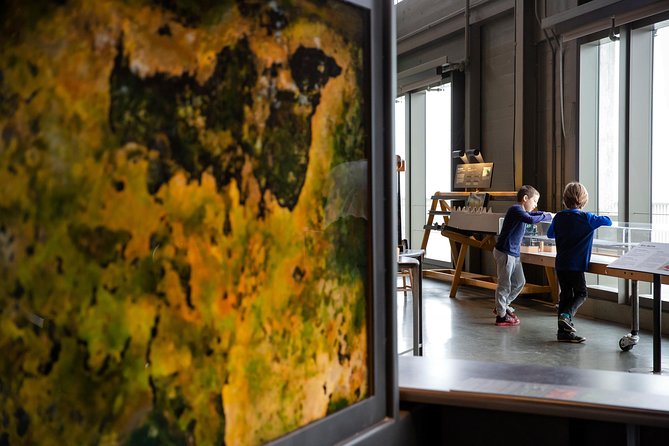
The location is one of this experience’s practical strengths. Pier 15 sits along the Embarcadero between the Ferry Building and Fisherman’s Wharf, so it fits neatly into a day of waterfront sightseeing.
You can pair the museum with a walk along the bay, a visit to the Ferry Building, or time near Fisherman’s Wharf and Pier 39. Public transportation is nearby, and the location is easy to include in a San Francisco itinerary without arranging a separate tour vehicle.
The mobile ticket is designed to let you proceed toward the museum entry point rather than stopping at the regular ticket counter. That is the real meaning of skip the line here. It is not a special entrance to every exhibit, and it does not remove crowds once you are inside.
This distinction matters. On a quiet day, you may find little or no line at the counter, so the time saved can be small. On a busy day, bypassing the purchase or voucher exchange can make arrival quicker. The ticket is sold at the same price as the museum’s other admission tickets, so you are paying for advance access and convenience, not a premium museum experience.
Have the mobile barcode ready on your phone. Some older ticket formats have required visitors to visit several ticket agents before entry, while newer barcodes are meant to scan at the entrance. If your ticket instructions direct you to a counter, follow them rather than assuming every mobile ticket works the same way.
Starting with the six galleries
The museum spreads its exhibits across six spacious galleries and an open-air area. You can follow the map or simply wander. If you want to reduce unnecessary walking, a useful approach is to begin with the left wing and work through the right wing toward the exit.
Museum maps are available in English, Spanish, French, Italian, Traditional Chinese, Simplified Chinese, German, Portuguese, Arabic, Japanese, Korean, and Filipino. That is helpful in a family group where different people want to find different sections.
The galleries are broad enough for groups to move around, but popular stations can become crowded. Children may need reminders to wait their turn. A little patience makes the visit much more pleasant, since many exhibits work best when you can spend a few quiet minutes testing them rather than rushing through.
Gallery 3: lights, mirrors, and bubbles
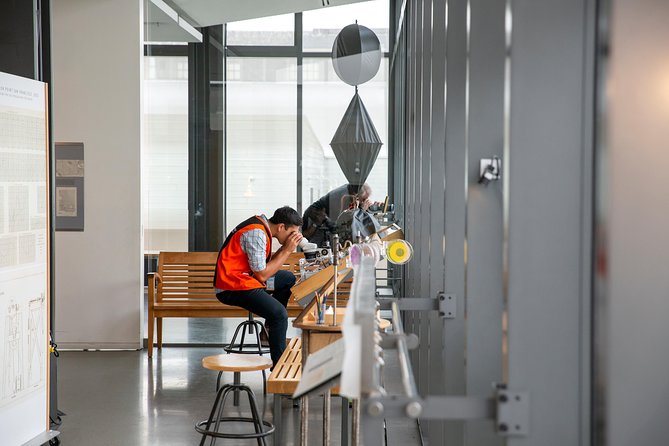
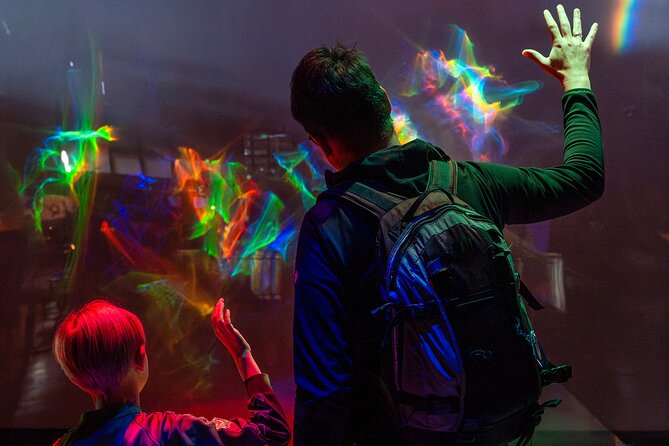
Gallery 3 focuses on visual effects and physical experiments. You can expect displays involving light, mirrors, bubbles, shadows, and changing patterns.
This is often a strong first stop for children because the results are immediate. You do not need a long explanation before something interesting happens. Move an object, change your position, or alter the light, and the effect changes.
Adults should pay attention to how much these simple actions reveal about perception. The gallery gives you a chance to notice how your eyes and brain work together, and how easily the mind can interpret the same scene in different ways.
Crowding is most noticeable at exhibits that produce a clear visual result. If a station is surrounded by a group, move on and return later. The museum is large enough that you do not need to wait beside one display for the entire family.
A different sort of day in San Francisco altogether:
- Muir Woods and Sausalito (Return by Bus or Ferry)
★ 4.5 · 5,098 reviews - Big Bus SF: Hop-on Hop-off Tour with 17 Stops and Sunset Option
★ 4.0 · 4,539 reviews - Napa and Sonoma Wine Country Full-Day Tour from San Francisco
★ 4.5 · 4,455 reviews - Small Group Yosemite and Giant Sequoias Day Trip from San Francisco
★ 5.0 · 3,671 reviews
Gallery 1: the brain and human perception

Gallery 1 examines the way people see, think, and interpret the world. This section can appeal to older children, teenagers, and adults who want more than a quick physical activity.
You may find experiments that make you question what your eyes are reporting or how your brain fills in missing information. These displays turn an abstract subject into something you can observe directly.
I would give this area extra time if your family enjoys puzzles and visual tricks. It is also a useful section for a teenager and younger sibling to enjoy together, since one child can experiment while another tries to explain the result.
The Tinkering Studio and hands-on machines
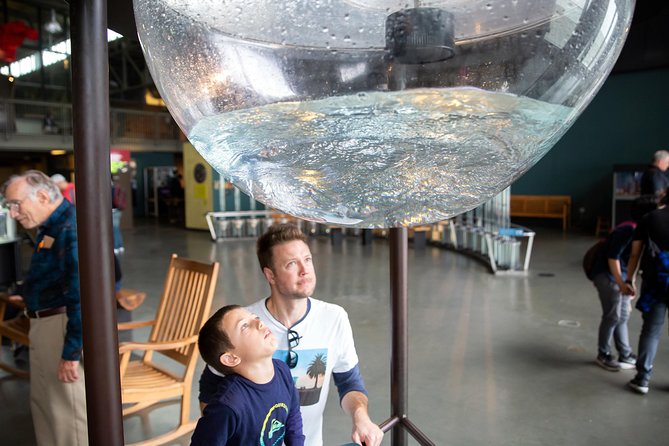
The Tinkering Studio is devoted to making and testing. Mechanical contraptions invite you to work out how parts move together, and the emphasis is on trying rather than getting the right answer on the first attempt.
That approach is one of the museum’s best features. Children can build confidence by adjusting a device, seeing what happens, and trying again. Adults can help without taking over, which turns the visit into a shared activity rather than a child-care assignment.
Demonstration areas and craft activities may also appeal to younger children. A drawing table or simple construction project can provide a welcome change after several rooms of machinery and visual experiments.
The main limitation is that hands-on exhibits need time. If you have only one hour before another reservation, you will spend much of the visit choosing what to skip. This admission is a better value when you can give the museum a relaxed afternoon.
Gallery 4: from DNA to ecosystems
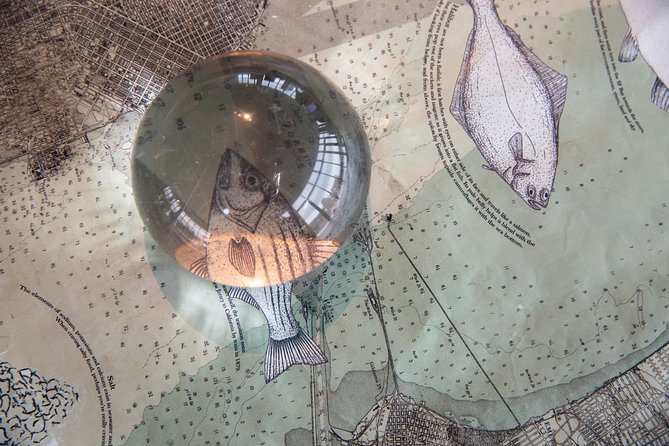
Gallery 4 shifts attention to life science, from DNA and cells to organisms and ecosystems. It gives the museum a broader reach than physics and perception alone.
For children, the displays can make biology feel less like memorizing terms. You can move from tiny building blocks of life to larger living systems and see how the pieces relate.
The level of interest will vary by age. Younger children may move quickly through the explanations and focus on whatever they can touch. Older children and adults may spend more time connecting the exhibits to biology lessons or the natural world around San Francisco.
The outdoor area and Bay Observatory

Do not skip the outdoor section. It examines the natural and human forces that shape the San Francisco Bay Area, then gives you room to step outside and look at the real setting around you.
The Bay Observatory offers broad views of the Bay and Bay Bridge. Ships move across the water, and the outdoor space gives children a chance to release some energy after time indoors.
This area also helps explain why the museum is located on the waterfront. The Bay is not just scenery outside the windows. It is part of the subject matter, shaped by water, people, weather, engineering, and the city’s development.
If your group tires easily, use the outdoor section as a natural pause. The museum also has frequent benches, useful for older adults or anyone who wants to watch an exhibit without standing for long periods.
How long should you stay?
The listed visit time is about three to five hours, and that range is sensible. Three hours gives you a substantial visit, but you will need to make choices. Five hours lets you move at a slower pace and return to favorite exhibits.
A short visit can still work, but the price makes less sense if you rush in for an hour. The museum has six galleries, an outdoor area, and hundreds of displays. You are paying for access to a large collection of activities, not a guided presentation with a fixed finish time.
A useful plan is:
- Spend the first 30 to 45 minutes getting your bearings.
- Let each person choose a favorite area.
- Use the map to avoid crossing the building repeatedly.
- Save time for the outdoor area and Bay Observatory.
- Take a break before children become overtired.
The museum allows you to leave and return with a hand stamp, according to the practical experience shared by visitors. That makes a meal break possible, though food and drinks are not included in admission. The café or food options may feel costly, so leaving the pier to eat can be a better choice if you have enough time.
Coin-operated lockers are located just past the ticketing and information desk. That can help if you are carrying coats or small bags, but plan to bring coins if you want to use them.
Price, crowds, and the skip-the-line question
At $39.95 per person, this is not a cheap quick stop. It becomes a stronger value if you stay for most of the afternoon and use several galleries.
The ticket includes daytime general admission only. Children age three and under enter free. It does not include food, hotel transportation, or the Tactile Dome. The Tactile Dome is a separate sensory experience and requires its own ticket, so do not assume it is part of the mobile admission.
The skip-the-line feature is useful mainly at the start. It can save you from buying a ticket or exchanging a voucher at the counter, but it does not reserve individual exhibits. Crowds are a real consideration, particularly during busy family periods. You may need to wait for popular stations, and some children may push ahead.
The museum’s large size helps spread people out. If one gallery feels packed, move to another section and return later. A patient, flexible approach is better than trying to complete the museum in a strict order.
The experience has a 4.7 rating from 165 reviews, with 91 percent of customers recommending it. Those numbers fit the attraction’s strengths: broad appeal, hands-on learning, and enough variety to keep different ages occupied. The weaker experiences center mostly on ticket handling or crowding, not on the museum itself.
Who will enjoy this most?
I would choose this admission for families with children, especially children who learn by doing. It also suits grandparents, couples, teenagers, and adults who enjoy science presented through experiments rather than long text panels.
It is a particularly good rainy-day activity. Most of the visit takes place indoors, and the exhibits give you a reason to stay active instead of simply waiting for better weather.
You should think twice if you dislike noisy, crowded family attractions or prefer a quiet art museum. The Exploratorium can feel hectic, and you may not get uninterrupted time at every station.
It is also a poor fit for a tightly scheduled day. The self-guided format encourages you to linger, and children often want to repeat favorite activities. Give yourself room to stay longer than planned.
The museum is accessible in several practical ways. Service animals and certified assistance animals are welcome. Tactile maps for blind and visually impaired visitors are available upon request. Most people can participate, and the experience is not built around a guided group, so you can set your own pace.
Should you book the daytime admission?
Book it if you want a family-friendly San Francisco attraction that combines science, play, and waterfront views. The best reason to go is not simply the skip-the-line feature. It is the chance to spend several hours experimenting together, with enough variety for children and adults to enjoy different parts of the museum.
I would book in advance when your schedule is fixed or when you expect a busy day at Pier 15. The mobile ticket can save a ticket-counter stop, though you should confirm the barcode instructions before arrival.
Skip it if you have only a short window, dislike crowds, or plan to buy the Tactile Dome experience without checking its separate ticket requirement. For most families with three to five free hours, though, the Exploratorium offers enough to justify the price, especially when you treat it as a substantial afternoon rather than a quick attraction.
Cancellation is free up to 24 hours before the scheduled start time. Cancellations made within 24 hours are not refunded, and late changes are not accepted.
FAQ
How long does the Exploratorium visit take?
The approximate duration is three to five hours. You can move at your own pace, and the museum is large enough that a longer visit may still leave exhibits to see.
What does the skip-the-line ticket include?
It includes daytime general admission and allows you to bypass the ticketing counter and proceed toward the museum entry point. It does not provide a private route through the galleries or skip waits at individual exhibits.
Is the Tactile Dome included?
No. The Tactile Dome requires a separate ticket and is not included with this daytime admission.
Is the Exploratorium suitable for young children?
Yes. The museum is family-friendly and includes many hands-on exhibits. Children age three and under receive free admission.
Are food and drinks included?
No. Food and drinks are not included. You may be able to leave and return with a hand stamp, allowing time to eat elsewhere.
Can visitors with service animals or visual impairments participate?
Service animals and certified assistance animals are welcome. Tactile maps for blind and visually impaired visitors are available upon request.
Recently added around San Francisco
- Guided Private Wine Tour to Napa and Sonoma Wine Country★ 5.0 · 3 reviews
- San Francisco: Muir Woods Giant Redwoods & City Private Tour★ 5.0 · 3 reviews
- San Francisco Chinatown Food and Culture Tour★ 5.0 · 3 reviews
- San Francisco City Half-Day Private Custom Tour★ 5.0 · 3 reviews
- Napa or Sonoma Private Wine Tour from San Francisco★ 5.0 · 3 reviews
- SFO Pick-Up with City Sightseeing Tour★ 5.0 · 3 reviews
- 6-Hour Luxury Napa Wine Tasting Tour with Route Planning★ 5.0 · 3 reviews
- Muir Woods, Sausalito and Ferry back to Fisherman’s Wharf★ 4.7 · 3 reviews
San Francisco Tours, compared.

Muir Woods and Sausalito (Return by Bus or Ferry)
Read our review →
Big Bus SF: Hop-on Hop-off Tour with 17 Stops and Sunset Option
Read our review →
Napa and Sonoma Wine Country Full-Day Tour from San Francisco
Read our review →
Small Group Yosemite and Giant Sequoias Day Trip from San Francisco
Read our review →
Yosemite Highlights & Giant Sequoias Day Tour from San Francisco
Read our review →
San Francisco Super Saver: Muir Woods & Wine Country w/ optional Gourmet Lunch
Read our review →