Reviewed · TOURS
San Francisco : Mission and Castro districts tour in French
San Francisco’s story comes into sharp focus in the Castro and Mission districts, where LGBT history, Hispanic heritage, Victorian homes, murals, and everyday neighborhood life sit close together. This three-hour French-language walk moves beyond the usual postcard sights and shows you two areas with strong identities and plenty of street-level character.
I like the small group of up to 10 people, which should make it easier to hear the guide and ask questions. I also like the mix of serious history and simple pleasures: the former photo store linked to Harvey Milk, Mission Dolores, local shops, taquerias, and the view from Dolores Park.
The main point to consider is the pace and weather. You spend the full three hours outside, and the tour runs rain or shine. If you want a relaxed ride between sights, this is not that kind of outing. It is a walking tour through active city neighborhoods.
In This Review
- Key points
- Why these two districts tell San Francisco’s story
- Starting at Cafe de Casa
- The Castro, from Harvey Milk Plaza to the Castro Theatre
- Mission Dolores and the city’s oldest building
- Dolores Street, Victorian homes, and the famous blue house
- Murals at the Women’s Building and Clarion Alley
- Valencia Street for shops, food, and local flavor
- Dolores Park and the final city view
- What $65 buys you
- Who will get the most from this walk
- Practical details before you book
- Should you book the Castro and Mission tour?
- FAQ
- Where does the tour begin?
- Where does the tour end?
- How long does the tour last?
- What language is the tour conducted in?
- How large is the group?
- Is food or drink included?
- Can I cancel for a refund?
Key points
- Harvey Milk Plaza and the Castro Theatre: Learn how the Castro became one of the world’s best-known LGBT neighborhoods.
- Mission Dolores: Visit San Francisco’s oldest building and connect the city’s early story with its Hispanic roots.
- Murals at the Women’s Building and Clarion Alley: See public art that turns walls into open-air galleries.
- Victorian houses and the blue house: Admire Liberty Hill homes, including the John McMullen House and the house made famous in song.
- Valencia Street: Browse independent bookstores, thrift shops, local boutiques, and Mexican taquerias.
- French-speaking small-group format: Get a personal guide, a map with recommended addresses, and a follow-up email with a souvenir photo.
Why these two districts tell San Francisco’s story
San Francisco can feel like a collection of separate towns. The Castro has its own symbols, history, and nightlife. The Mission has a different visual style, shaped by Hispanic heritage, street art, food, and local shops.
This tour links the two neighborhoods in one outing. That matters because you can see how San Francisco changed over time without reducing the city to one single image. You get political history, community history, architecture, food culture, and street art in a compact route.
The tour is conducted in French, which is its main advantage for French-speaking visitors. A guide can explain sensitive subjects, local references, and small historical details with more ease in your own language. Guides named in recent departures include Jeremy and Lillian, both praised for clear French and an engaging approach.
The route lasts three hours, with roughly 90 minutes devoted to each district. That is enough time to understand the character of both areas, though not enough for an exhaustive visit. Think of it as a well-shaped introduction, not a full study of either neighborhood.
A few more San Francisco tours worth comparing
- Muir Woods and Sausalito (Return by Bus or Ferry)
★ 4.5 · 5,098 reviews - Big Bus SF: Hop-on Hop-off Tour with 17 Stops and Sunset Option
★ 4.0 · 4,539 reviews - Napa and Sonoma Wine Country Full-Day Tour from San Francisco
★ 4.5 · 4,455 reviews
Starting at Cafe de Casa
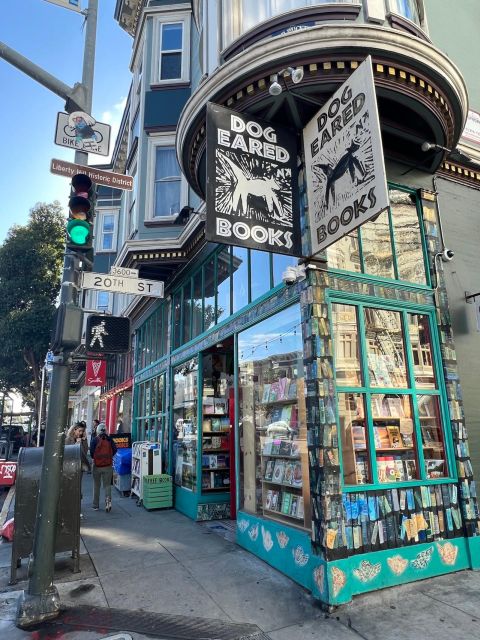
The meeting point is Cafe de Casa. From there, the experience heads toward the Castro, beginning with a neighborhood that announces itself through color and symbolism.
A café meeting point is a practical choice. You can arrive early, settle in, and start the walk with a drink if you wish, though beverages are not included in the tour price. The description does not specify how far the group walks before or after the meeting point, so check the starting time and allow yourself enough time to arrive without rushing.
Since the tour takes place rain or shine, bring weather protection suited to the forecast. San Francisco can feel cool even on a bright day, and a three-hour outdoor visit calls for comfortable shoes and a light extra layer.
The Castro, from Harvey Milk Plaza to the Castro Theatre
The Castro portion opens with the neighborhood’s best-known symbol, the rainbow flag. It is more than a colorful photo stop. Here, it points to a district closely tied to the history of the LGBT community and to the public life of Harvey Milk, America’s first openly gay elected official.
At Harvey Milk Plaza, the guide places the neighborhood in its wider political and social setting. The value of this stop is not only the information itself. You begin to understand why the Castro became a place of visibility, community, and activism.
The tour also points out the former photo store associated with Harvey Milk. A small storefront can carry more meaning than a grand monument when it is tied to someone’s daily work and public role. This is the kind of detail that helps the history feel connected to a real street rather than confined to a museum.
The Castro Theatre adds another layer. Its presence reflects the district’s long connection with cinema and local culture. You have time for photographs and a guided explanation, but the tour does not include an admission to a film or an interior visit. Keep that distinction in mind if the theater is a major reason for your interest.
The Castro is also one of San Francisco’s trendier districts, so the experience is not only historical. You will see a living neighborhood with shops, cafés, and daily activity. The tour’s strength here is the balance between the district’s past and its current identity.
Parents may find the Castro section workable for older children, especially if they enjoy stories about people, politics, and social change. One family specifically found the visit enjoyable for both children and adults. The guide’s storytelling style matters here, since the subject can be handled as human history rather than as a list of dates.
Mission Dolores and the city’s oldest building
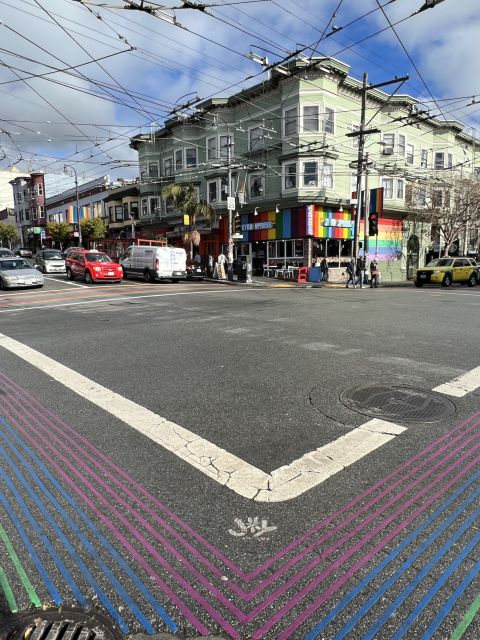
The route then moves toward the Mission District, San Francisco’s oldest Hispanic neighborhood. The change is easy to notice in the architecture, murals, food, and street life.
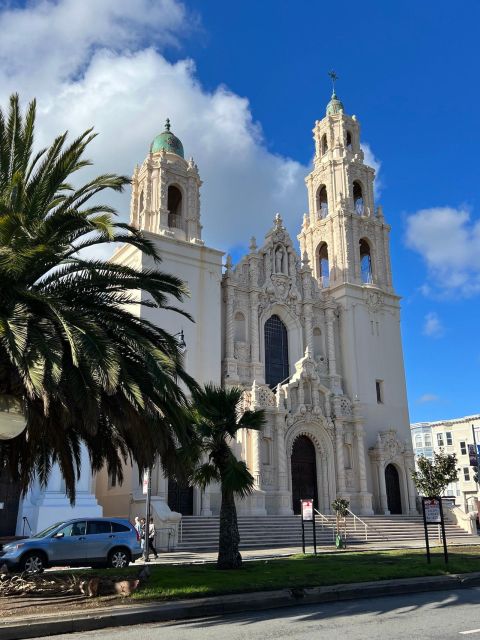
Mission Dolores is the key historical stop. It is described as San Francisco’s oldest building, giving the tour a direct connection to the city’s earliest period. This is a useful counterpoint to the Castro, where the focus is much more modern and political.
The visit helps you place the Mission in time. You are not simply looking at a historic structure before moving on to newer streets. You are seeing how an old foundation remains part of a neighborhood known today for art, restaurants, independent businesses, and Hispanic culture.
The tour includes a photo stop and guided explanation. It does not state that an interior visit is included, so do not book this experience expecting a long church or museum visit. The appeal is the setting and the context, especially when combined with the rest of the Mission route.
A different sort of day in San Francisco altogether:
- Small Group Yosemite and Giant Sequoias Day Trip from San Francisco
★ 5.0 · 3,671 reviews - Yosemite Highlights & Giant Sequoias Day Tour from San Francisco
★ 4.5 · 3,455 reviews - San Francisco Super Saver: Muir Woods & Wine Country w/ optional Gourmet Lunch
★ 4.5 · 3,352 reviews - San Francisco: Golden Gate Bay Cruise (1-hour)
★ 4.7 · 3,071 reviews
Dolores Street, Victorian homes, and the famous blue house
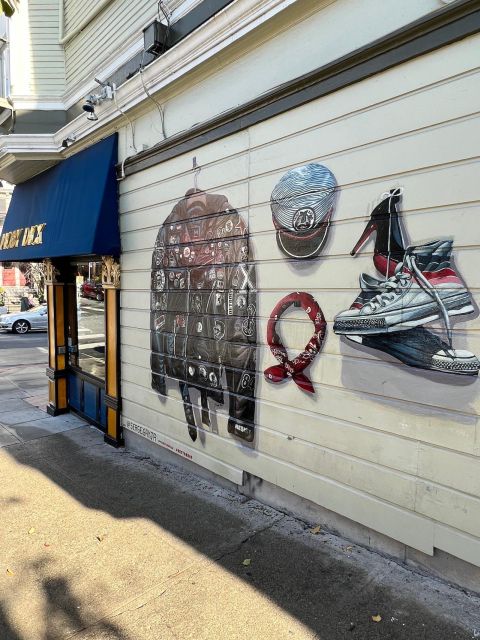
Dolores Street brings a different mood. Palm trees line the street, and the route gives you time to look at San Francisco’s well-known Victorian architecture.
The blue house connected with Maxime Le Forestier’s song is one of the tour’s most personal details. If you know the song, seeing the actual house adds a small moment of recognition. If you do not, it is still a memorable example of how music and place can connect across countries.
The tour continues into Liberty Hill, described as San Francisco’s first suburb. Here, the focus shifts from individual landmarks to the range of homes found in the district. Simple cottages sit alongside more elaborate Victorian mansions, showing how the neighborhood developed over time.
The John McMullen House is singled out as one of the most beautiful examples, dating from the late 19th century. You will not be touring these private homes, but the street view is the point. This is architecture best appreciated at walking pace, when you can compare details from one house to the next.
I like this section because it avoids treating San Francisco’s Victorian houses as a single postcard style. The homes are varied, and the Liberty Hill stop gives you a clearer sense of that variety. The drawback is that architecture fans may want more time for photographs than a guided three-hour route allows.
Murals at the Women’s Building and Clarion Alley
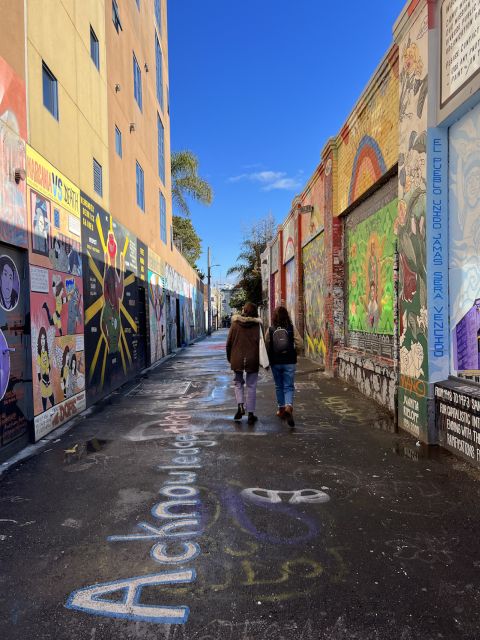
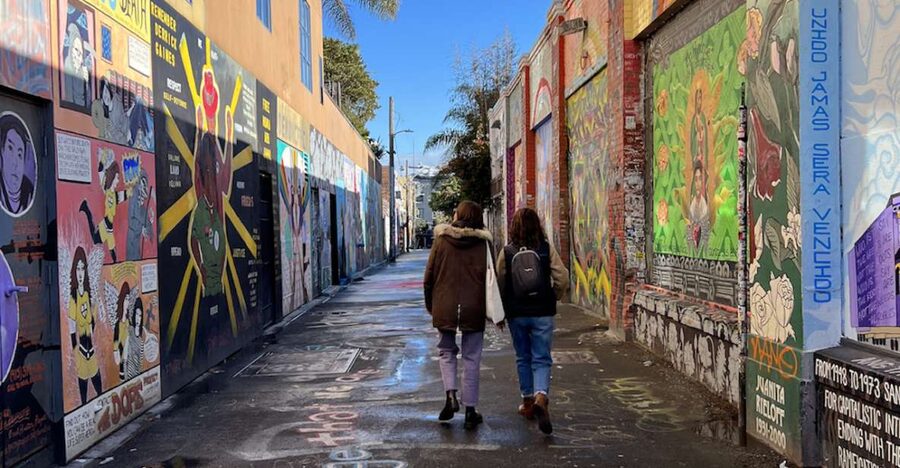
The Mission’s murals are among the most visually striking parts of the walk. At the Women’s Building, a giant mural covers the exterior and offers a strong example of public art with a community focus.
Clarion Alley brings a different style. Its urban graffiti changes over time, so the exact artwork will not always be the same. That is part of the appeal. You are seeing an open-air art space rather than a fixed gallery collection.
The guide adds meaning to the paintings and the places where they appear. Without context, murals can become a quick photo stop. With an explanation, you can better understand why the Mission is associated with artistic expression and neighborhood identity.
This portion suits people who enjoy photography, design, and street culture. It also gives the tour a welcome change of pace after the historical stops. The walls are colorful, but the point is not just decoration. The art is part of how the neighborhood presents its ideas and communities.
Valencia Street for shops, food, and local flavor
Valencia Street is the most practical section for anyone who wants to continue exploring after the tour. The street is lined with independent bookstores, thrift shops, Mexican taquerias, and unusual local boutiques.
Food and shopping are not included in the $65 price, so bring a separate budget if you want to buy something or stop for a meal later. The map supplied with the tour includes recommended addresses, which makes this section more useful than a simple pass-by.
I would pay close attention to the guide’s suggestions here. A local address can help you avoid spending the rest of your San Francisco visit only in heavily visited areas. The tour does not promise tastings, drinks, or purchases, so treat Valencia Street as a chance to note places for later.
This is also where the small-group format has real value. With only 10 participants, you can ask where to return for lunch, what kind of shops suit your interests, or which nearby streets are worth adding to your plans.
Dolores Park and the final city view
The tour ends at the top of Dolores Park. From here, you get a broad view toward downtown and its distant skyscrapers.
Ending at a park gives the route a natural finish. You have moved from close-up details, such as murals and storefronts, to a wider view of the city. The panorama also helps you understand the relationship between the neighborhoods you have just crossed and the downtown core beyond them.
This is a photo stop, not a full sightseeing session with a long break. If you want quiet time in the park, plan to return later. The tour ends at Mission Dolores Park rather than bringing you back to Cafe de Casa, so make sure you are comfortable arranging the next part of your day from there.
What $65 buys you
At $65 per person, this is not the cheapest way to see San Francisco streets. The value comes from the French-speaking guide, the small group, and the amount of context fitted into three hours.
You are paying for more than directions between landmarks. The route connects LGBT history in the Castro with Hispanic heritage in the Mission, then adds architecture, murals, shops, and a city view. If you explored alone, you could see many of the same streets, but you would need to research the background and plan the route yourself.
The included map with recommended addresses adds practical value, especially if you plan to spend more time in the Mission after the tour. The follow-up email, with a reminder of the places visited and a souvenir photo, is a useful way to keep the route from becoming a blur of names.
There are limits. Drinks, purchases, and any food stops cost extra. The tour is also fixed at three hours, so you cannot linger at every mural, shop, or house. If you already know San Francisco well, you may prefer to explore independently. If this is your first visit, the price is easier to justify because it gives you a clear introduction to two districts that are easy to miss or misunderstand without local context.
Who will get the most from this walk
I would recommend this tour to French-speaking visitors who want history explained naturally and who prefer neighborhoods to major monuments. It is especially useful if you have already seen the Golden Gate Bridge, Fisherman’s Wharf, or Union Square and want a more local side of the city.
It also suits families. The route has visual variety, short historical stories, colorful murals, and open streets. The experience has been described as enjoyable for both children and adults, though each family should judge whether a three-hour city walk fits its children’s energy and interests.
The tour is a good match for:
- French-speaking first-time visitors
- People interested in LGBT history and social change
- Architecture fans who enjoy Victorian homes
- Photographers and street-art enthusiasts
- Shoppers looking for independent stores
- Visitors who want food suggestions without booking a food tour
It may be less suitable if you want a vehicle-based sightseeing trip, a food tasting, or extensive interior visits. The route is centered on streets, façades, public art, and guided interpretation.
Practical details before you book
The tour costs $65 per person and lasts three hours. The group is limited to 10 participants, and the live guide speaks French.
You can cancel up to 24 hours before the tour for a full refund. You can also reserve now and pay later, which helps if your San Francisco schedule is still changing.
The tour runs in all weather. Wear shoes suited to city walking, check the forecast, and bring a layer or rain protection as needed. Since the route finishes at Mission Dolores Park, plan your next stop from that location rather than assuming you will return to the starting café.
The overall rating is 4.6 from six reviews, with repeated praise for the guides’ friendly manner, fluent French, historical explanations, emotional context, and useful anecdotes. Jeremy and Lillian are two guide names associated with particularly positive experiences. The strongest pattern is clear: people come for the neighborhoods and remember the way the stories are told.
Should you book the Castro and Mission tour?
Book it if you want San Francisco explained through its communities, streets, and local details rather than only through famous landmarks. The combination of Harvey Milk Plaza, Mission Dolores, Victorian homes, murals, Valencia Street, and Dolores Park gives you a varied three-hour route with a strong sense of place.
I would especially choose it early in a San Francisco visit. The map and recommended addresses can help shape later meals and walks, while the guide gives you context for returning to the Castro or Mission on your own.
Skip it if you dislike walking in uncertain weather, need lots of free time at each stop, or want food and drinks included. For everyone else, $65 is a fair price for a small French-language introduction to two of San Francisco’s most distinctive districts.
FAQ
Where does the tour begin?
The tour starts at Cafe de Casa.
Where does the tour end?
The tour ends at Mission Dolores Park.
How long does the tour last?
The tour lasts three hours, with about 1.5 hours in the Castro and 1.5 hours in the Mission District.
What language is the tour conducted in?
The live tour guide speaks French.
How large is the group?
The group is limited to 10 participants.
Is food or drink included?
No. Beverages and personal purchases are not included.
Can I cancel for a refund?
Yes. You can cancel up to 24 hours in advance for a full refund.
Recently added around San Francisco
- Guided Private Wine Tour to Napa and Sonoma Wine Country★ 5.0 · 3 reviews
- San Francisco: Muir Woods Giant Redwoods & City Private Tour★ 5.0 · 3 reviews
- San Francisco Chinatown Food and Culture Tour★ 5.0 · 3 reviews
- San Francisco City Half-Day Private Custom Tour★ 5.0 · 3 reviews
- Napa or Sonoma Private Wine Tour from San Francisco★ 5.0 · 3 reviews
- 6-Hour Luxury Napa Wine Tasting Tour with Route Planning★ 5.0 · 3 reviews
- SFO Pick-Up with City Sightseeing Tour★ 5.0 · 3 reviews
- 6-Hour Sparkling Wine Tour of Napa Valley★ 5.0 · 3 reviews
Tours, compared.
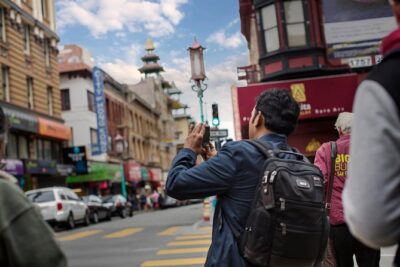
Big Bus SF: Hop-on Hop-off Tour with 17 Stops and Sunset Option
Read our review →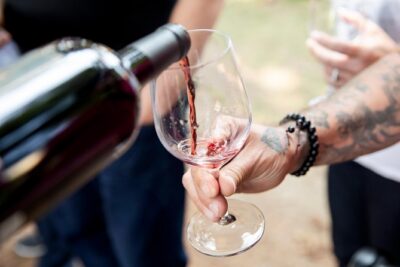
Napa and Sonoma Wine Country Full-Day Tour from San Francisco
Read our review →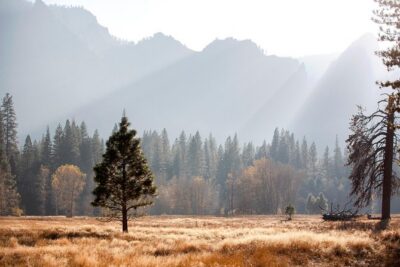
Yosemite Highlights & Giant Sequoias Day Tour from San Francisco
Read our review →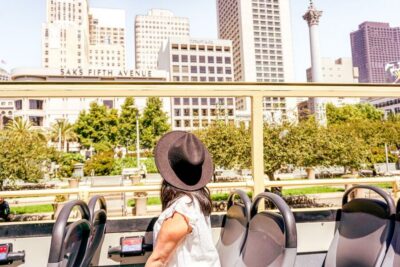
Combo Tour: Alcatraz Island and San Francisco Grand City Tour
Read our review →
Monterey, Carmel and 17-Mile Drive: Full Day Tour from SF
Read our review →