Reviewed · TOURS
San Francisco: Giants Oracle Park Ballpark Tour
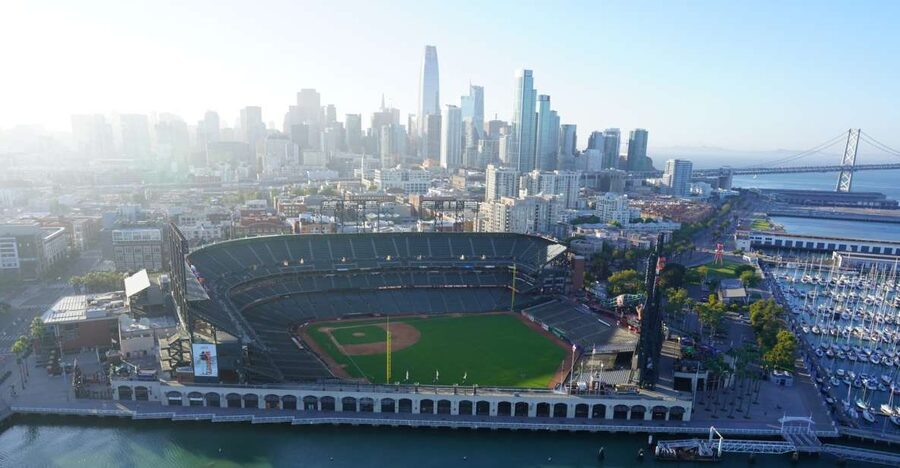
Oracle Park gives you something most ballpark tours cannot: a working baseball stadium beside the water, with the Bay Bridge and McCovey Cove adding a dramatic backdrop. I like the chance to enter places normally reserved for players and staff, especially the visitors’ indoor batting cage and press box. I also like that guides such as Barry, Craig, Barbara, and Daniel bring real enthusiasm to the Giants’ story, which helps even if baseball is not your strong suit.
The main drawback is that the route is not fixed. Team schedules and area availability can close off certain stops, so the dugout, luxury boxes, or changing rooms are not guaranteed. You will also walk about 2 miles continuously, and the tour runs rain or shine.
In This Review
- Key points to know before you go
- Why Oracle Park is worth seeing without a game
- Starting at the Juan Marichal statue
- The visitors’ indoor batting cage
- The press box and the unseen work of game day
- Walking onto the field
- What the guide adds to the 90 minutes
- The waterfront views and retro character
- Timing, access, and the limits of the route
- Is $46 a fair price?
- Who should book the Oracle Park tour?
- Should you book it?
- FAQ
- Where does the Oracle Park tour begin?
- How long does the ballpark tour last?
- What areas can I see during the tour?
- Is the tour offered in English?
- Can I bring a backpack or suitcase?
- Is the tour wheelchair accessible?
Key points to know before you go
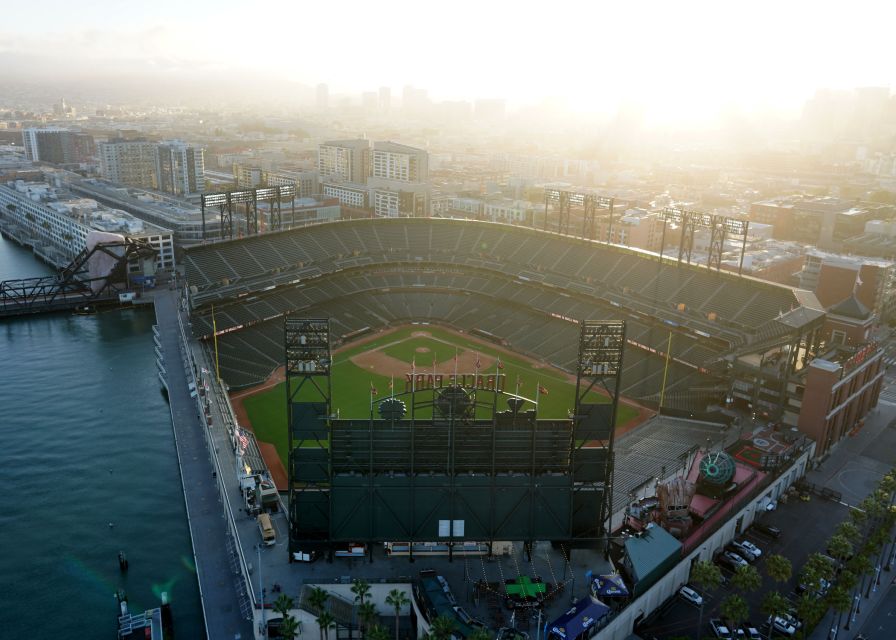
- McCovey Cove and Bay Bridge views: Oracle Park’s waterfront setting is part of the tour, not just background scenery.
- Visitors’ indoor batting cage: See a practice area normally kept away from ordinary ticket holders.
- Press box access: Get a different view of how a game is presented and covered.
- English-speaking Giants guides: Guides including Barry, Craig, Barbara, and Daniel have been praised for their club and Major League Baseball knowledge.
- A 90-minute walking tour: Plan for steady movement, airport-style security, and no backpacks or large bags.
- $46 with gratuities included: The cost makes the most sense if you value access beyond the public concourses and seats.
Why Oracle Park is worth seeing without a game
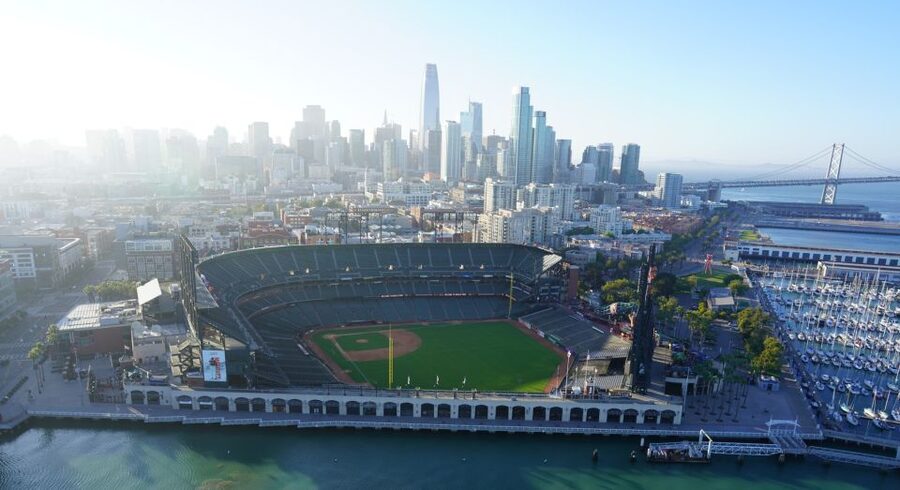
Many stadiums are enjoyable only when the lights are on and the crowd is loud. Oracle Park has enough character to make a daytime visit worthwhile. Its position on San Francisco Bay gives the tour a sense of place that a standard sports venue cannot match.
This is the home of the San Francisco Giants, one of baseball’s most storied franchises. It is also a park built around the water, where a home run can become a splash hit in McCovey Cove. Even if you do not follow baseball closely, that detail gives the building a personality you can understand at once.
I especially like the mix of baseball and architecture. You are not simply walking through corridors and checking off rooms. At several points, the park opens toward the bay, and the view becomes part of the experience. The Bay Bridge adds another strong visual feature, particularly from the seating and field areas.
The tour suits adults, children, Giants supporters, and first-time visitors to the sport. It also works well for international visitors. One guide, Barry, was praised for explaining the club in a way that made sense to someone from the United Kingdom with little baseball knowledge. That is important here, since American baseball terms and traditions can otherwise make a ballpark tour feel like an inside conversation.
A few more San Francisco tours worth comparing
- Muir Woods and Sausalito (Return by Bus or Ferry)
★ 4.5 · 5,098 reviews - Big Bus SF: Hop-on Hop-off Tour with 17 Stops and Sunset Option
★ 4.0 · 4,539 reviews - Napa and Sonoma Wine Country Full-Day Tour from San Francisco
★ 4.5 · 4,455 reviews
Starting at the Juan Marichal statue
Your meeting point is the Juan Marichal Statue next to the O’Doul Gate, at Third and Berry Streets. It is beside the Giants’ Flagship Dugout Store and near the Giants’ Dugout Store entrance.
Give yourself enough time to find the statue and arrive ready to enter. The group passes through airport-style security, so do not bring a backpack, suitcase, oversized luggage, or large bag. This rule matters more than it might seem. If you are touring with luggage after checking out of a hotel, arrange storage elsewhere before you arrive.
The starting point also puts you close to the stadium’s public Giants merchandise shops. You can browse before or after the tour, but food and drinks are not included, and there is no hotel pickup or drop-off. The sensible plan is to treat this as a downtown San Francisco activity and arrange your own way to Oracle Park.
The tour is offered in English with a live guide. That personal format is one of its strengths. A good guide can stop to explain a baseball term, answer a question about Giants history, or point out a detail you would miss while walking through the park alone.
The visitors’ indoor batting cage
The visitors’ indoor batting cage is one of the clearest reasons to book this tour rather than simply buy a game ticket. It is a working practice space, hidden from the usual public route, and it gives you a look at the preparation behind the spectacle.
You can picture the contrast: fans gather in the stands for the finished product, while players use areas like this to warm up and work on their swing. The cage brings the tour closer to the daily routines of a professional team without pretending that you are entering a public attraction designed only for display.
The precise amount of time spent here can vary with the group and the day’s access. Team schedules control much of the route, so the batting cage is a featured stop, but no tour can promise that every area will be open on every departure.
Practice areas and changing rooms have also been part of some routes, but you should not count on seeing every team-only space. That uncertainty is the tradeoff for touring an active ballpark rather than a museum that is closed to normal operations.
The press box and the unseen work of game day
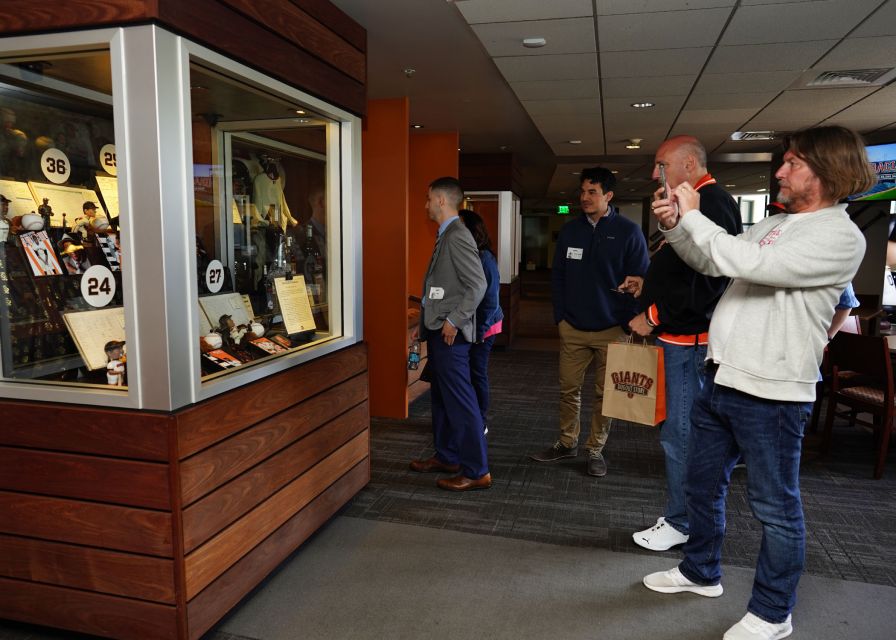
The press box offers a change of viewpoint. From here, you begin to understand that a baseball game is not only the players on the field. It is also a carefully managed production involving statistics, announcements, commentary, reporting, and constant attention to the action.
For a fan, this may be one of the most rewarding stops. You get a better sense of how the field is observed from above and how the game reaches people who are not sitting in the stadium. For a newcomer, the guide’s explanation is what makes the room useful. Without context, it could look like rows of desks. With a strong guide, it becomes part of the story of how Major League Baseball operates.
Several guides have been singled out for their enthusiasm and ability to answer questions. Craig was described as friendly and highly informed about the park and its past. Barbara was praised for sharing facts about both the Giants and Major League Baseball more broadly. That range is helpful because you can ask about the local club, the building, or baseball customs in general.
You might also see other media or team areas depending on access. The route can change, so think of the press box as a likely highlight rather than a rigid promise that every room will be open.
A different sort of day in San Francisco altogether:
- Small Group Yosemite and Giant Sequoias Day Trip from San Francisco
★ 5.0 · 3,671 reviews - Yosemite Highlights & Giant Sequoias Day Tour from San Francisco
★ 4.5 · 3,455 reviews - San Francisco Super Saver: Muir Woods & Wine Country w/ optional Gourmet Lunch
★ 4.5 · 3,352 reviews - San Francisco: Golden Gate Bay Cruise (1-hour)
★ 4.7 · 3,071 reviews
Walking onto the field
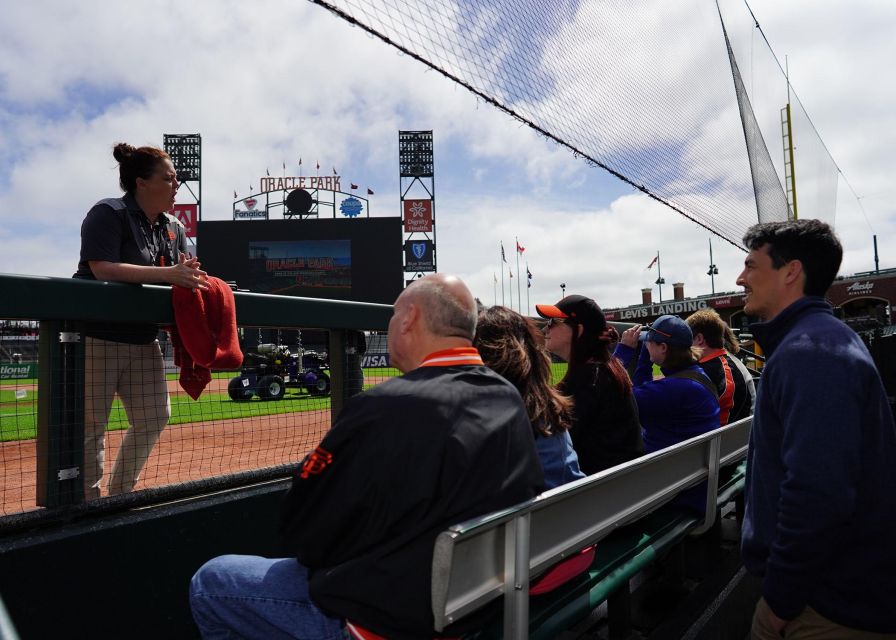
The field is the emotional center of the tour. From the seats, you watch baseball as a spectator. From field level, you notice the scale of the park in a different way, including the distance to the outfield and the relationship between the playing surface, the stands, and the bay.
This stop is particularly good for photos. Guides have been willing to answer questions and take pictures, although you should follow their instructions about where the group may stand. The experience is not a chance to wander wherever you please. It is a guided visit through an active professional venue.
The field also makes the waterfront setting feel more real. Oracle Park is known for the possibility of a ball leaving the yard and landing in McCovey Cove. Even if no game is taking place, the position of the park beside the water explains why the venue has such a distinct identity.
Do not expect a full game-day experience. You will not be watching live play as part of the tour, and food and drinks are not included. If your main goal is to see the Giants play, buy a game ticket instead. If you want to understand the venue before attending a game, this tour makes a good companion.
What the guide adds to the 90 minutes
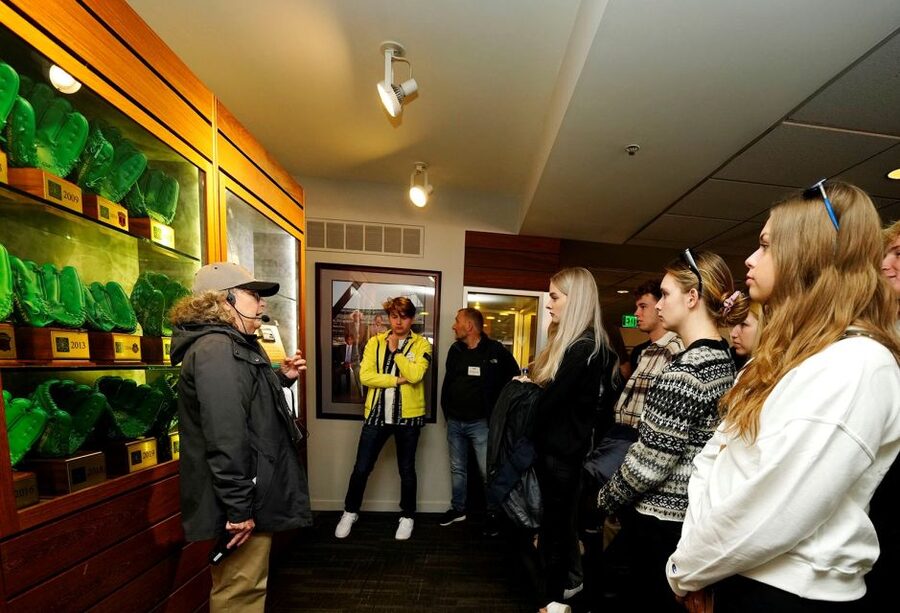
The guide can make or break a ballpark tour. Here, the strongest part of the experience appears to be the human storytelling. Barry, Craig, Barbara, Daniel, Marjorie, Tom, and other guides have been praised for their enthusiasm, friendliness, and command of the Giants’ story.
That matters for two reasons. First, a stadium contains many details that are not obvious. Second, the tour has to work for a mixed group. Some people will know the Giants’ history well. Others may be visiting from abroad and know very little about baseball.
A guide such as Marjorie can engage different ages and levels of interest, while Daniel was praised for being happy to answer questions and take photos. The best approach is to ask questions as you go. If you are unsure about an area, a baseball term, or a feature of the park, this is the moment to ask rather than quietly guess.
The guides also provide the personal link that a self-guided visit lacks. They are not just moving you from room to room. Their stories connect the team, the stadium, and the wider history of Major League Baseball.
Still, guide quality can vary from one departure to another. The repeated praise for individual guides is encouraging, but no tour can promise a particular person unless the booking specifically names one. Your route and guide may be different from someone else’s.
The waterfront views and retro character
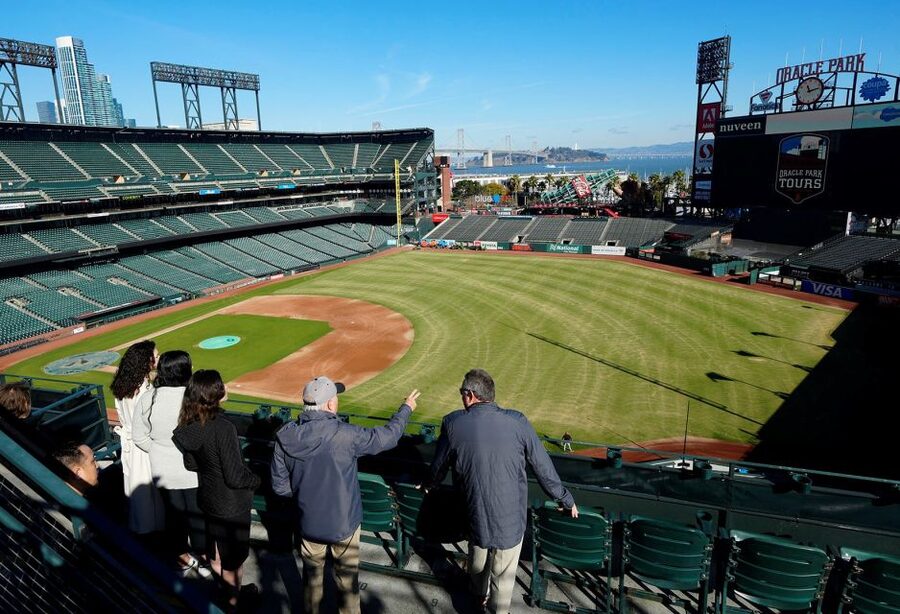
The bay views are not a minor extra. They are one of the main reasons this park feels different from an ordinary stadium. From the right vantage point, you can look across the water toward the Bay Bridge and understand how closely Oracle Park is tied to San Francisco’s setting.
One visitor called the park a fantastic venue and pointed to the interesting cantilever bridge nearby. Another liked the park’s retro style. Those details give you more to notice than team colors and seating sections. Look for the way the stadium frames the water and how the architecture creates sight lines beyond the outfield.
The views may be best appreciated at a measured pace, but the tour covers roughly 2 miles of continuous walking. You will be moving between areas rather than stopping for long stretches at every viewpoint. Wear comfortable shoes and be ready for outdoor conditions.
The tour takes place rain or shine. A sunny day will make the bay views more appealing, but poor weather does not automatically cancel the visit. Bring suitable clothing, while remembering that you cannot carry a backpack or large bag inside.
Timing, access, and the limits of the route
The advertised duration is about 90 minutes. That is long enough to see several behind-the-scenes areas without taking up an entire day in San Francisco. It also fits well before another downtown activity, provided you allow time to reach the meeting point and pass through security.
One person described the visit as lasting closer to two hours. That may reflect the pace of the group, extra questions, or a route with more stops. I would keep a little space in your schedule rather than booking a tightly timed meal, museum entry, or departure immediately afterward.
All stops depend on the Giants’ team schedule and area availability. This is the key condition to understand before paying. You may see the visitors’ batting cage, press box, and field, but access to the dugout, luxury boxes, changing rooms, or other areas can change.
That flexibility is not a flaw unique to this tour. It is simply what happens when you visit an active ballpark. The advantage is that you are seeing a real sports venue, not a static exhibit. The disadvantage is that you cannot demand a fixed checklist of rooms.
The tour is wheelchair accessible, but the walking distance remains significant. If you use a wheelchair or have limited stamina, consider the 2-mile route when deciding if the pace will suit you.
Is $46 a fair price?
At $46 per person, the tour is not the cheapest way to see Oracle Park. You can view parts of the building from public areas on a game day, and the waterfront can be enjoyed without buying a tour at all.
The value comes from access. You are paying to enter staff and player areas, hear the Giants’ story from a live guide, walk onto the field, and see the park from working areas such as the press box and batting cage. Gratuities are included, which keeps the final price clearer.
I think the price is fair if you are a Giants fan, a baseball enthusiast, or someone who enjoys architecture and behind-the-scenes access. It is also a reasonable gift for a spouse or family member who already loves the team. One person received the tour as a gift for her husband and found it especially worthwhile for that reason.
The value is weaker if you have no interest in baseball, dislike guided group visits, or want guaranteed access to the dugout and luxury boxes. The waterfront views are free, and a game ticket may be a better purchase if live action is your priority.
Free cancellation up to 24 hours before the tour and the option to reserve now and pay later make the booking less rigid. Those terms are useful if your San Francisco plans are still moving around, but they do not change the basic need to check the departure time and route conditions.
Who should book the Oracle Park tour?
I would recommend this tour to first-time San Francisco visitors who want an activity with a strong local connection. Oracle Park gives you sport, architecture, city views, and a bit of insider access in one 90-minute outing.
It is especially suited to:
- Giants fans who want to see beyond the ordinary seating areas
- Families with children interested in sports
- International visitors who want baseball explained in plain terms
- Couples looking for a memorable gift or unusual city activity
- Architecture fans who appreciate the park’s retro style and waterfront position
I would be more cautious if you are carrying luggage, have difficulty walking 2 miles, or need a guaranteed route. The restrictions on backpacks and large bags are strict, and team operations can alter the stops.
Should you book it?
Book the Giants Oracle Park Ballpark Tour if you want to know how the park works beyond the turnstiles. The field, visitors’ batting cage, press box, and bay views give the visit real variety, while the best guides add stories that make the building feel connected to the team and the sport.
Go in with the right expectations. This is not a game, food tour, or guaranteed visit to every premium area. It is a walking tour of an active stadium, with a flexible route and about 90 minutes of access that can occasionally run longer.
For $46, I see good value for baseball fans and curious visitors who want a closer look at one of San Francisco’s most distinctive venues. If that sounds like you, arrive light, wear comfortable shoes, and leave room in your schedule for the guide to tell the story properly.
FAQ
Where does the Oracle Park tour begin?
The tour begins at the Juan Marichal Statue next to the O’Doul Gate at Third and Berry Streets, beside the Giants’ Flagship Dugout Store.
How long does the ballpark tour last?
The stated duration is approximately 90 minutes. The walking route covers about 2 miles, and one tour account described the visit as lasting around two hours.
What areas can I see during the tour?
The planned behind-the-scenes areas include the visitors’ indoor batting cage, the press box, and the field. Other stops can change with the team schedule and area availability.
Is the tour offered in English?
Yes. The tour has a live English-speaking guide.
Can I bring a backpack or suitcase?
No. Backpacks, suitcases, oversized luggage, and large bags are not allowed. Everyone must also pass through airport-style security before entering the ballpark.
Is the tour wheelchair accessible?
Yes, the tour is wheelchair accessible. Keep in mind that the route involves about 2 miles of continuous walking and takes place rain or shine.
Recently added around San Francisco
- Guided Private Wine Tour to Napa and Sonoma Wine Country★ 5.0 · 3 reviews
- San Francisco: Muir Woods Giant Redwoods & City Private Tour★ 5.0 · 3 reviews
- Napa or Sonoma Private Wine Tour from San Francisco★ 5.0 · 3 reviews
- San Francisco Chinatown Food and Culture Tour★ 5.0 · 3 reviews
- San Francisco City Half-Day Private Custom Tour★ 5.0 · 3 reviews
- SFO Pick-Up with City Sightseeing Tour★ 5.0 · 3 reviews
- 6-Hour Luxury Napa Wine Tasting Tour with Route Planning★ 5.0 · 3 reviews
- Muir Woods, Sausalito and Ferry back to Fisherman’s Wharf★ 4.7 · 3 reviews
Tours, compared.
Big Bus SF: Hop-on Hop-off Tour with 17 Stops and Sunset Option
Read our review →
Napa and Sonoma Wine Country Full-Day Tour from San Francisco
Read our review →
Yosemite Highlights & Giant Sequoias Day Tour from San Francisco
Read our review →
Combo Tour: Alcatraz Island and San Francisco Grand City Tour
Read our review →
Monterey, Carmel and 17-Mile Drive: Full Day Tour from SF
Read our review →