Reviewed · TOURS
San Francisco: Downtown Architecture & Public Art Tour
San Francisco’s downtown is not just a forest of office towers. On this three-hour walk, you’ll read the city through its buildings, from a bank rebuilt after the 1906 disaster to sleek towers by famous modern architects. The most surprising part is the public art tucked into office plazas, where sculpture, digital work, and paintings turn ordinary passages into open-air galleries.
I like two things right away. First, guide Jamie makes the tour a conversation, so you can ask about an architect, a company, or an odd detail on a façade. Second, the route reaches Salesforce Park, a remarkable 5.5-acre garden built above a transit terminal, with 600 trees, 16,000 plants, and 13 planting zones. The main drawback is simple: you’ll walk for about two and a half hours, so comfortable shoes matter.
In This Review
- Key points to know
- Why San Francisco’s office district deserves a closer look
- Starting at Mechanics Monument Plaza on Market Street
- From the London Paris National Bank to the Art Deco skyline
- Glass, steel, and the Crown Zellerbach Building
- The southward push and star-architect buildings
- Public art by George Rickey, Jenny Holzer, and more
- Salesforce Park, a garden above the buses
- Finishing at SFMOMA
- What $44 gets you
- The guide makes the difference
- How to prepare for the walk
- Who should book this San Francisco architecture tour?
- FAQ
- How long is the San Francisco Downtown Architecture and Public Art Tour?
- Where does the tour begin?
- Where does the tour end?
- What language is the tour offered in?
- Is admission to SFMOMA included?
- What buildings and styles will I see?
- Which public artists are included on the route?
- What is special about Salesforce Park?
- Is the walking tour wheelchair accessible?
- What should I wear?
- Can I cancel the booking?
Key points to know
- Architecture in historical sequence: See buildings from San Francisco’s post-1906 rebuilding, the 1920s, the mid-century boom, the turn-of-the-millennium expansion, and the tech era.
- Public art with real variety: Look for work by George Rickey, Jenny Holzer, Frank Stella, Jonathan Borofsky, and Ugo Rondinone.
- Salesforce Park is the big finale: This elevated garden creates green space where a conventional park would not fit.
- Jamie keeps the pace relaxed: The tour is built around questions and discussion rather than a nonstop lecture.
- A useful local angle: You’ll hear about public spaces, company contributions, architects, artists, and San Francisco’s changing downtown.
- Good value for architecture fans: At $44, the price is reasonable if you want context rather than a quick photo stop.
Why San Francisco’s office district deserves a closer look
Most people come downtown for Chinatown, the cable cars, the waterfront, or the hills. The Central Business District can feel less inviting at first. It has wide streets, tall commercial buildings, and plenty of places you might otherwise pass without a second glance.
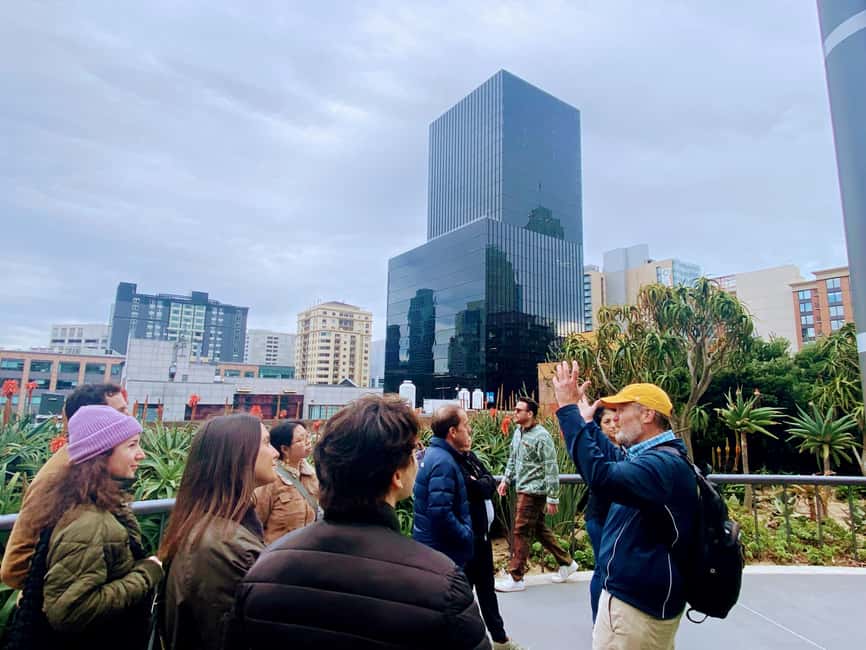
That is exactly why this tour works. Jamie gives you a way to look upward, across plazas, and into spaces you might miss on your own. A plain-looking tower can reveal a link to a particular era of American business. A small sculpture can show how San Francisco requires new office buildings to support public art.
For about 40 years, new downtown office buildings have set aside 1 percent of construction costs for art. You do not need to know the policy in advance to enjoy the result. The practical benefit is that art appears in places where you are already walking, rather than behind a museum ticket desk.
The route also ties local buildings to wider architectural movements. You’ll hear how San Francisco’s commercial center changed after the earthquake and fire, how Art Deco brought decoration to the skyline, and how International Style towers favored glass, steel, and clean lines. The later section looks at the southward growth of downtown and the more recent work of star architects.
A few more San Francisco tours worth comparing
- Muir Woods and Sausalito (Return by Bus or Ferry)
★ 4.5 · 5,098 reviews - Big Bus SF: Hop-on Hop-off Tour with 17 Stops and Sunset Option
★ 4.0 · 4,539 reviews - Napa and Sonoma Wine Country Full-Day Tour from San Francisco
★ 4.5 · 4,455 reviews
Starting at Mechanics Monument Plaza on Market Street
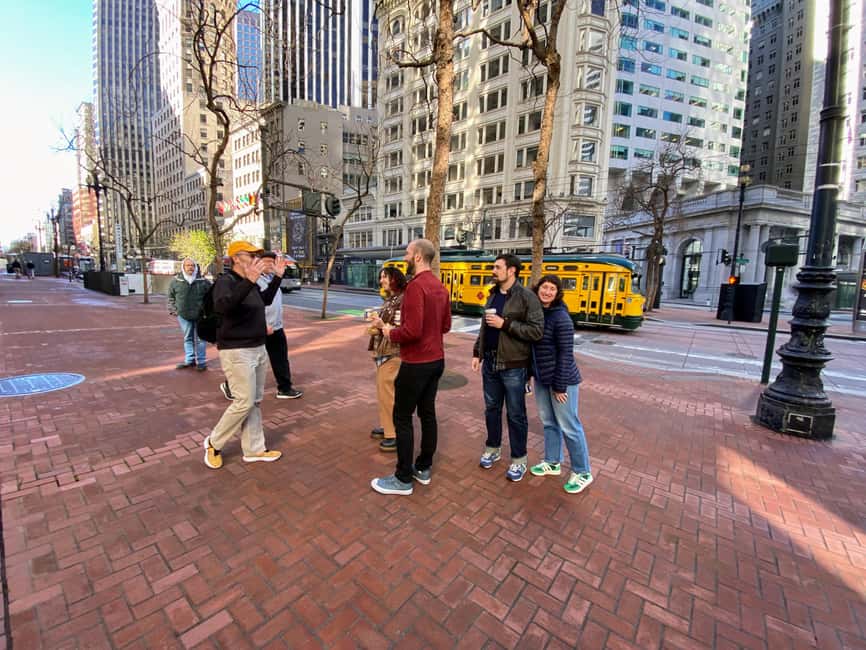
The meeting point is in front of Mechanics Monument Plaza at 488 Market Street. This gives the walk a clear, central starting place, but you should allow enough time to locate the monument and meet the guide before the scheduled departure.
The first section focuses on the Financial District and nearby parts of the Central Business District. You are not simply given a list of building names. The useful part is the sequence. San Francisco’s downtown becomes easier to understand when you see each period as a response to money, technology, disaster, and changing business needs.
The tour lasts three hours overall, with about two and a half hours of walking. That leaves time for the final stop at the San Francisco Museum of Modern Art. Expect a moderate city walk, not a mountain hike, but you will be on your feet for most of the experience.
From the London Paris National Bank to the Art Deco skyline
One of the early architectural examples is the London Paris National Bank. Its importance comes from timing as much as appearance. The building rose from the rubble after the 1906 earthquake and fire, offering a look at how San Francisco rebuilt its commercial core.
That context adds weight to the façade. You are not seeing an isolated old building. You are seeing part of the city’s effort to restore confidence and business after a major catastrophe. Jamie’s job here is to connect the stone and ornament to the event that made reconstruction necessary.
The Pacific Telephone Building brings a different mood. It is an exuberant Art Deco building from the 1920s, the period when new technology, business wealth, and a confident decorative style shaped the skyline.
Art Deco is especially rewarding on a walking tour because details can disappear from a passing car or a quick downtown errand. Look for the overall vertical push, the decorative treatment, and the way the building announces its presence. The contrast with the earlier post-earthquake structures helps you see that downtown did not grow in one steady style.
Glass, steel, and the Crown Zellerbach Building
The next shift is toward the International Style and the mid-century economic boom. The Crown Zellerbach Building represents this period, with a cleaner, sleeker approach than the ornate buildings associated with the 1920s.
This is a good point to think about what modernism changed. Instead of making a tower look historic or heavily decorated, architects focused on structure, materials, proportion, and the repetition of windows. A glass-and-steel office building can seem anonymous if you only see it as a workplace. With some context, you can compare its design choices with the older structures around it.
I like this part of the tour because it shows that architecture is not just about age. A newer building can be important for how it changed the city’s idea of a downtown tower. The walk also helps you notice the tension between preservation and growth, though the experience is primarily a guided architecture and art tour rather than a formal debate about planning policy.
A different sort of day in San Francisco altogether:
- Small Group Yosemite and Giant Sequoias Day Trip from San Francisco
★ 5.0 · 3,671 reviews - Yosemite Highlights & Giant Sequoias Day Tour from San Francisco
★ 4.5 · 3,455 reviews - San Francisco Super Saver: Muir Woods & Wine Country w/ optional Gourmet Lunch
★ 4.5 · 3,352 reviews - San Francisco: Golden Gate Bay Cruise (1-hour)
★ 4.7 · 3,071 reviews
The southward push and star-architect buildings
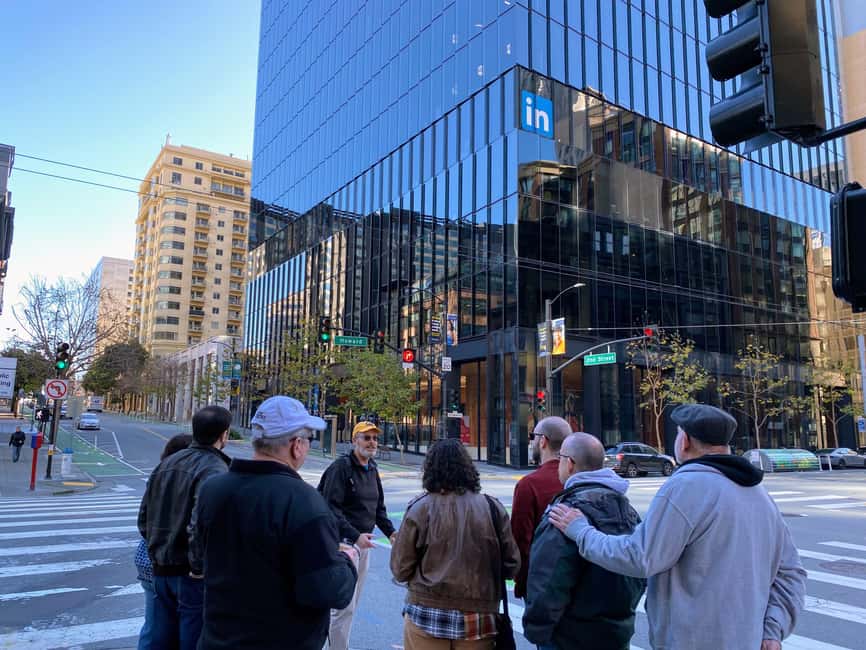
The JP Morgan Chase Building marks another stage in San Francisco’s commercial growth. It helped lead the Central Business District southward around the turn of the millennium, when the downtown core began reaching into areas that had not previously held the same concentration of offices.
You will also see work by well-known architects including Cesar Pelli and Rem Koolhaas. These buildings bring the story into the current tech era, when major companies and large developments used design to signal modernity, ambition, and international reach.
The value here is comparison. You can place a bank from the rebuilding era beside a 1920s tower, a mid-century glass building, and a much newer structure. Jamie also connects San Francisco architecture to work elsewhere in the United States and around the world, giving you more than local trivia.
The route does not promise entry into every building. Much of the experience is based on exterior views, plazas, passages, and public spaces. That is useful to know if you expect interior tours or private access. You are learning to read the city from the street.
Public art by George Rickey, Jenny Holzer, and more
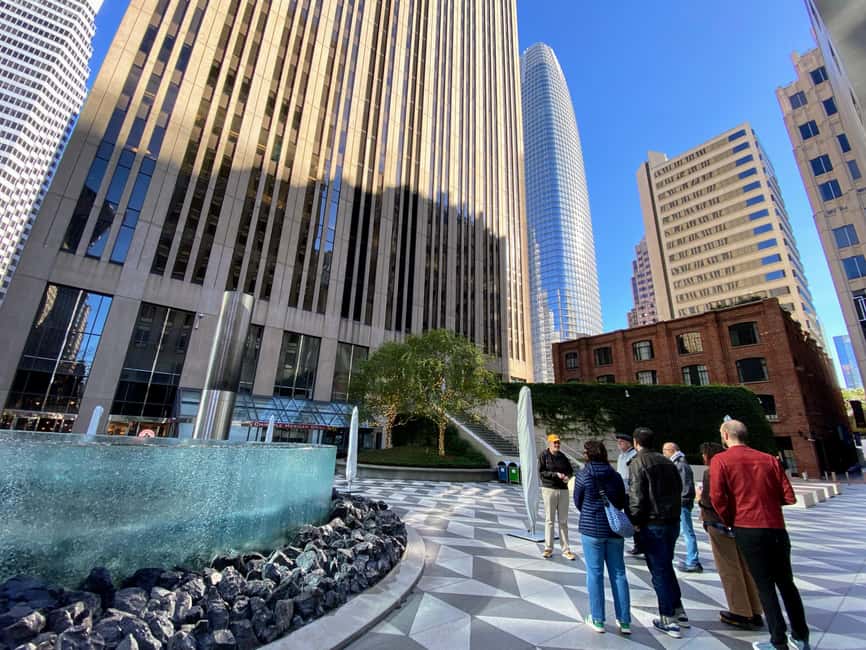
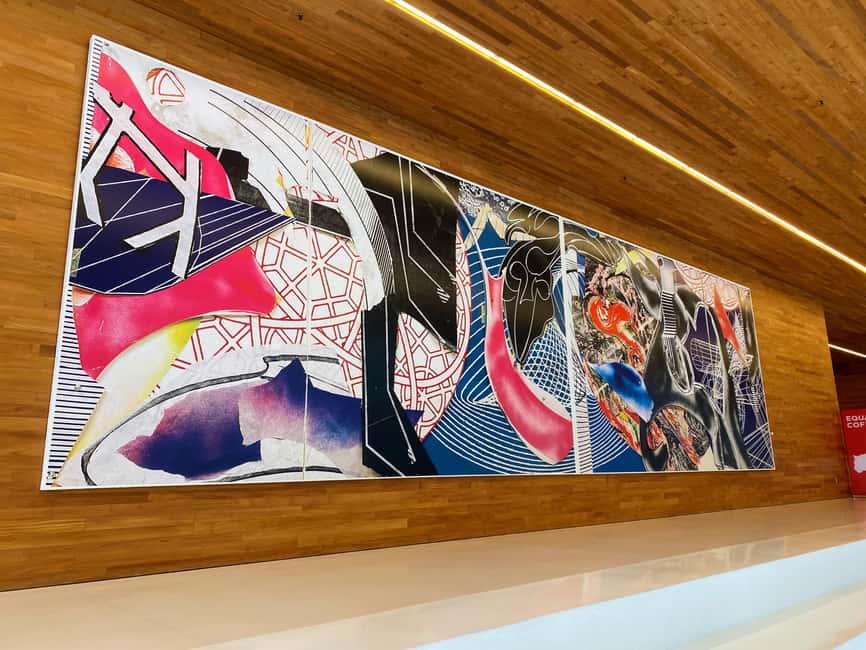
The art section is one of the strongest reasons to choose this walk instead of a standard downtown history tour. The CBD includes work by artists whose names you may recognize from major museums, but here their pieces appear as part of the daily city.
You may see kinetic sculpture by George Rickey, digital art by Jenny Holzer, paintings by Frank Stella, and playful or unusual installations by Jonathan Borofsky and Ugo Rondinone. The range is broad. Some pieces move, some use text or screens, and others interrupt a plaza with a shape or figure you would not expect beside an office tower.
This is where a guide makes a real difference. Without explanation, public art can look like decoration, corporate branding, or an object placed in the wrong spot. Jamie identifies the artists and points out how their work relates to the surrounding buildings and spaces.
I also like the way the tour treats public art as part of urban life. You are not being rushed through a gallery. You can see how art shares space with office workers, pedestrians, transit users, and people taking a break. The setting changes the experience, and the city becomes part museum, part workplace, and part park.
Salesforce Park, a garden above the buses
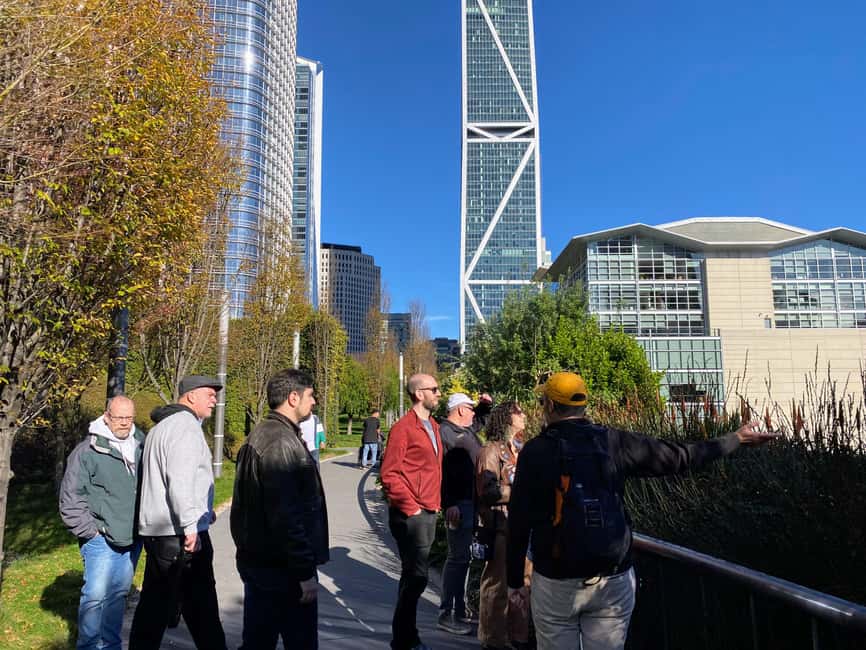
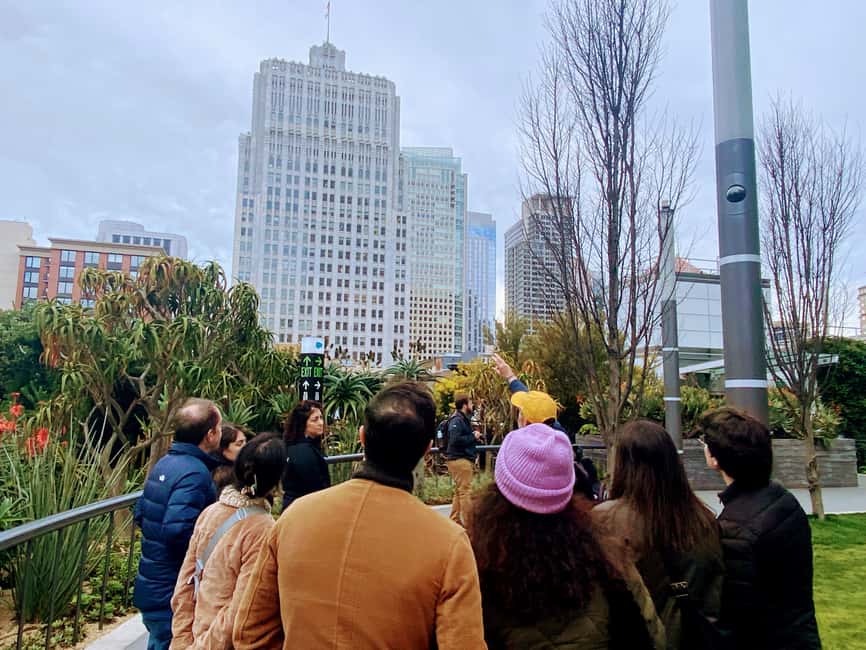
The tour’s most unusual stop is Salesforce Park. The park stretches across four and a half city blocks and covers 5.5 acres above an intermodal transit terminal. It is longer than Salesforce Tower is tall, a comparison that gives you a sense of the park’s scale.
The engineering idea is straightforward but impressive: build a public garden on top of a transportation facility in a part of downtown where a normal ground-level park would have been difficult to create. The result adds greenery to an intensely built-up area without taking away valuable street-level space.
Inside the park, the planting is divided into zones representing 13 ecosystems. There are 600 trees and 16,000 plants. You can also find quiet places to read, yoga classes, movie nights, concerts, and a beer garden, though the tour may not coincide with any particular activity.
One detail is especially fun. Water jets in a fountain activate as buses move through the transit terminal below. It is a small piece of public design, but it makes the hidden transportation system visible from above.
The park sits 70 feet above street level and provides views toward the office and residential buildings constructed around the same period. This is an excellent place to pause and see how the newer downtown fits together.
There is a practical point here. Salesforce Park is not just a photo stop. It takes time to walk through, and the route has already included a substantial amount of city walking. If you have trouble standing or prefer short distances, check the current arrangement before booking. The activity is described as wheelchair accessible, but it still involves a moderate amount of walking.
Finishing at SFMOMA
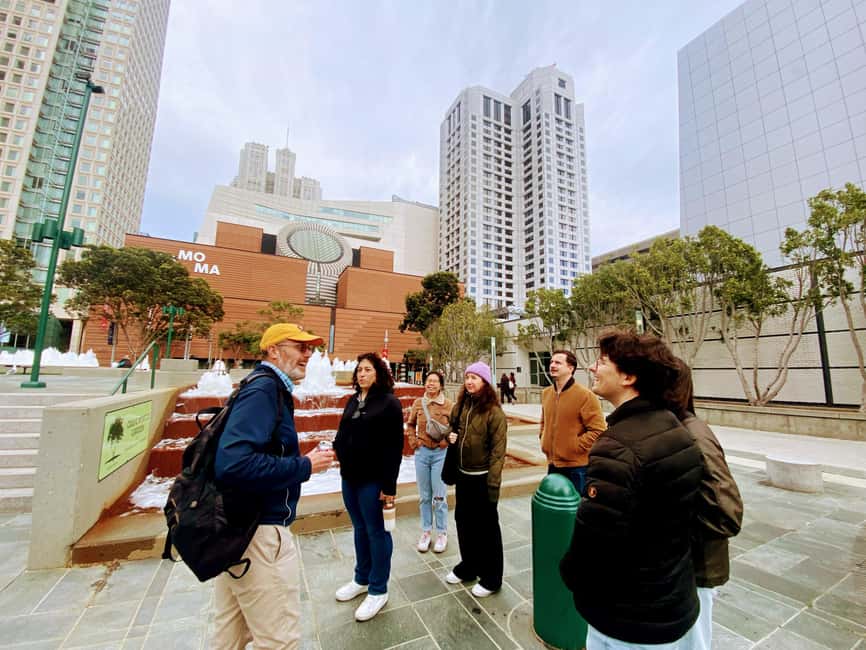
The tour ends at the entrance of the San Francisco Museum of Modern Art. SFMOMA is one of the world’s largest modern and contemporary art museums, and its exterior is part of the architectural story.
This ending works well because the tour has already introduced you to public art in office plazas. You finish at a formal art institution, giving you a natural chance to continue the subject on your own.
The museum visit is listed as part of the route, but admission to the museum is not listed among the included items. Treat the finish as an introduction to SFMOMA and its exterior unless you separately confirm that an entry ticket is provided. That distinction matters when you are working out your total budget.
If you plan to go inside afterward, leave extra time. The walking tour itself is scheduled for three hours, and the description does not promise a full museum visit. You may prefer to return later when you can give the galleries the attention they deserve.
What $44 gets you
The price is $44 per person. For a three-hour guided walk, that is fair value, especially if architecture and public art are central to your trip. You are paying for a specialist guide, a planned route, and explanations that would be difficult to assemble from casual sightseeing.
The strongest value comes from the connections. You see buildings from several periods, learn why the downtown shifted south, understand the role of public art funding, and visit a large park built over transit infrastructure. That is a lot of ground for one morning or afternoon.
The price is less compelling if you only want famous landmark photographs or if you dislike long walking tours. You can see many downtown buildings for free on your own, but you will miss much of the background and the less obvious art. This experience makes sense when you want someone to show you what deserves a second look.
Parking is not included. Since the meeting point and finish are both in central San Francisco, using public transportation may be easier than bringing a car, though the tour information does not specify a recommended route.
The guide makes the difference
Jamie is the name most often associated with the guide, and the experience is built around his personal knowledge of San Francisco architecture, public art, and city development. One booking record identifies the guide as James, so confirm the guide’s name when you book if that detail matters to you.
The best fit is a guide who can answer questions without turning every stop into a speech. Jamie’s approach is described as relaxed, personable, and conversational. He can discuss architects, artists, landscape design, local companies, and wider architectural ideas.
That matters on a subject like this. Architecture tours can become a parade of dates and names. A conversational guide helps you ask the questions that fit your interests, such as why a building uses a certain material or how a public space serves people who work nearby.
The tour is in English only. It is also suitable for locals who want to see familiar streets differently, not just for first-time visitors.
How to prepare for the walk
Wear comfortable walking shoes. The route covers a moderate distance over roughly two and a half hours, and downtown pavement can make a long walk feel longer than expected.
Check the weather and dress accordingly. Much of the experience takes place outside, even though the buildings and art provide plenty to look at. A comfortable layer is useful when conditions change during the day.
The walk is wheelchair accessible, but the published details do not describe every surface, restroom arrangement, or accessibility feature along the route. If you need specific accommodations, ask before booking.
Free cancellation is available up to 24 hours before the activity for a full refund. You can also reserve now and pay later, which helps if your San Francisco schedule is still shifting.
Who should book this San Francisco architecture tour?
You should book it if you enjoy cities as works of art, want more than the usual tourist stops, or like understanding why a place looks the way it does. It is particularly good for architecture students, design fans, art lovers, curious locals, and anyone who has already seen San Francisco’s classic sights.
It also suits a repeat visitor. The buildings and public spaces are there every day, but a guide can reveal connections you would not notice while rushing between neighborhoods.
I would choose another activity if you want interiors, a short stroll, or a broad tour of all San Francisco sights. This route focuses tightly on downtown architecture, public art, and public space. Its strength is focus, not variety.
At $44, with Jamie’s relaxed style and the unusual Salesforce Park finish, I consider it a solid buy for the right audience. Book it when you want to slow down, look closely, and understand downtown as more than a collection of tall buildings.
FAQ
How long is the San Francisco Downtown Architecture and Public Art Tour?
The activity lasts three hours. About two and a half hours are devoted to the guided downtown walking tour, followed by the finish at SFMOMA.
Where does the tour begin?
Meet the guide in front of Mechanics Monument Plaza at 488 Market Street in San Francisco.
Where does the tour end?
The tour ends at the entrance of the San Francisco Museum of Modern Art.
What language is the tour offered in?
The tour is offered in English with a live English-speaking guide.
Is admission to SFMOMA included?
SFMOMA is the finishing point, but museum admission is not listed among the included items. Confirm the current ticket arrangements if you plan to enter.
What buildings and styles will I see?
You will see examples from San Francisco’s post-1906 rebuilding, 1920s Art Deco, mid-century International Style, turn-of-the-millennium growth, and the current tech era. Featured buildings include the London Paris National Bank, Pacific Telephone Building, Crown Zellerbach Building, and JP Morgan Chase Building.
Which public artists are included on the route?
The tour includes public art by George Rickey, Jenny Holzer, Frank Stella, Jonathan Borofsky, and Ugo Rondinone.
What is special about Salesforce Park?
Salesforce Park covers 5.5 acres above an intermodal transit terminal. It includes 600 trees, 16,000 plants, planting zones based on 13 ecosystems, public programs, and a fountain whose water jets respond to buses below.
Is the walking tour wheelchair accessible?
The activity is listed as wheelchair accessible. You should still be prepared for a moderate amount of walking and contact the provider with specific accessibility questions.
What should I wear?
Wear comfortable walking shoes and dress for the weather. Checking the forecast before you go is recommended.
Can I cancel the booking?
You can cancel up to 24 hours in advance for a full refund. Reserve now and pay later is also available.
Recently added around San Francisco
- Guided Private Wine Tour to Napa and Sonoma Wine Country★ 5.0 · 3 reviews
- San Francisco: Muir Woods Giant Redwoods & City Private Tour★ 5.0 · 3 reviews
- San Francisco Chinatown Food and Culture Tour★ 5.0 · 3 reviews
- San Francisco City Half-Day Private Custom Tour★ 5.0 · 3 reviews
- Napa or Sonoma Private Wine Tour from San Francisco★ 5.0 · 3 reviews
- SFO Pick-Up with City Sightseeing Tour★ 5.0 · 3 reviews
- 6-Hour Luxury Napa Wine Tasting Tour with Route Planning★ 5.0 · 3 reviews
- Muir Woods, Sausalito and Ferry back to Fisherman’s Wharf★ 4.7 · 3 reviews
Tours, compared.
Big Bus SF: Hop-on Hop-off Tour with 17 Stops and Sunset Option
Read our review →
Napa and Sonoma Wine Country Full-Day Tour from San Francisco
Read our review →
Yosemite Highlights & Giant Sequoias Day Tour from San Francisco
Read our review →
Combo Tour: Alcatraz Island and San Francisco Grand City Tour
Read our review →
Monterey, Carmel and 17-Mile Drive: Full Day Tour from SF
Read our review →