Reviewed · TOURS
Grace Cathedral: Explore the Beauty (Entry + Self-Led Tour)
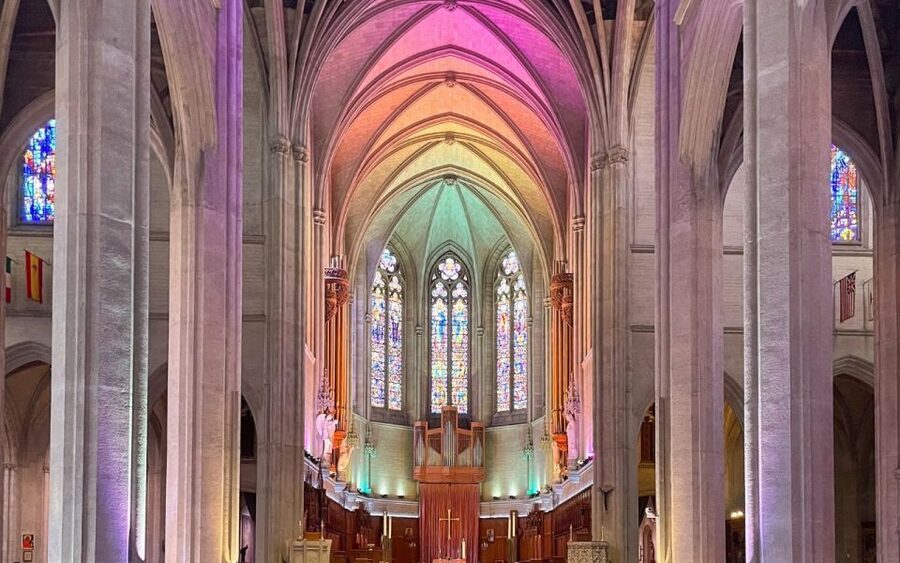
Grace Cathedral gives you far more than a quick look inside a church. At the top of Nob Hill, this Episcopal cathedral brings together Gothic architecture, stained glass, two labyrinths, and modern art in one spacious visit. Its self-guided displays also connect the building to San Francisco’s 1906 fire and the founding of the United Nations.
I like the freedom to explore without being tied to a guide or group. I also like the unusual mix of sacred and secular art, from the Interfaith AIDS Chapel to works linked with Keith Haring, David LaChapelle, and Ansel Adams.
The main consideration is time. The stated duration is 30 minutes, which is enough for a brisk visit but short if you want to read every display, study the art, walk both labyrinths, and involve children in the treasure hunt.
In This Review
- Key Points Before You Go
- Why Grace Cathedral Feels Different From a Standard Church Visit
- Entering From Taylor Street on Nob Hill
- Gothic Details, Stained Glass, and the Ghiberti Doors
- The Self-Guided Tour and Its Four Languages
- The Labyrinths Turn Looking Into Participation
- The Aeolian-Skinner Organ and the Sound of the Space
- The Interfaith AIDS Chapel and Grace’s Social Mission
- Bringing Children: The Treasure-Hunt Map
- How Much Value You Get for $14
- Who Will Enjoy This Visit Most
- Practical Tips for a Better Visit
- Should You Book Grace Cathedral?
- FAQ
- How much does entry to Grace Cathedral cost?
- How long does the experience last?
- Is the tour guided?
- Which languages are available for the interactive tour?
- Where is Grace Cathedral located?
- Which entrance should I use?
- Is Grace Cathedral wheelchair accessible?
- Are children allowed to visit?
- Is photography allowed?
- What can I see inside Grace Cathedral?
Key Points Before You Go
- Two indoor labyrinths give this cathedral visit an active finish, not just a look at architecture.
- Four-language interactive displays are available in English, Spanish, Chinese, and Korean.
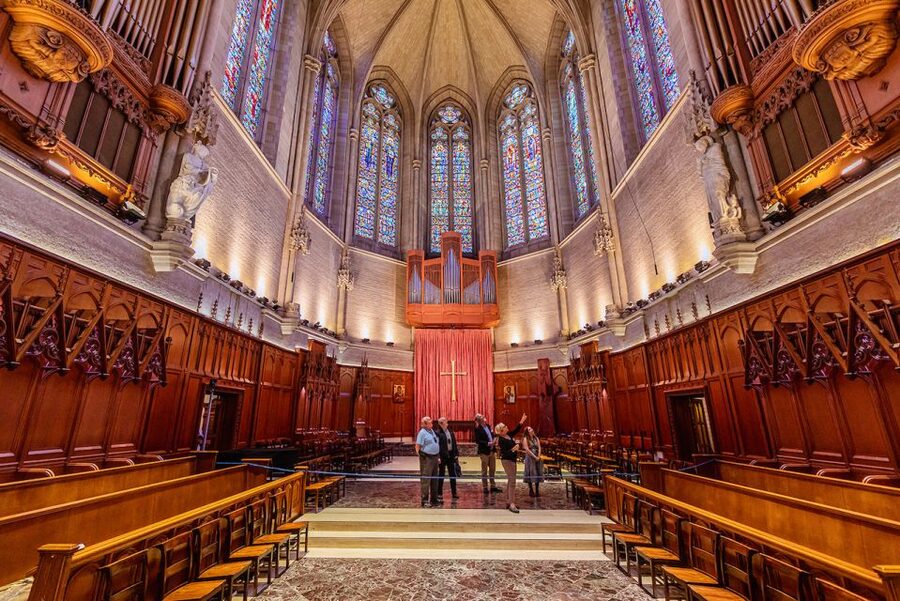
- The Aeolian-Skinner pipe organ adds a major musical feature to the cathedral’s visual appeal.
- Modern art shares space with religious art, including work connected with Keith Haring and David LaChapelle.
- A children’s map and treasure hunt help younger visitors stay involved.
- The $14 admission supports Grace’s inclusive mission and offers more than a simple photo stop.
Why Grace Cathedral Feels Different From a Standard Church Visit
Grace Cathedral is a place of worship, but it also works as an architectural sight, art collection, history lesson, and quiet pause in the middle of San Francisco. That mix is what makes the visit worthwhile.
You can begin by looking up. The cathedral’s Gothic design gives you the tall interior, detailed stonework, and grand sense of scale you expect from a major European church. Yet this is not a copy of a single old-world building. The cathedral’s story is tied closely to San Francisco, including the 1906 fire and the city’s connection to the founding of the United Nations.
I find that context useful because it keeps the visit from becoming a quick round of pretty windows and arches. The interactive tour explains how the building relates to religion, architecture, art, social justice, and local events. You can choose how much information you want, rather than being pushed through a fixed talk.
Grace Cathedral is an Episcopal church, and that matters to the tone of the visit. Some displays and spaces are clearly religious, while others focus on social justice and public life. You do not need to be Episcopalian to appreciate the building, but you should enter with respect for its continuing role as a church.
A few more San Francisco tours worth comparing
- Muir Woods and Sausalito (Return by Bus or Ferry)
★ 4.5 · 5,098 reviews - Big Bus SF: Hop-on Hop-off Tour with 17 Stops and Sunset Option
★ 4.0 · 4,539 reviews - Napa and Sonoma Wine Country Full-Day Tour from San Francisco
★ 4.5 · 4,455 reviews
Entering From Taylor Street on Nob Hill
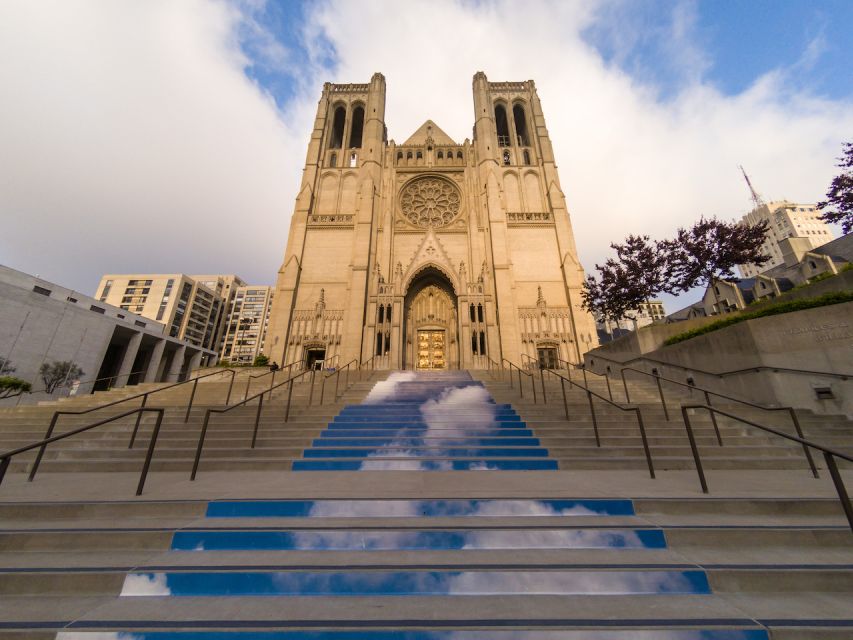
The cathedral is at the top of Nob Hill, and the most direct arrival point is the great steps on Taylor Street. These steps make a dramatic entrance and give you an immediate sense of the building’s scale.
The setting also affects your planning. Nob Hill is one of San Francisco’s more prominent uphill areas, so the approach may feel like part of the outing rather than a simple walk from street level. If steps are difficult for you, use the accessible entrance just north of the great steps at 1051 Taylor Street.
From that sidewalk entrance, go through the double glass doors, turn left, and follow the hall. Turn right past the restrooms, then continue to the elevator on your right. Press the button for floor 1 to reach the main floor of the cathedral.
The Grace Cathedral Garage uses this same accessible entrance. Follow the signs to the cathedral after entering the garage. This is a useful detail for anyone arriving by car or needing a step-free route.
Gothic Details, Stained Glass, and the Ghiberti Doors
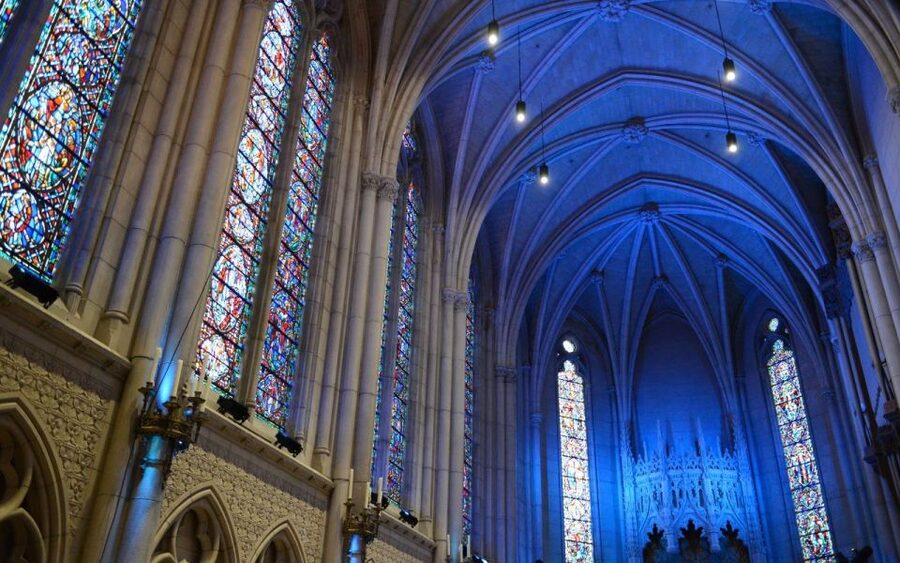
Once inside, take a moment before starting the interactive tour. Grace Cathedral’s Gothic architecture works best when you give your eyes time to adjust to the height and detail.
The stained glass is one of the major reasons to visit. Light, color, and pattern change the feel of the interior, and the windows reward a slower look. If you rush through in 30 minutes, you may notice the overall effect but miss smaller details.
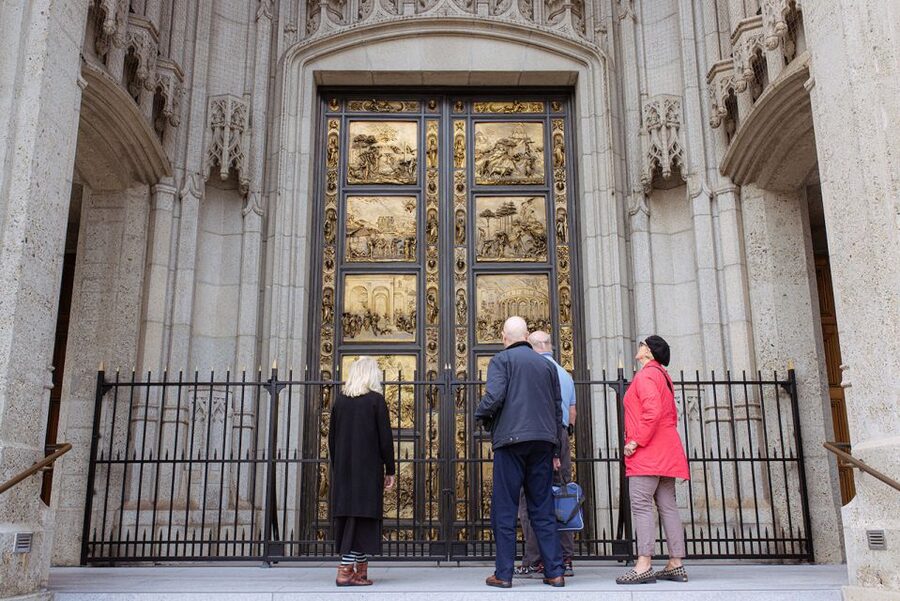
The Ghiberti Doors offer another important artistic stop. Their name points to a connection with the great tradition of Italian Renaissance doors, while their place here shows how Grace Cathedral combines historic artistic ideas with a San Francisco setting. The doors deserve more than a quick photograph.
You will also see religious and secular art throughout the cathedral. That range gives the building a less predictable character. You may move from a traditional Christian subject to a modern work or a piece connected with public life and social justice.
The art associated with Keith Haring, David LaChapelle, and Ansel Adams is especially notable because the names bring different visual languages into the cathedral. Haring’s work is known for bold, direct imagery. LaChapelle is linked with highly staged contemporary photography, while Adams is famous for carefully composed black-and-white photographs. The visit does not limit itself to one period or one definition of religious art.
The Self-Guided Tour and Its Four Languages
Your admission includes an interactive self-guided tour. It is available in English, Spanish, Chinese, and Korean, which makes the visit easier to follow for a wider range of visitors.
The displays cover several subjects:
- Grace Cathedral’s history
- San Francisco history
- The cathedral’s art
- Architecture
- Religion
- Social justice efforts
- The 1906 fire
- The founding of the United Nations
This is a strong feature for an independent visit. You can stop at displays that interest you and move on when you have had enough. You are not relying on a guide’s pace, and you can split up briefly if members of your group want to see different things.
The host or greeter language is English, but the interactive content is offered in the four languages listed above. If you need help getting started, basic assistance at the entrance should be expected in English.
The self-guided format also suits repeat visitors. On one visit, you might focus on the building and stained glass. On another, you could spend more time with the social justice material or San Francisco history. The format gives you room to choose.
A different sort of day in San Francisco altogether:
- Small Group Yosemite and Giant Sequoias Day Trip from San Francisco
★ 5.0 · 3,671 reviews - Yosemite Highlights & Giant Sequoias Day Tour from San Francisco
★ 4.5 · 3,455 reviews - San Francisco Super Saver: Muir Woods & Wine Country w/ optional Gourmet Lunch
★ 4.5 · 3,352 reviews - San Francisco: Golden Gate Bay Cruise (1-hour)
★ 4.7 · 3,071 reviews
The Labyrinths Turn Looking Into Participation
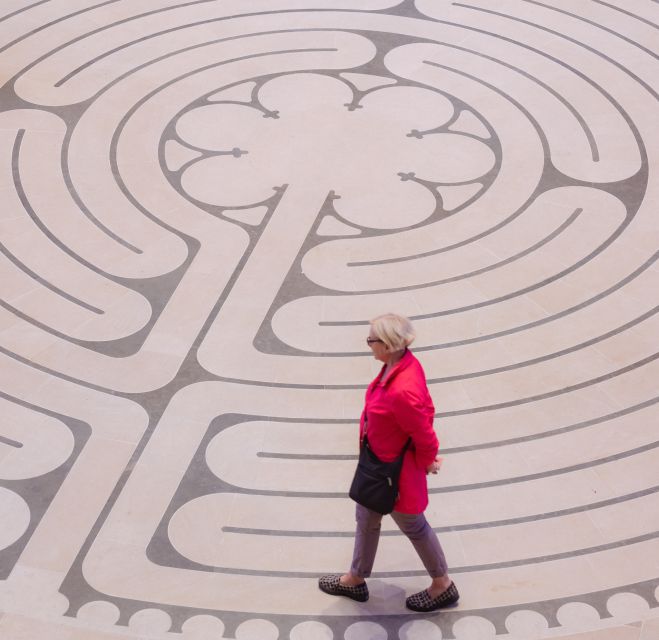
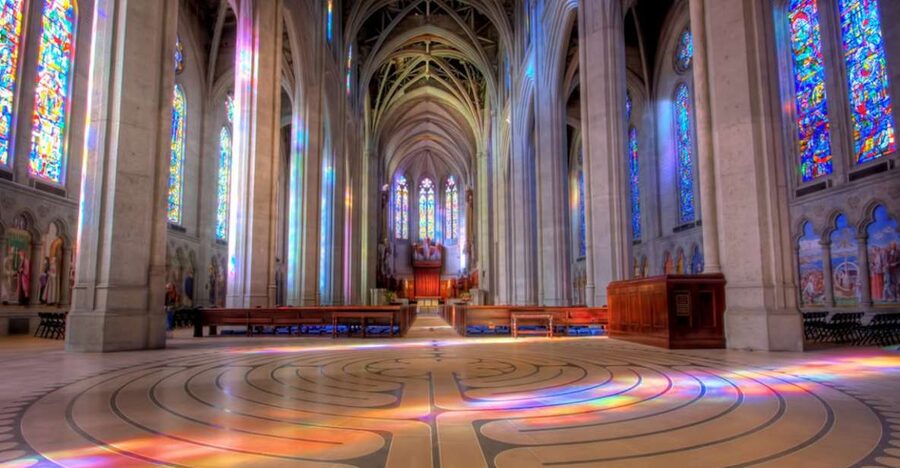
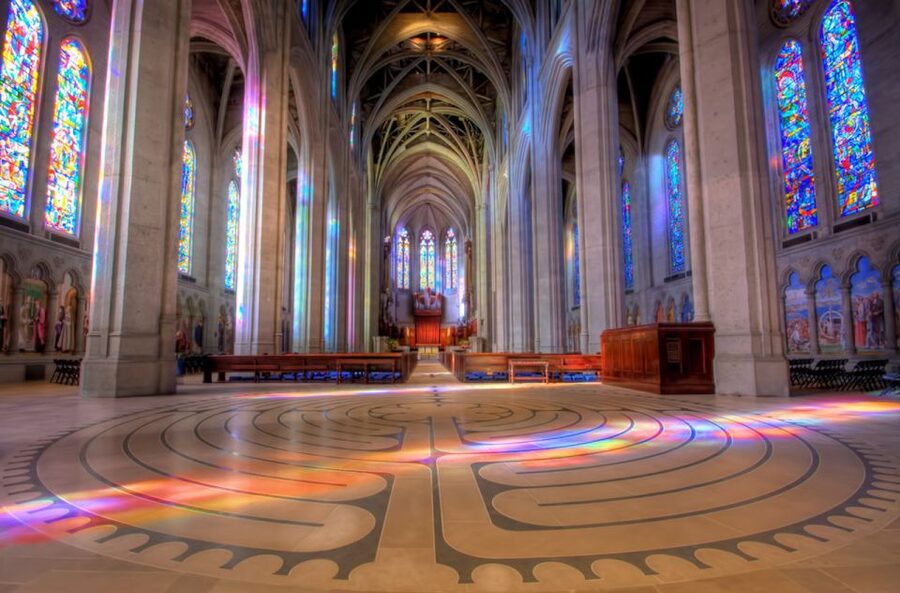
Grace Cathedral has two labyrinths, and walking one of them is a memorable way to finish. A labyrinth is not a maze with dead ends. It is a marked path that leads you toward the center and back out again.
That makes the experience different from simply viewing a church interior. You are asked to slow down and follow the pattern. Some people will treat it as a quiet spiritual activity, while others will appreciate it as an unusual piece of design and tradition.
You can walk one or both labyrinths if time and access allow. The available information does not set out a required route or tell you how long to spend there, so plan according to your own interest. If you are visiting with children, explain the path before they begin and keep the group together.
The labyrinths are also a good reason not to treat the 30-minute duration as a strict sightseeing limit in your mind. If the cathedral’s schedule allows you to remain longer, extra time will help you enjoy this feature without feeling hurried. Check the available starting time when booking.
The Aeolian-Skinner Organ and the Sound of the Space
The Aeolian-Skinner pipe organ is one of Grace Cathedral’s most impressive interior features. Even when no performance is taking place, a pipe organ of this kind adds visual weight to the building and helps you understand why music matters in a cathedral.
The organ belongs to the architecture rather than feeling like a separate attraction. Look for it as you move through the interior, and consider how its size relates to the cathedral’s tall spaces.
Do not assume that admission includes a concert. The experience information identifies the Aeolian-Skinner organ as something to view, but it does not promise a performance. If music is important to your visit, treat the organ as part of the self-guided tour unless a separate event is listed.
The Interfaith AIDS Chapel and Grace’s Social Mission
The Interfaith AIDS Chapel adds a serious and modern layer to the visit. It shows how Grace Cathedral addresses social concerns as well as traditional worship.
This chapel is especially valuable if you want to understand the cathedral as a living institution. The building is not presented only as an old-style monument. Its displays also discuss social justice initiatives and an inclusive mission intended to welcome all.
That balance may be one of the most meaningful parts of the experience. You can admire Gothic design and historic art while also seeing how the cathedral has made room for contemporary issues. For some visitors, this will carry more weight than the architecture alone.
The visit does not require you to share a particular religious outlook. It does ask you to recognize that Grace Cathedral remains an Episcopal church and an active place of worship.
Bringing Children: The Treasure-Hunt Map
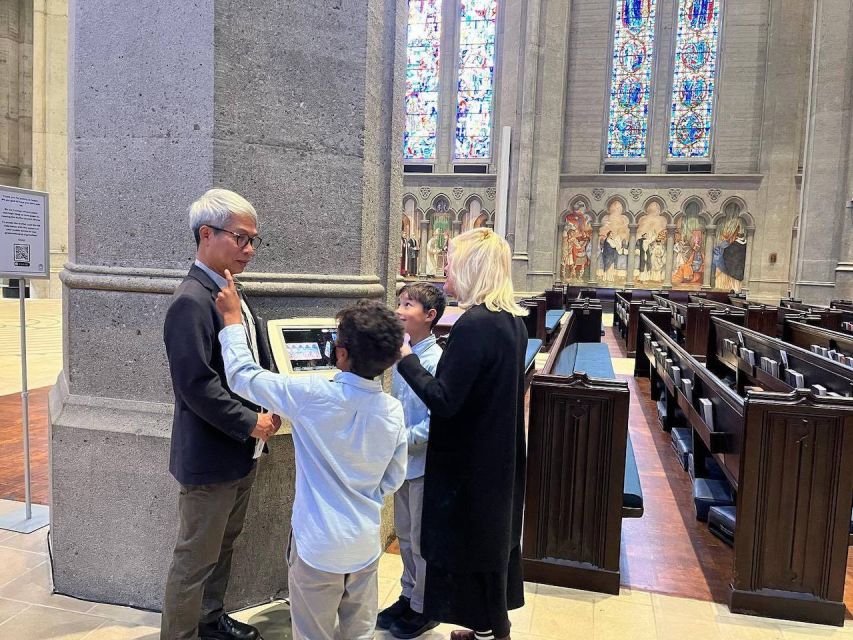
Families get a useful extra: a children’s map that sends young visitors on a treasure hunt throughout the cathedral.
This changes the visit from a quiet art stop into something more active. Children can look for details, follow a goal, and move through the building with a sense of purpose. That is helpful in a large church where young visitors may otherwise lose interest after the first stained-glass window.
Children age 11 and younger must be accompanied by an adult. The map does not turn the visit into a supervised children’s program, so you remain responsible for guiding your family and keeping the group respectful inside the church.
I would give the map to children near the start, then let them lead parts of the visit while you pause at the architectural and historical displays. Older children may also appreciate the connections to San Francisco’s history, the organ, and the modern art.
How Much Value You Get for $14
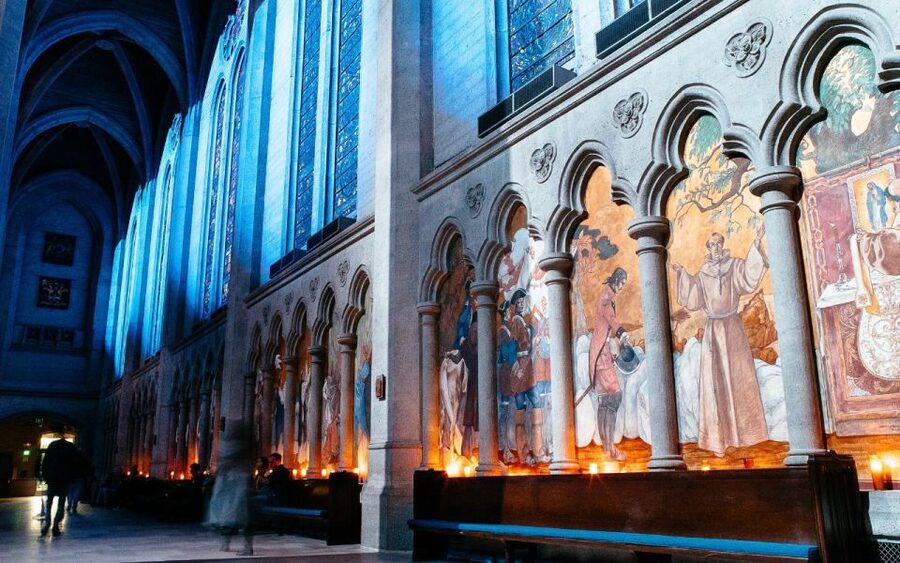
At $14 per person, Grace Cathedral is priced as a modest cultural attraction rather than a major paid tour. The value depends on how you use the time.
If you enter only for a few photographs and leave after 10 minutes, the price may feel less convincing. If you use the interactive displays, study the stained glass and art, look for the Ghiberti Doors, visit the Interfaith AIDS Chapel, and walk a labyrinth, the admission covers a varied experience.
The price also includes the self-guided tour, so you are not paying extra for the historical and art information. The four-language access adds practical value for international groups and multilingual families.
Your admission supports Grace’s inclusive mission, which gives the fee a purpose beyond maintaining a sightseeing site. You are visiting a working Episcopal cathedral and contributing to its welcoming role.
The stated visit length is 30 minutes. I would see that as a useful minimum for a focused visit, not a promise that you will see every detail in half an hour. If your schedule is tight, you can concentrate on the main architecture, stained glass, organ, and one labyrinth. If you have more freedom, give yourself time to read and look closely.
Who Will Enjoy This Visit Most
Grace Cathedral is a good fit for several kinds of visitors:
- Architecture fans will appreciate the Gothic scale, details, and stained glass.
- Art lovers will find both religious and secular work, including pieces connected with well-known modern artists and photographers.
- Families can use the children’s map and treasure hunt to keep younger visitors involved.
- History-minded visitors will find links to the 1906 fire, San Francisco, and the founding of the United Nations.
- Independent sightseers will like choosing their own pace and topics.
- Visitors seeking a quiet stop can spend time with the labyrinths and chapel.
It may be less suitable if you want a live guided tour with a named expert explaining every feature. No guide is listed for this experience. The format is self-led, with an English-speaking host or greeter available and interactive displays in four languages.
It may also disappoint anyone expecting a concert. The Aeolian-Skinner organ is part of the visit, but a musical performance is not included in the stated admission.
Practical Tips for a Better Visit
Start with the building before reading every screen. Get your bearings, look up at the architecture, and notice the overall effect. Then return to the displays that match your interests.
Allow extra time if you are visiting with children. The treasure hunt will slow your group down in a good way, but it also means a 30-minute visit can feel short.
Do not use flash photography. This is both a practical rule and a courtesy to people who may be praying or enjoying the interior quietly.
Wear shoes suitable for San Francisco’s Nob Hill approach, especially if you plan to use the great steps on Taylor Street. If you need a step-free entrance, use 1051 Taylor Street and the elevator route described above.
The activity offers free cancellation up to 24 hours before the visit, and you can reserve now and pay later. Starting times vary by availability, so check the schedule when choosing your visit.
Should You Book Grace Cathedral?
Book this experience if you want an affordable, flexible cultural stop that combines architecture, art, local history, social justice, and a hands-on labyrinth walk. It is especially useful for families and mixed-interest groups because each person can choose what to explore.
I would not book it expecting a long guided lecture or a pipe-organ concert. Choose it instead for the freedom to look closely, learn at your own speed, and see a side of San Francisco that is both historic and active today.
For $14, Grace Cathedral earns its place on a Nob Hill itinerary, particularly if you give it more than a quick photo stop.
FAQ
How much does entry to Grace Cathedral cost?
Entry costs $14 per person.
How long does the experience last?
The stated duration is 30 minutes. You should check availability for the specific starting times.
Is the tour guided?
It is a self-guided interactive tour. An English-speaking host or greeter is available.
Which languages are available for the interactive tour?
The interactive displays are available in English, Spanish, Chinese, and Korean.
Where is Grace Cathedral located?
Grace Cathedral is located at the top of Nob Hill in San Francisco, California.
Which entrance should I use?
The main approach is by the great steps on Taylor Street. An accessible entrance is available at 1051 Taylor Street, just north of the steps.
Is Grace Cathedral wheelchair accessible?
Yes. Wheelchair users and others who need step-free access can enter through the accessible entrance and use the elevator to reach the main floor.
Are children allowed to visit?
Yes. Children age 11 and younger must be accompanied by an adult.
Is photography allowed?
Photography is allowed, but flash photography is not allowed.
What can I see inside Grace Cathedral?
You can see Gothic architecture, stained glass, two labyrinths, the Interfaith AIDS Chapel, the Aeolian-Skinner pipe organ, the Ghiberti Doors, and religious and secular art connected with artists including Keith Haring, David LaChapelle, and Ansel Adams.
Recently added around San Francisco
- San Francisco: Muir Woods Giant Redwoods & City Private Tour★ 5.0 · 3 reviews
- Guided Private Wine Tour to Napa and Sonoma Wine Country★ 5.0 · 3 reviews
- Napa or Sonoma Private Wine Tour from San Francisco★ 5.0 · 3 reviews
- San Francisco Chinatown Food and Culture Tour★ 5.0 · 3 reviews
- San Francisco City Half-Day Private Custom Tour★ 5.0 · 3 reviews
- 6-Hour Luxury Napa Wine Tasting Tour with Route Planning★ 5.0 · 3 reviews
- SFO Pick-Up with City Sightseeing Tour★ 5.0 · 3 reviews
- Muir Woods, Sausalito and Ferry back to Fisherman’s Wharf★ 4.7 · 3 reviews
Tours, compared.
Big Bus SF: Hop-on Hop-off Tour with 17 Stops and Sunset Option
Read our review →
Napa and Sonoma Wine Country Full-Day Tour from San Francisco
Read our review →
Yosemite Highlights & Giant Sequoias Day Tour from San Francisco
Read our review →
Combo Tour: Alcatraz Island and San Francisco Grand City Tour
Read our review →
Monterey, Carmel and 17-Mile Drive: Full Day Tour from SF
Read our review →