Reviewed · SAN FRANCISCO TOURS
Emperor Norton’s Fantastic San Francisco Time Machine
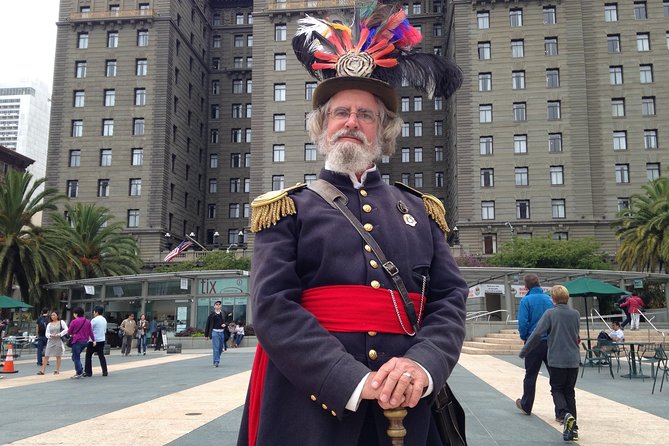
San Francisco’s past gets a wonderfully odd tour guide here: Emperor Norton, the nineteenth-century eccentric who declared himself ruler of the United States and Mexico. In costume, he leads you from Union Square through the old Barbary Coast and Chinatown, turning ordinary streets into scenes from an earlier city.
I like the small group size, capped at 10 people, and the easy walking pace. I also like the mix of famous places and lesser-known stories, from Lotta’s Fountain and the 1906 earthquake to the days when glamorous Maiden Lane held brothels. The main consideration is that this is still a two-mile city walk, so comfortable shoes and a moderate level of fitness matter.
In This Review
- Key things to know before you book
- Meet Emperor Norton in modern San Francisco
- Union Square and the city’s changing center
- Following the Barbary Coast Trail
- Jackson Square and the notorious old waterfront
- Maiden Lane, from brothels to glamour
- Lotta’s Fountain and the earthquake story
- Portsmouth Square, San Francisco’s birthplace
- Old Saint Mary’s Cathedral and Emperor Norton’s passing
- What the $20 price delivers
- How demanding is the walk?
- Who will enjoy this San Francisco walk?
- Booking, cancellation, and practical timing
- Should you book Emperor Norton’s time machine?
- FAQ
- How long does the tour last?
- How far do you walk?
- Where does the tour start?
- What time does the tour begin?
- Where does the tour end?
- What places do you visit?
- Is Emperor Norton a real historical figure?
- Is food included?
- Is hotel pickup included?
- Can I cancel for a refund?
Key things to know before you book
- Emperor Norton guides the story: Your guide appears in character as one of San Francisco’s most unusual historical figures.
- The route covers about two miles: The walk takes around two hours at a leisurely pace.
- You see seven important stops: Union Square, Jackson Square, Maiden Lane, Lotta’s Fountain, Portsmouth Square, Old Saint Mary’s Cathedral, and sections of the Barbary Coast Trail.
- The stories reach beyond famous names: Expect tales of the Barbary Coast, the 1906 earthquake, Lotta Crabtree, Lola Montez, and Luisa Tetrazzini.
- The tour ends near Chinatown: Old Saint Mary’s Cathedral puts you close to Portsmouth Square and the central Chinatown area for lunch or further exploring.
- The $20 price is reasonable: You get a professional guide, city history, and a small-group experience, but food, drinks, and hotel transfers are extra.
Meet Emperor Norton in modern San Francisco
The clever idea behind this tour is simple: you walk through present-day San Francisco while listening to the city through the eyes of a man who lived in the 1800s. Emperor Norton was a real local character, not a fictional invention made for tourists. His public persona gives the walk a light comic touch, but the tour also uses him to explain how San Francisco grew, changed, and rebuilt.
You begin at Union Square at 11:00 a.m. This is a useful starting point because the square is easy to reach by public transportation and sits in the middle of the city’s shopping district. From there, the route follows parts of the Barbary Coast Trail and moves gradually east toward Old Saint Mary’s Cathedral.
The guide’s costume adds theater without requiring you to sit through a staged performance. You are still walking through real streets, but the character helps connect the locations. Along the way, people may recognize the emperor and call out to him, which adds to the sense that this unusual figure belongs to San Francisco’s public life.
The tone suits you if you enjoy history with humor. It is not a formal lecture, and it is not a ghost tour. It is a walking lesson in civic stories, odd characters, old scandals, and urban change.
A few more San Francisco tours worth comparing
- Muir Woods and Sausalito (Return by Bus or Ferry)
★ 4.5 · 5,098 reviews - Big Bus SF: Hop-on Hop-off Tour with 17 Stops and Sunset Option
★ 4.0 · 4,539 reviews - Napa and Sonoma Wine Country Full-Day Tour from San Francisco
★ 4.5 · 4,455 reviews
Union Square and the city’s changing center
Union Square gets about 20 minutes, including the history of the square and the Dewey Monument. You learn how this central public space fits into San Francisco’s growth rather than simply using it as a meeting point.
The square is now associated with department stores, hotels, theaters, and busy sidewalks. The tour asks you to look past that modern setting and consider the older city beneath it. The Dewey Monument also gives the guide a fixed point for explaining public memory and the way San Francisco marks important events.
This first stop helps you get your bearings. You are not immediately sent into a maze of small streets. Instead, you begin in a familiar central location and then move toward districts with older and less obvious stories.
If you plan to shop around Union Square, schedule that for before or after the walk. The tour starts at 11:00 a.m., and its value comes from paying attention to the guide rather than splitting your focus between the commentary and store windows.
Following the Barbary Coast Trail
The Barbary Coast Trail winds through much of the experience, linking the stops into one larger story. The trail is not treated as a single quick photo stop. It forms the historical backbone of the walk and helps explain where the shoreline, streets, and city limits once sat.
San Francisco’s early downtown was not shaped like the city you see today. The route shows how land was added and how the bay’s edge shifted as the city grew. That detail can be especially useful if you have already walked around the downtown core and wondered why some streets seem far removed from the water.
The Barbary Coast also has a difficult past. Its reputation involved drinking, gambling, prostitution, violence, and rough port life. A good tour needs to explain that past without turning every old street into a colorful legend, and this experience uses the area to show how a frontier city developed into a major urban center.
I find this part especially useful for first-time visitors because it gives context to several neighborhoods at once. You are not just collecting disconnected facts about San Francisco. You are following a route shaped by trade, migration, entertainment, disaster, and redevelopment.
Jackson Square and the notorious old waterfront
Jackson Square receives about 30 minutes, making it one of the longer stops. That extra time makes sense. This district preserves some of the city’s older street patterns and provides a strong setting for stories about the Barbary Coast.
The guide explains the area’s reputation and the people who made it infamous. You hear about a San Francisco where the waterfront drew sailors, fortune seekers, merchants, entertainers, and opportunists. The district’s past was not polite, and the tour does not flatten it into a simple good-old-days tale.
Jackson Square is also a reminder that old San Francisco is easy to miss. Modern buildings and traffic can hide the importance of a corner or narrow lane. With the guide pointing out the connections, the area becomes easier to read.
Expect the history here to be more colorful than the polished image of Union Square. If you prefer only grand buildings and famous monuments, this may feel less immediate. If you like stories about how cities actually work, Jackson Square is likely to be one of the strongest parts of the walk.
A different sort of day in San Francisco altogether:
- Small Group Yosemite and Giant Sequoias Day Trip from San Francisco
★ 5.0 · 3,671 reviews - Yosemite Highlights & Giant Sequoias Day Tour from San Francisco
★ 4.5 · 3,455 reviews - San Francisco Super Saver: Muir Woods & Wine Country w/ optional Gourmet Lunch
★ 4.5 · 3,352 reviews - San Francisco: Golden Gate Bay Cruise (1-hour)
★ 4.7 · 3,071 reviews
Maiden Lane, from brothels to glamour
Maiden Lane gets about 15 minutes and offers one of the route’s sharpest contrasts. Today, the lane is linked with style and high-end shopping. In its earlier life, it was lined with brothels.
That change is a useful way to understand San Francisco. Streets are not locked into one identity. A place associated with vice can later be marketed as elegant, and the physical setting may remain while the social meaning changes.
The stop is brief, so do not expect a long standalone lecture. Instead, Maiden Lane works as a compact example of urban reinvention. It also gives you a chance to compare the narrow lane with the larger streets and public squares visited elsewhere.
I like this stop because it cuts through the polished surface of downtown. It reminds you that today’s fashionable addresses may have had very different roles in the past.
Lotta’s Fountain and the earthquake story
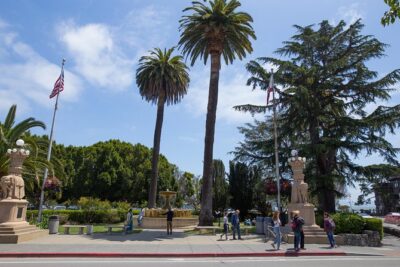
Lotta’s Fountain gets about 20 minutes and brings together several threads of San Francisco history. The fountain has been a gathering place since 1875 and remains connected with the city’s annual earthquake commemoration.
This is one of the tour’s best stops for understanding how San Francisco remembers disaster. The 1906 earthquake and fire are not presented only as a date in a textbook. You hear about the buildings that survived and the way the city used familiar meeting points to keep memory alive.
The guide also brings in Lotta Crabtree, Lola Montez, and Luisa Tetrazzini, three names tied to the city’s entertainment and cultural past. These stories widen the focus beyond earthquakes and architecture. San Francisco’s identity was shaped by performers, public figures, public gatherings, and people who captured the city’s imagination.
Lotta’s Fountain can be easy to pass without knowing why it matters. The tour gives it a clear place in the story, and that makes the later earthquake commemoration easier to understand.
Portsmouth Square, San Francisco’s birthplace
The walk continues to Portsmouth Square, described as the birthplace of San Francisco and the living room of Chinatown. About 15 minutes here gives you a bridge between the city’s early downtown and the Chinatown district that surrounds it.
Calling Portsmouth Square a living room points to its public role. It has been a place where people meet, gather, and watch city life unfold. The stop also helps you see Chinatown as part of San Francisco’s central story, not a separate add-on at the edge of downtown.
This is a good place to pause and think about the layers covered during the walk. The route has moved from a major commercial square to the Barbary Coast, through streets once tied to prostitution, past earthquake memory, and into a public space closely tied to Chinatown.
The end of the walk is well placed for continuing your day. You can explore more of Chinatown or stop for lunch nearby. One useful tip from the tour experience is to ask the guide for food suggestions. Past participants have found the lunch advice helpful, as well as a recommendation for popovers at Neiman Marcus.
Old Saint Mary’s Cathedral and Emperor Norton’s passing
The final stop is Old Saint Mary’s Cathedral at 660 California Street. The cathedral receives only about five minutes, but it gives the tour a natural closing point: you hear about the building, the emperor, and the passing of Emperor Norton.
Ending here ties the character back to the real person. The costume and humor are entertaining, but the walk is ultimately about a man who became part of San Francisco’s civic folklore. Old Saint Mary’s provides a quieter place to close the story than a busy shopping street would.
The cathedral is also near public transportation and Chinatown, so you can continue without arranging a separate transfer. Hotel pickup and drop-off are not included, but the route begins and ends in central areas that are practical for an independent day in the city.
What the $20 price delivers
At $20 per person, this is a good-value city tour if you want history rather than transport. The fee covers a professional guide plus taxes, fees, and handling charges. It does not include food, drinks, or hotel pickup and drop-off.
The value comes from the interpretation. You could walk through Union Square, Maiden Lane, Jackson Square, Lotta’s Fountain, and Portsmouth Square on your own, but you would likely miss the links between them. A guide also helps you notice why a fountain, lane, or public square matters.
The maximum group size is 10 people, which is another reason the price feels fair. A small group makes it easier to hear the guide, ask questions, and keep a relaxed pace. It also suits the character-led format, since Emperor Norton can interact with a handful of people more naturally than with a large crowd.
This is not the right purchase if you want admission to museums, a meal, or a ride around the city. It is a focused walking tour. At roughly two hours, it also leaves plenty of time for lunch and further sightseeing.
How demanding is the walk?
The route covers around two miles at a leisurely pace. The description calls for a moderate level of physical fitness, so you should be comfortable walking through central San Francisco for about two hours.
No special sporting ability is needed, but sensible shoes will help. You should also plan for ordinary city walking, including stopping on sidewalks and moving between different neighborhoods. The tour does not include hotel pickup, so you need to reach Union Square on your own.
Service animals are allowed, and the tour runs near public transportation. Masks and social distancing are listed as required, so check the current operating instructions when you book.
The mobile ticket is convenient. You can keep the booking on your phone rather than arranging a paper voucher, but arrive with enough time to locate the meeting point at Union Square.
Who will enjoy this San Francisco walk?
I would recommend this experience most strongly to you if you enjoy local history, unusual characters, and walking tours that mix major landmarks with small details. It works especially well early in a San Francisco visit because it gives you a useful framework for later visits to Chinatown, downtown, and the old waterfront area.
It also suits people who already live in the Bay Area. The route is not only for first-time visitors. The stories about where the city ended and the bay began, along with the details about old buildings and local figures, can change the way you see familiar streets.
Families with older children may enjoy the costume and character. The subject matter includes brothels, vice, and earthquake destruction, so parents should decide if that tone fits their group.
You may want a different activity if you have trouble walking for two hours, need hotel transport, or prefer a tour with indoor attractions. The experience is built around streets, public spaces, and storytelling.
Booking, cancellation, and practical timing
Confirmation is sent within 48 hours of booking, subject to availability. Free cancellation is available if you cancel at least 24 hours before the 11:00 a.m. start time.
If you cancel inside that 24-hour window, you do not receive a refund, and changes made during that period are not accepted. The cut-off uses San Francisco local time, so keep that in mind if you are booking from another time zone.
Plan your day around the start and end points. Begin at Union Square and finish at Old Saint Mary’s Cathedral, rather than expecting to return to your hotel or starting point. The end location makes it easy to add Chinatown, lunch, or more downtown sightseeing afterward.
Should you book Emperor Norton’s time machine?
Book it if you want a funny, place-based history walk that explains why downtown San Francisco looks the way it does. The guide in character, the small group, and the steady two-mile route create a personal introduction to the city without taking up a full day.
I especially recommend it as a first activity in San Francisco, since the stories give later sightseeing more meaning. It can also work as a fresh look at home for people who have lived in the city for years.
Skip it if you want a ride, a meal, museum entry, or a short stop with little walking. For $20, though, it offers a strong amount of local context, a memorable guide, and a practical route through some of the city’s most important historic areas.
FAQ
How long does the tour last?
The walking tour lasts approximately two hours.
How far do you walk?
The route covers around two miles at a leisurely pace.
Where does the tour start?
It starts at Union Square in San Francisco.
What time does the tour begin?
The tour begins at 11:00 a.m.
Where does the tour end?
It ends at Old Saint Mary’s Cathedral, 660 California Street, San Francisco.
What places do you visit?
The route includes the Barbary Coast Trail, Union Square, Jackson Square, Maiden Lane, Lotta’s Fountain, Portsmouth Square, and Old Saint Mary’s Cathedral.
Is Emperor Norton a real historical figure?
Yes. The tour presents Emperor Norton as a real San Francisco character who lived during the 1800s.
Is food included?
No. Food and drinks are not included.
Is hotel pickup included?
No. Hotel pickup and drop-off are not included.
Can I cancel for a refund?
Yes, if you cancel at least 24 hours before the experience start time. Cancellations made less than 24 hours in advance are not refunded.
Recently added around San Francisco
- San Francisco: Muir Woods Giant Redwoods & City Private Tour★ 5.0 · 3 reviews
- Guided Private Wine Tour to Napa and Sonoma Wine Country★ 5.0 · 3 reviews
- Napa or Sonoma Private Wine Tour from San Francisco★ 5.0 · 3 reviews
- San Francisco Chinatown Food and Culture Tour★ 5.0 · 3 reviews
- San Francisco City Half-Day Private Custom Tour★ 5.0 · 3 reviews
- 6-Hour Luxury Napa Wine Tasting Tour with Route Planning★ 5.0 · 3 reviews
- SFO Pick-Up with City Sightseeing Tour★ 5.0 · 3 reviews
- Muir Woods, Sausalito and Ferry back to Fisherman’s Wharf★ 4.7 · 3 reviews
San Francisco Tours, compared.
Muir Woods and Sausalito (Return by Bus or Ferry)
Read our review →
Big Bus SF: Hop-on Hop-off Tour with 17 Stops and Sunset Option
Read our review →
Napa and Sonoma Wine Country Full-Day Tour from San Francisco
Read our review →
Small Group Yosemite and Giant Sequoias Day Trip from San Francisco
Read our review →
Yosemite Highlights & Giant Sequoias Day Tour from San Francisco
Read our review →
San Francisco Super Saver: Muir Woods & Wine Country w/ optional Gourmet Lunch
Read our review →