Reviewed · TICKETS
California Academy of Sciences General Admission Ticket
The California Academy of Sciences puts an aquarium, planetarium, rainforest, and natural history museum under one living roof. That unusual mix lets you move from African penguins to a four-story tropical forest, then out toward distant galaxies without changing venues.
I especially like the hands-on exhibits, which give children and adults something to do rather than simply something to read. I also like the live programs, including penguin feedings, animal talks, and pop-up demonstrations. The main caution is crowding: busy Saturdays can make the popular exhibits harder to enjoy, and the $49 admission can climb quickly once you add parking and food.
In This Review
- Key points to know
- Four major science experiences under one roof
- Start with the aquarium and its 60,000 animals
- Meet the Academy’s most popular residents
- Walk through the Osher Rainforest
- Reserve your Morrison Planetarium show early
- Give the natural history exhibits time
- Add Wander Woods and Golden Gate Park
- Is $49 a fair price?
- How to plan a smoother visit
- Who will enjoy this Academy most?
- Should you book the California Academy of Sciences?
- FAQ
- How long should I plan for the California Academy of Sciences?
- What does the admission ticket include?
- Do I need a separate ticket for the planetarium?
- Are planetarium shows suitable for young children?
- Where is the California Academy of Sciences located?
- Can I buy food at the Academy?
- Can I cancel the booking for a refund?
Key points to know
- One ticket covers four major attractions: aquarium, rainforest, planetarium, and natural history displays.
- Nearly 60,000 animals live here, including African penguins, butterflies, reptiles, fish, and Claude, the white alligator.
- Planetarium shows require a separate free reservation using the QR code in the lobby, and passes are first come, first served.
- The rainforest is warm and humid, so wear comfortable clothes and shoes for a long indoor walk.
- Golden Gate Park adds breathing room, with the Academy located at 55 Music Concourse Drive.
- Plan on 3 to 5 hours if you want more than a quick look at the main rooms.
Four major science experiences under one roof
I find the Academy most appealing because it does not ask you to choose between a museum and a zoo-like animal visit. You can study fossils, watch a penguin feeding, walk through a rainforest, and attend a planetarium show during the same outing.
That range works well for families with children of different ages. Toddlers can watch moving animals and butterflies, school-age children can test interactive displays, and teenagers or adults can spend more time with the geology, astronomy, and natural history material.
The Academy has been a San Francisco institution for 170 years, but the experience is not frozen in the past. Recent additions include Wander Woods, an outdoor nature play and exploration area, and Hidden Wonders, which reveals previously unseen specimens from the Academy’s research collections.
Your ticket is for admission only, not a guided tour. You explore at your own pace, choose the public programs that fit your day, and decide how much time to spend in each section.
A few more San Francisco tours worth comparing
- Muir Woods and Sausalito (Return by Bus or Ferry)
★ 4.5 · 5,098 reviews - Big Bus SF: Hop-on Hop-off Tour with 17 Stops and Sunset Option
★ 4.0 · 4,539 reviews - Napa and Sonoma Wine Country Full-Day Tour from San Francisco
★ 4.5 · 4,455 reviews
Start with the aquarium and its 60,000 animals
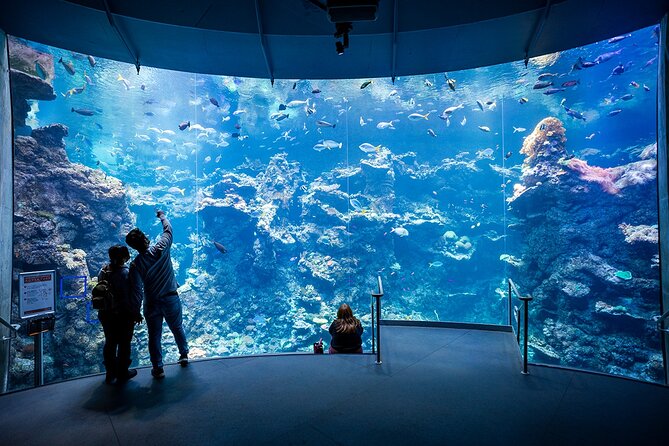
The Steinhart Aquarium is the strongest reason to allow several hours here. It contains nearly 60,000 live animals from more than 1,000 species, so this is not a small side exhibit attached to the museum.
The aquarium’s biggest draw is its living coral reef, described as the world’s deepest indoor living coral reef. You also get unusual zones that go beyond the standard colorful tropical fish displays. The Venom exhibit features more than a dozen species, while the Twilight Zone focuses on marine life from the darker parts of the sea.
I like this section for its variety. One room gives you bright reef life, another shifts toward animals with defensive toxins, and another explores creatures adapted to little or no light. The displays make the aquarium feel like a lesson in how different sea environments work, not just a parade of attractive fish.
Families should allow at least an hour here, and more if your children want to stop at each display. The aquarium is also a good choice when the rest of the building feels crowded, since you can move at different speeds and return to favorite tanks.
The animal encounters are not limited to glass cases. Public programs may include feedings and staff demonstrations. At the ray pool, staff members can explain what you are seeing and answer questions, adding a human touch to the exhibits.
Meet the Academy’s most popular residents
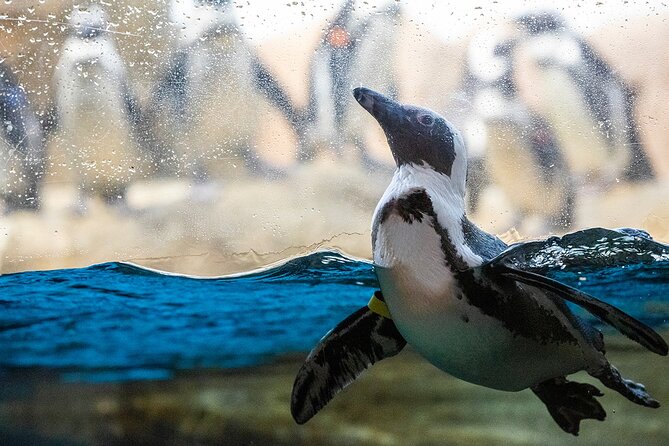
The African penguin colony is one of the easiest highlights to find and one of the most entertaining. The penguins are active, expressive, and close enough to the viewing area for children to follow their movements.
Try to time your visit around a scheduled feeding. A biologist feeds the penguins and answers questions, so you get more than a few minutes of watching birds swim. Public programs change, but the Academy includes daily opportunities such as animal feedings and short demonstrations.
Claude, the white alligator, is another memorable resident. His unusual coloring makes him easy to remember, though the penguins may still win the family vote.
The Academy’s animal displays work best when you slow down. I would not rush through them simply to reach the planetarium. The penguins, aquarium animals, butterflies, and rainforest creatures are the parts that make this more than a conventional natural history museum.
Walk through the Osher Rainforest
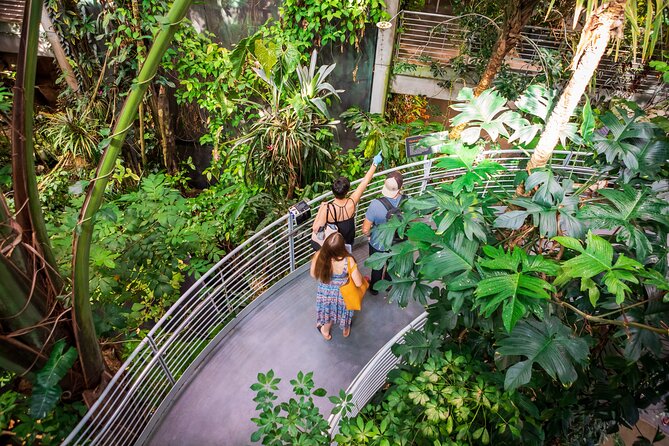
The Osher Rainforest is a four-story glass dome filled with more than 1,600 plants and animals. You move through several levels of a warm, humid environment where free-flying birds and butterflies share the space with reptiles, spiders, and fish.
The temperature is part of the point. You are not looking at a dry exhibit that only suggests a rainforest. You feel the heat and humidity as you walk, which helps explain the conditions these species require.
Look for butterflies, exotic reptiles, golden-silk orb weaver spiders, and large Amazonian fish. The animals do not all appear on cue, so the experience rewards patience. A butterfly may pass close by, while another visit may give you a clearer view of a bird or reptile.
Wear comfortable shoes. The Academy is easy to spend a full afternoon inside, and the rainforest’s warm air can feel tiring if you have already been walking for hours. If you are sensitive to heat or humidity, make this a shorter stop and take a break afterward.
For many families, this is the most memorable room in the building. It feels active and unpredictable, unlike a display where every object is fixed behind glass. It is also a strong choice for children who have limited interest in reading long museum panels.
A different sort of day in San Francisco altogether:
- Small Group Yosemite and Giant Sequoias Day Trip from San Francisco
★ 5.0 · 3,671 reviews - Yosemite Highlights & Giant Sequoias Day Tour from San Francisco
★ 4.5 · 3,455 reviews - San Francisco Super Saver: Muir Woods & Wine Country w/ optional Gourmet Lunch
★ 4.5 · 3,352 reviews - San Francisco: Golden Gate Bay Cruise (1-hour)
★ 4.7 · 3,071 reviews
Reserve your Morrison Planetarium show early
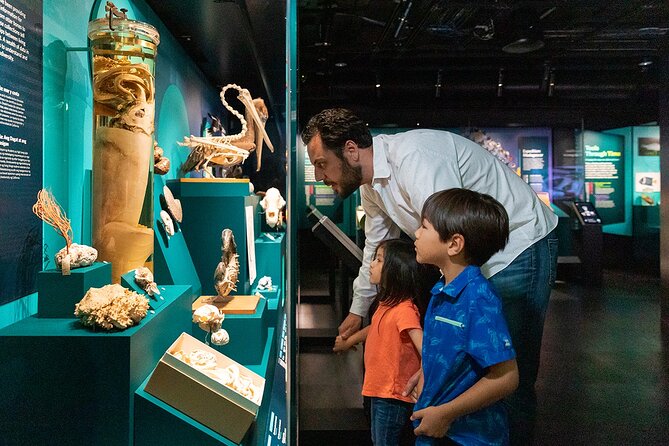
The Morrison Planetarium uses a 75-foot dome screen for shows about the cosmos and the workings of our own planet. Visualizations and virtual environments fill your field of view, giving the show a different feel from a standard flat-screen film.
Admission includes a planetarium show pass, but the pass is not automatically assigned with your ticket. When you arrive, scan the QR code posted in the lobby and reserve a showtime. Passes are free, first come, first served, and showtimes are offered during the day.
This is the one part of the visit that requires a little strategy. I would reserve a planetarium time near the beginning of your visit, then plan the aquarium and rainforest around it. If you wait until late afternoon, the time you want may be gone.
Show choices vary. One program, Incoming, has been singled out as a favorite for its presentation of cosmic events. You should check the available options when you arrive rather than assume a particular show will be running.
The planetarium has age limits worth knowing. Shows may not suit children under seven, and children under four are not permitted. If you have a young child, the aquarium and rainforest may be a better use of your time while another family member attends the show.
Give the natural history exhibits time
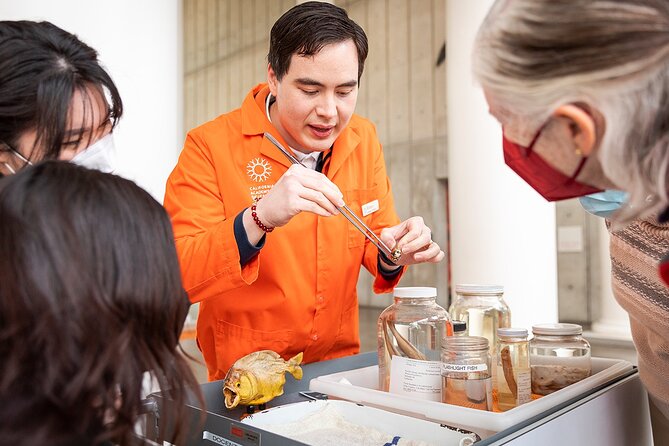
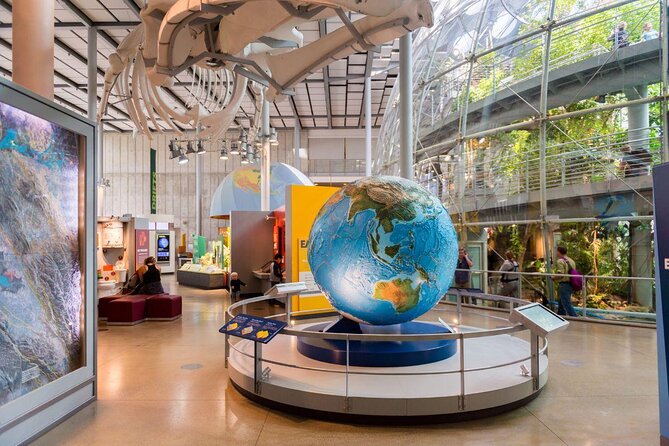
The Academy’s natural history displays fill in the science behind the live exhibits. You can walk beneath the bones of enormous prehistoric animals, study geology specimens, and use interactive displays that connect California’s species, places, and people.
California: State of Nature focuses on the state’s biodiversity across four ecosystems. It combines specimens, multimedia, models, and hands-on elements. This gives you a useful local focus after the more global aquarium and rainforest sections.
The geology collection includes nearly 400 specimens. If you enjoy minerals, fossils, and the physical story of the planet, this area can hold your attention well beyond a quick family stop.
The dinosaur material may not satisfy every fossil enthusiast. Some visitors have found the dinosaur exhibit less impressive than expected, especially compared with larger dedicated natural history museums. If dinosaurs are your main reason for visiting, keep expectations measured and treat this Academy as a broad science center rather than a dinosaur museum.
On the other hand, the Academy has small interactive moments that can be more engaging than a large fossil hall. One display includes a dinosaur 3D puzzle, and staff can help explain how the pieces fit together. That kind of activity gives children a reason to look closely.
Hidden Wonders offers another angle by showing specimens from the Academy’s research collections that have not previously been on view. It is a reminder that museums are active research centers, not simply rooms of old objects.
Add Wander Woods and Golden Gate Park
The Academy sits in Golden Gate Park at 55 Music Concourse Drive. The park setting gives you a welcome break from the indoor exhibits and makes it easier to pair the visit with other time outdoors.
Wander Woods is an outdoor nature play and exploration area designed to encourage children to investigate. It can be especially useful if younger children need a change after the darker aquarium rooms or the warm rainforest.
I would not treat Golden Gate Park as a minor detail. The Academy can fill most of your day, but the park helps you reset between indoor sections. You can also use the surrounding grounds before or after your visit instead of forcing every minute into the museum.
Public transportation is nearby, and service animals are allowed. Most people can take part, and the building is accessible. The ticket is mobile, so you can go directly to the entrance without stopping at a separate kiosk to exchange a voucher.
Is $49 a fair price?
At $49 per person, this is not a cheap drop-in attraction. The value depends on how much of the building you use.
If you spend only an hour looking at a few exhibits, the price feels high. If you stay for three to five hours, attend a planetarium show, see the aquarium and rainforest, and catch a public program, the cost is easier to justify because several major attractions are included in one admission.
Extra spending can make the day expensive. Food and drinks are sold at the Academy Café and Terrace Restaurant, including sustainable grab-and-go choices. One family outing reported parking at $31.25 and food for three at $75, though prices can change. If you are watching your budget, check current parking and food costs before you go.
The Academy also costs less in hassle than visiting several separate venues across San Francisco. You do not need to travel between an aquarium, a museum, and a planetarium. That matters when you have children, limited time, or poor weather.
Still, people comparing this with a major aquarium should think about priorities. If your entire family wants a large marine-focused experience, another aquarium may offer more water-based exhibits. The Academy wins for variety.
How to plan a smoother visit
The listed opening hours for January 20 through February 13, 2026 are Monday through Saturday, 9:30 a.m. to 5 p.m. For February 14 through February 16, the listed schedule includes Monday from 9:30 a.m. to 5 p.m. Check the date-specific schedule before setting out, since special access arrangements can affect the first part of the morning.
A past operating-hours problem caused an early arrival to overlap with a members-only period. If your visit falls on a special date or holiday period, confirm the hours directly before you go.
Plan for at least three hours. Four to five hours is better if you want a planetarium show and public programs without rushing.
A practical order is:
- Reserve your planetarium time soon after arrival.
- Visit the aquarium while your energy is high.
- Catch the penguin feeding or another scheduled program.
- Walk through the rainforest.
- Finish with natural history exhibits, Wander Woods, or a return to a favorite animal area.
Wear walking shoes and bring a light layer for the rest of the building. The rainforest is hot and humid, while other rooms may feel cooler.
Crowds can change the experience. Saturday can be too full for an easy look at every attraction, so a weekday visit may give you more room. If you must visit on a busy day, accept that the aquarium and popular animal viewing areas may require patience.
Who will enjoy this Academy most?
Families with toddlers through teenagers get the widest range of activities. Young children can focus on penguins, butterflies, fish, and outdoor play, while older children can spend time with geology, astronomy, and California’s ecosystems.
Adults without children should not dismiss it. The aquarium is substantial, the rainforest is unusual, and the planetarium provides a strong reason for an adult visit. Couples and friends can easily spend an afternoon here without treating it as a children’s-only attraction.
The Academy also suits first-time San Francisco visitors who want one dependable indoor activity in Golden Gate Park. It is less ideal if you dislike crowds, want a quiet art museum, or expect a large dinosaur collection.
The facility is generally accessible, and most people can participate. Food is available on-site, though a full visit can become costly when admission, parking, and meals are added together.
Should you book the California Academy of Sciences?
I would book it if you want variety and can give it at least half a day. The combination of Steinhart Aquarium, Osher Rainforest, Morrison Planetarium, and natural history exhibits is unusual, and the penguins and butterflies give the visit plenty of life.
Reserve the free planetarium pass early, wear comfortable shoes, and expect the rainforest to be warm. If you are visiting with very young children, check the planetarium age limits and build your day around the aquarium and animal areas instead.
At $49, this is best treated as a substantial Golden Gate Park attraction, not a quick museum stop. Book when you value several experiences in one place, but compare costs carefully if parking and food will stretch your budget.
FAQ
How long should I plan for the California Academy of Sciences?
Plan for approximately 3 to 5 hours. A shorter visit can cover the main highlights, but several hours are useful if you want the aquarium, rainforest, planetarium, natural history exhibits, and public programs.
What does the admission ticket include?
The ticket includes instant-access admission to the California Academy of Sciences. Aquarium entry, rainforest entry, natural history exhibits, public programs, and planetarium show passes are included.
Do I need a separate ticket for the planetarium?
You do not pay an additional fee, but you need to reserve a free show pass. Scan the QR code in the lobby after arrival. Passes are first come, first served.
Are planetarium shows suitable for young children?
Shows may not be appropriate for children under seven. Children under four are not permitted in the planetarium.
Where is the California Academy of Sciences located?
The Academy is at 55 Music Concourse Drive, San Francisco, California 94118, inside Golden Gate Park.
Can I buy food at the Academy?
Yes. Sustainable grab-and-go food and drinks are available at the Academy Café and Terrace Restaurant.
Can I cancel the booking for a refund?
You can cancel at least 24 hours before the experience start time for a full refund. Cancellations or changes made less than 24 hours before the start time are not accepted and are not refunded.
Recently added around San Francisco
- San Francisco: Muir Woods Giant Redwoods & City Private Tour★ 5.0 · 3 reviews
- Guided Private Wine Tour to Napa and Sonoma Wine Country★ 5.0 · 3 reviews
- San Francisco Chinatown Food and Culture Tour★ 5.0 · 3 reviews
- San Francisco City Half-Day Private Custom Tour★ 5.0 · 3 reviews
- Napa or Sonoma Private Wine Tour from San Francisco★ 5.0 · 3 reviews
- 6-Hour Luxury Napa Wine Tasting Tour with Route Planning★ 5.0 · 3 reviews
- SFO Pick-Up with City Sightseeing Tour★ 5.0 · 3 reviews
- 6-Hour Sparkling Wine Tour of Napa Valley★ 5.0 · 3 reviews
Tickets, compared.


Best Alcatraz Prison Tickets & San Francisco Combo Tour
Read our review →
San Francisco Morning City Tour & Afternoon Alcatraz Ticket
Read our review →